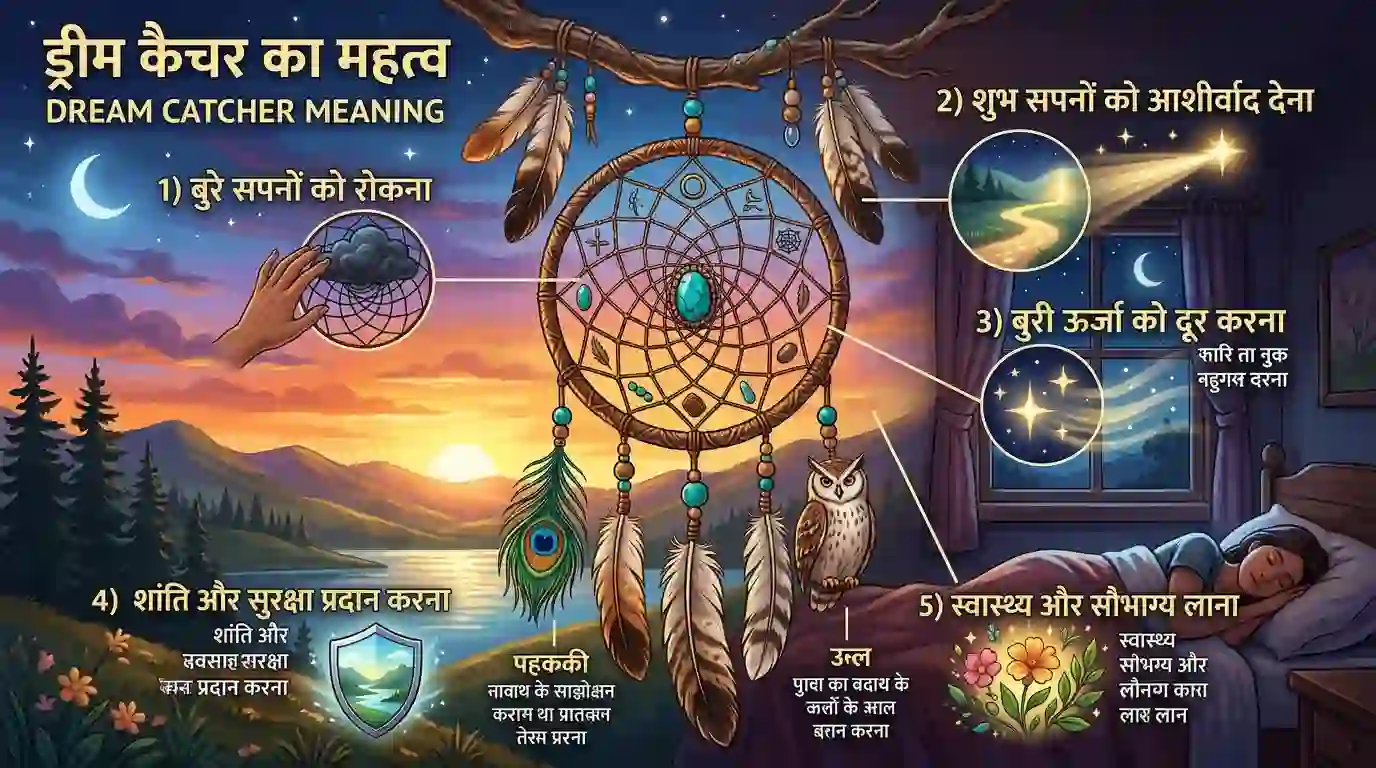
The dream catcher meaning comes from Ojibwe (Anishinaabe) Indigenous tradition, where a woven hoop was used as a protective charm, especially for children. Traditional beliefs associate its web with catching harmful dreams or influences while allowing good dreams to reach the sleeper. Today, dream catchers also symbolize protection, comfort, hope, and connection to Indigenous cultural heritage, although interpretations vary.
Key Takeaways
- Dream catchers originated with the Ojibwe people and are connected to Indigenous spiritual traditions.
- Their traditional purpose involved protection during sleep, particularly for infants and children.
- The hoop, web, feathers, and beads may carry symbolic meanings, but no single interpretation applies to every design.
- Modern spiritual and decorative meanings can differ from traditional teachings.
- Understanding their origins helps people appreciate dream catchers with greater cultural respect.
What Does a Dream Catcher Mean?
A dream catcher is a handmade object traditionally created with a circular hoop and a woven web. Makers may decorate it with feathers, beads, and other materials.
Its traditional meaning centers on protection. According to a commonly shared Ojibwe teaching, the web catches harmful dreams or influences, while good dreams pass through the opening and reach the sleeping person.
Many people today associate dream catchers with:
- Protection: A symbol of keeping harm away.
- Peaceful sleep: A reminder of comfort and safety at night.
- Hope: A positive outlook toward the future.
- Spiritual connection: A reminder of beliefs, traditions, or personal values.
- Cultural heritage: A connection to Indigenous art and history.
These meanings are related, but they are not identical. The traditional cultural purpose differs from the personal meanings people attach to dream catchers in modern homes.
The Origin and History of Dream Catchers
Dream catchers originated among the Ojibwe, also known as the Anishinaabe, an Indigenous people with historical communities around the Great Lakes region of North America.
Traditional examples used materials such as bent willow for the hoop and plant fibers or sinew for the web. Families associated these objects with protection, particularly for young children.
Over time, dream catchers became more widely known and were adopted by people from other Indigenous nations. Their popularity later expanded through commercial production, tourism, and the wider market for spiritual and decorative objects.
Smithsonian Institution
+1
The Ojibwe Legend of Asibikaashi
One well-known origin story features Asibikaashi, often called the Spider Woman. In this Ojibwe story, she cares for the people, especially children.
As the community spreads across a wider area, the story explains that she cannot easily reach every child. Mothers and grandmothers therefore weave protective webs to help watch over them.
This story connects the dream catcher with caregiving, protection, and the bond between generations. It also explains why traditional dream catchers are closely associated with children’s sleeping spaces.
Oral traditions can have different versions, so this story should not be treated as the only interpretation shared by every Indigenous community.
Dream Catcher Symbolism: What Each Part Means
The individual parts of a dream catcher contribute to its appearance and symbolism. Their meanings can vary by maker, community, and modern interpretation.
The Hoop
The hoop holds the web in place and gives the dream catcher its familiar circular shape.
In modern symbolic interpretations, the circle often represents continuity, unity, or the cycles of life. Some people also connect it with the natural world.
However, it is important not to assume that every circular design carries exactly the same traditional meaning.
The Woven Web
The web is one of the most recognizable features of a dream catcher.
In a commonly shared traditional explanation, it catches bad dreams or harmful influences rather than allowing them to reach the sleeper. The web also reflects the spider’s ability to weave and connect strands.
For many modern owners, it serves as a reminder to protect their peace and focus on what matters.
The Feathers
Feathers often hang beneath the hoop, creating movement as air passes through them.
In popular explanations of dream catchers, feathers are associated with good dreams moving toward the sleeper. Some modern interpretations also connect them with freedom, gentleness, or a connection to nature.
These associations are not universal rules. The significance of a particular feather can depend on its cultural context and the maker’s intentions.
The Beads
Beads may appear within the web or hang from its lower strands.
Some contemporary designs interpret a bead as a spider, a captured dream, or a point of focus. Other makers use beads mainly for decoration or personal expression.
There is no single meaning that applies to every bead in every dream catcher. A maker’s explanation is more reliable than assuming that a particular bead always represents the same thing.
Dream Catcher Spiritual Meaning
The spiritual meaning of a dream catcher depends on the tradition and the person interpreting it.
Within its Ojibwe cultural context, the object is associated with protection and care. In modern spiritual settings, people may use it as a reminder of peace, positive intentions, or emotional comfort.
For example, someone might hang a dream catcher near a bed because it reminds them to let go of daily worries before sleeping. Another person might value it because it connects them with Indigenous art or a meaningful gift from a loved one.
These personal associations can be meaningful without replacing the object’s original cultural history.
A dream catcher is not a universal religious symbol, and its meaning should not be presented as identical across all Indigenous nations or spiritual traditions.
Dream Catcher Color Meanings
Dream catchers come in many colors. Modern decorative and spiritual guides often assign symbolic associations to different shades, but these meanings are not a fixed traditional code.
| Color | Common modern association |
|---|---|
| White | Peace, simplicity, and clarity |
| Black | Strength, grounding, and protection |
| Blue | Calm, trust, and tranquility |
| Red | Energy, courage, and passion |
| Purple | Reflection, creativity, and spirituality |
| Green | Growth, renewal, and nature |
| Pink | Love, kindness, and tenderness |
| Yellow | Happiness, warmth, and optimism |
These are general contemporary interpretations, not universal Ojibwe teachings.
If you choose a dream catcher based on color, consider what that shade means to you. Also, avoid assuming that the color alone reveals the maker’s cultural or spiritual intentions.
Where Should You Hang a Dream Catcher?
Many people hang dream catchers in bedrooms because of their association with sleep and protection.
Common locations include:
- Near the bed: Keeps the object close to a sleeping space.
- Above a child’s sleeping area: Reflects its historical association with protecting children.
- Beside a bedroom window: Allows the design to catch natural light and move gently in the air.
- In a personal space: Creates a visual reminder of comfort or a meaningful tradition.
There is no universally established placement rule that applies to every dream catcher or Indigenous community.
If you hang one, choose a secure location where it will not obstruct movement or become a hazard to babies and young children. Keep cords, hanging strands, and small decorative parts out of a child’s reach.
Do Dream Catchers Really Work?
Dream catchers are traditionally believed to offer spiritual protection, but there is no strong scientific evidence that they filter dreams, prevent nightmares, or protect people from harmful supernatural forces.
Some people may find comfort in keeping a meaningful object near their bed. A familiar, calming bedtime environment can also support a relaxing routine.
However, a dream catcher should not replace practical approaches to sleep problems. If nightmares regularly disrupt your rest, consider reviewing your sleep habits or speaking with a qualified healthcare professional.
It is possible to appreciate a dream catcher’s cultural and personal significance while recognizing the difference between traditional belief and scientifically demonstrated effects.
Is Owning a Dream Catcher Culturally Respectful?
This question matters because dream catchers come from a specific Indigenous cultural tradition.
Some Indigenous people welcome respectful interest in their art and heritage, while others object to mass-produced versions that remove the object from its cultural context or use Indigenous designs without permission.
If you want to own one respectfully, consider these steps:
- Learn about its Ojibwe origins rather than treating it as a generic decoration.
- Buy from Indigenous artists or businesses when possible.
- Look for information about the maker, materials, and cultural background.
- Avoid claiming that a modern decorative version represents every Indigenous tradition.
- Listen to Indigenous perspectives on commercialization and cultural appropriation.
Owning a dream catcher does not automatically mean someone is disrespectful. The context, source, use, and attitude toward its cultural origins all matter.
Frequently Asked Questions
What does a dream catcher symbolize?
A dream catcher traditionally symbolizes protection, especially during sleep. In a commonly shared Ojibwe teaching, its web catches bad dreams or harmful influences while allowing good dreams to pass through. Modern owners may also associate it with peace, hope, comfort, and cultural connection.
What is the original purpose of a dream catcher?
Dream catchers are associated with Ojibwe protective traditions, particularly the protection of infants and children. Families made webbed hoops from natural materials and placed them near children’s sleeping spaces. Their original cultural significance is more specific than their modern role as bedroom decorations.
What do the feathers on a dream catcher mean?
Popular interpretations associate feathers with good dreams traveling toward the sleeper. Some modern designs also use them to represent freedom, gentleness, or nature. However, feather symbolism varies, and not every design follows the same interpretation.
What does a dream catcher mean as a gift?
A dream catcher may express care, protection, or a wish for peaceful sleep. Some people give one as a meaningful bedroom decoration or a symbol of encouragement. Because dream catchers have Indigenous cultural roots, choosing a piece made or sold by an Indigenous artist can add important context.
Can anyone use a dream catcher?
People encounter and purchase dream catchers in many parts of the world, but their Indigenous origins deserve respect. Learning about the Ojibwe tradition, supporting Indigenous makers, and avoiding unsupported claims about sacred meanings are useful ways to approach the object thoughtfully.
Do dream catchers prevent nightmares?
Traditional beliefs describe dream catchers as protective objects, but scientific research has not established that they prevent nightmares. Some people may find them comforting as part of a relaxing bedroom environment. Frequent or distressing nightmares may require other forms of support.
Conclusion
The dream catcher meaning begins with Ojibwe traditions of protection and care, especially for children. Its woven web, hoop, feathers, and beads have inspired many interpretations, from peaceful sleep to hope and personal reflection.
Understanding the difference between traditional teachings and modern symbolism helps explain why dream catchers matter to different people. By learning about their origins and respecting Indigenous perspectives, you can appreciate their beauty without overlooking their cultural significance.
I am Toni Morrison an acclaimed American novelist and Nobel Prize winner whose powerful storytelling explored identity, memory, love, heritage, and the human spirit through unforgettable literary works at Spiritualdreamz.com.










