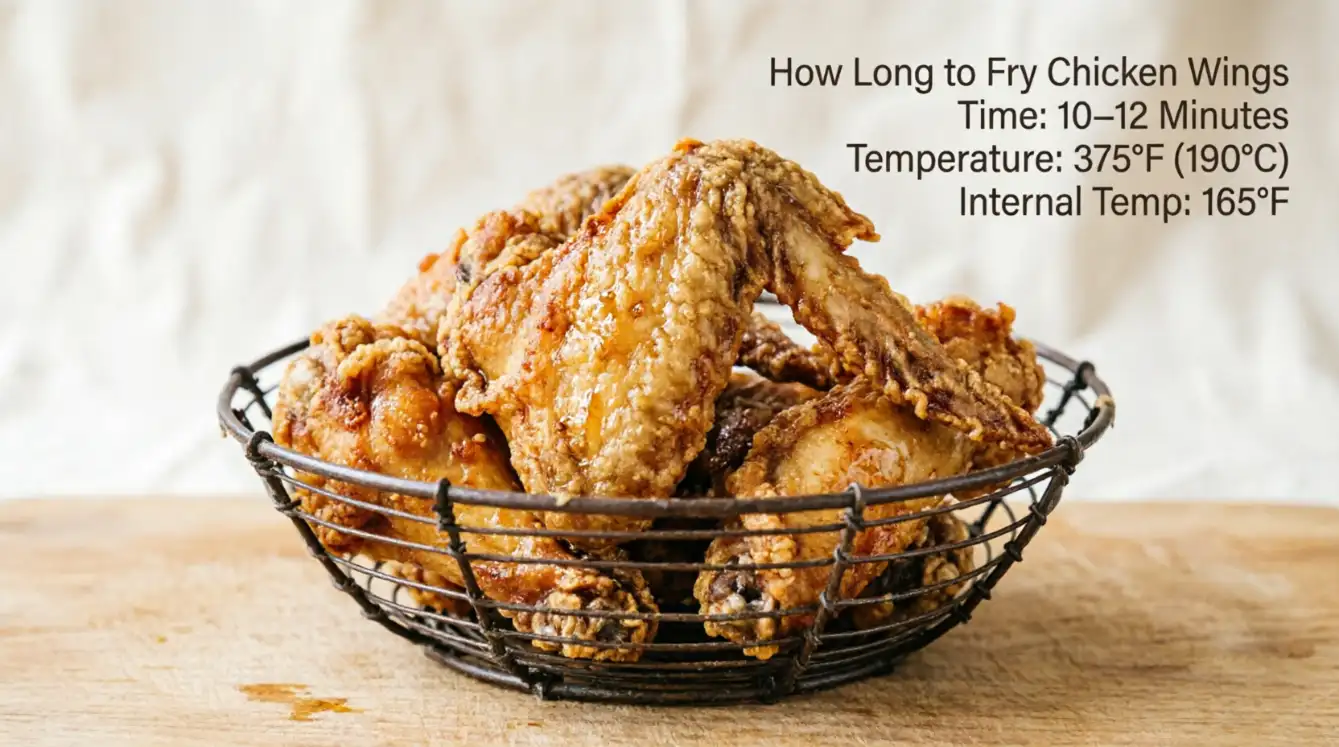
Chicken wings typically take 8–12 minutes to fry in oil heated to 350–375°F. Smaller wings may cook faster, while larger wings need more time. For crispy, golden skin, maintain a steady oil temperature and fry the wings in small batches. Always use a food thermometer to make sure the thickest part reaches 165°F before serving.
Key Takeaways
- Fry chicken wings for approximately 8–12 minutes at 350–375°F.
- Use a deep-frying thermometer to maintain the correct oil temperature.
- Make sure the internal temperature reaches 165°F for food safety.
- Pat fresh or thawed wings dry before frying for crispier skin.
- Avoid overcrowding the fryer because it lowers the oil temperature.
How Long Does It Take to Fry Chicken Wings?
The time needed to fry chicken wings depends on their size, oil temperature, and whether they are fresh or frozen. Most thawed chicken wings take around 8–12 minutes when deep-fried at 350–375°F.
Smaller wings may cook in less time, while large, meaty wings may need a few extra minutes. The goal is to achieve crispy, golden-brown skin and fully cooked meat.
Here is a general cooking-time guide for thawed chicken wings.
Frying Time at Different Temperatures
| Oil temperature | Approximate frying time |
| 325°F | 12–15 minutes |
| 350°F | 10–12 minutes |
| 375°F | 8–10 minutes |
| 400°F | Not recommended for routine frying; skin may brown too quickly |
Times are estimates for average-sized, thawed wings. Actual cooking time varies with size and fryer performance.
For most home cooks, 350°F is a practical starting temperature. It allows the chicken to cook without browning the outside too quickly. If you prefer extra-crispy skin, 375°F can work, provided you monitor the wings closely.
The most important thing is to check the internal temperature rather than relying on cooking time alone.
How to Fry Chicken Wings Step by Step
You do not need complicated equipment to make crispy fried chicken wings at home. A heavy pot or deep fryer, cooking oil, and a thermometer are enough.
Step 1: Prepare the chicken wings
If your wings are whole, separate them into drumettes and wings if desired. Remove any excess moisture with paper towels. Dry skin helps the wings brown and become crisp.
Season the wings with salt, black pepper, garlic powder, or your favorite seasoning.
Step 2: Heat the cooking oil
Pour enough neutral, high-smoke-point oil into a heavy pot or deep fryer to submerge the wings safely, without exceeding the equipment’s fill line.
Heat the oil to 350°F. Canola, peanut, and vegetable oils are common choices for deep-frying.
Use a thermometer to check the temperature before adding the chicken.
Step 3: Add the chicken wings
Carefully lower a small batch of wings into the hot oil using tongs or a frying basket. Do not drop them from a height because hot oil can splash.
Avoid adding too many wings at once. Overcrowding lowers the oil temperature and can make the wings greasy.
Step 4: Fry until golden brown
Fry the wings for approximately 8–12 minutes, depending on their size and the oil temperature.
Turn them occasionally if necessary to promote even browning. Keep the oil near 350°F and adjust the heat as needed.
Step 5: Check the internal temperature
Use an instant-read food thermometer to check the thickest part of a wing without touching the bone. The chicken must reach at least 165°F.
If it has not reached that temperature, continue frying and check again.
Step 6: Drain and serve
Remove the cooked wings with a slotted spoon or frying basket. Place them on a wire rack or paper towels to drain excess oil.
Allow excess oil to drain, then toss the wings in your favorite buffalo, barbecue, or garlic Parmesan sauce. Serve while hot.
How to Know When Chicken Wings Are Done
Golden-brown skin is a useful visual sign, but it does not guarantee that the chicken is fully cooked. The outside can brown before the meat near the bone reaches a safe temperature.
The USDA recommends cooking all poultry, including chicken wings, to an internal temperature of 165°F.
Use an instant-read thermometer to check the thickest part of the meat, avoiding the bone. If the temperature is below 165°F, continue cooking.
Other signs of properly fried wings include:
- Crispy, golden-brown skin.
- Meat that is no longer raw or translucent.
- Juices that are not visibly bloody.
However, these visual signs should not replace a thermometer. Temperature is the reliable way to check safety.
Tips for Crispy Fried Chicken Wings
Making crispy chicken wings at home is easier when you control moisture, oil temperature, and cooking batches.
- Dry the wings thoroughly: Pat them dry with paper towels before seasoning. Excess moisture can cause splattering and interfere with browning.
- Maintain a steady oil temperature: Keep the oil around 350°F. Check it between batches and allow it to recover if it drops.
- Fry in small batches: Give each wing enough room to cook evenly. Crowded wings can become soggy.
- Use the right oil: Canola, peanut, and vegetable oils are suitable choices because they tolerate typical deep-frying temperatures.
- Drain on a wire rack: A rack allows air to circulate around the wings and helps preserve their crisp texture.
- Add sauce just before serving: Tossing wings in sauce too early can soften their crispy coating.
For extra-crispy skin, let the wings rest briefly on a rack after frying before tossing them in sauce.
Common Mistakes to Avoid When Frying Wings
Even when you follow the recommended cooking time, a few mistakes can affect the results.
Using oil that is too hot: Very hot oil can brown the outside before the inside is cooked. Keep the temperature under control and check the wings before removing them.
Adding wet or icy chicken: Water and ice can cause dangerous oil splashes. Always thaw chicken safely and dry it thoroughly before frying.
Overcrowding the pot: Too many wings can lower the oil temperature, resulting in longer cooking times and less crispy skin.
Relying only on color: A wing may look golden but still be undercooked inside. Always check its internal temperature.
Leaving cooked wings on paper towels for too long: A wire rack is useful for longer draining because it prevents the underside from sitting in trapped steam.
Frequently Asked Questions
How long do you fry chicken wings at 350°F?
Chicken wings generally take 10–12 minutes to fry at 350°F. Smaller wings may finish sooner, while larger wings can take longer. Fry them in small batches to maintain the oil temperature, and use a food thermometer to confirm that the thickest part reaches 165°F.
How long do you fry chicken wings at 375°F?
At 375°F, chicken wings usually take 8–10 minutes to fry, depending on their size. Keep a close eye on them because the higher temperature can brown the skin quickly. Check the internal temperature before removing them from the oil.
Can you fry frozen chicken wings?
It is safer and easier to fry chicken wings after thawing them completely. Frozen wings can cause hot oil to splatter and may cook unevenly. Thaw them in the refrigerator, pat them dry, and then fry them. If using a product specifically designed to be cooked from frozen, follow its package instructions.
Should you cover chicken wings while frying?
No. Chicken wings are generally fried uncovered. Covering the pot traps steam, which can make the skin less crispy. It can also cause condensation to drip into the hot oil. Use a suitable splatter screen if needed, while keeping the pot uncovered.
Why are my fried chicken wings soggy?
Fried wings can become soggy if the oil temperature is too low, the pot is overcrowded, or the wings are too wet before frying. Excess sauce can also soften the skin. Dry the wings before cooking, fry in small batches, and drain them on a wire rack.
Conclusion
Chicken wings typically take 8–12 minutes to fry at 350–375°F. The exact time depends on their size and the temperature of the oil. For crispy, golden wings, dry the chicken before frying, avoid overcrowding the pot, and maintain a steady temperature.
Most importantly, check that the internal temperature reaches 165°F before serving. With these simple steps, you can prepare delicious, crispy fried chicken wings at home.

I am James Patterson an American writer sharing thoughtful insights on dreams, spirituality, personal growth, and everyday life through practical guides and meaningful stories for SpiritualDreamz.com readers everywhere with warmth.










