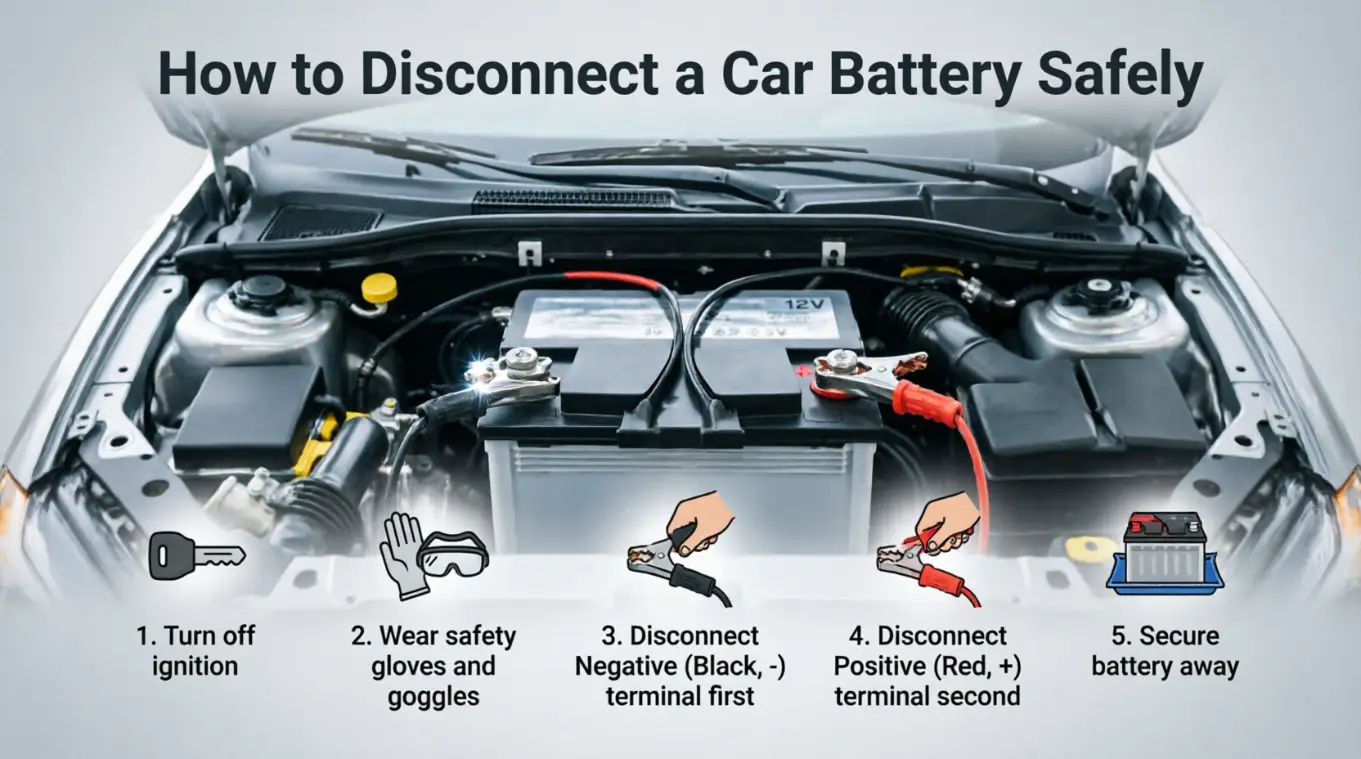
To disconnect a car battery safely, turn off the engine, remove the key, and locate the battery. Use a suitable wrench to loosen the negative (-) terminal first, then remove the positive (+) terminal. Keep both cables away from the battery posts. Wear safety glasses and gloves, and never allow a metal tool to touch both terminals.
Key Takeaways
- Always disconnect the negative terminal first to reduce the risk of electrical shorts.
- Turn off the engine and all electrical accessories before starting.
- Use the correct wrench and wear protective gloves and safety glasses.
- Keep disconnected cables away from the battery terminals.
- Reconnect the battery in reverse order: positive first, negative last.
Disconnecting a car battery is a useful skill for vehicle owners. You may need to do it when replacing an old battery, cleaning corroded terminals, performing electrical repairs, or preparing your car for long-term storage.
The process is usually straightforward, but following the correct steps is important. A small mistake can cause sparks, damage electrical components, or result in injury. This guide explains how to disconnect a car battery safely, even if you have never done it before.
Tools You Need to Disconnect a Car Battery
Before starting, gather the necessary tools. Having everything ready makes the process easier and helps prevent unnecessary handling of the battery.
| Tool | Purpose |
| Wrench or socket set | Loosens the battery terminal clamps |
| Safety glasses | Protects your eyes from sparks and battery acid |
| Protective gloves | Protects your hands while handling the battery |
| Battery terminal brush | Cleans corrosion if necessary |
| Memory saver (optional) | Helps preserve certain electronic settings |
A 10 mm wrench is common for battery terminals, but the correct size depends on your vehicle. Check your owner’s manual before beginning.
Safety Precautions Before Disconnecting Your Battery
Car batteries store electrical energy and may release flammable hydrogen gas. Taking a few precautions can reduce the risk of accidents.
Turn Off Your Vehicle
Park your car on a flat, stable surface and engage the parking brake. Turn off the engine, headlights, air conditioning, and other electrical accessories.
Remove the ignition key and keep it away from the vehicle. If your car uses a keyless ignition, make sure the vehicle is completely off and keep the key fob away.
Never disconnect the battery while the engine is running. Doing so can damage the vehicle’s electrical system.
Wear Protective Equipment
Wear safety glasses and protective gloves before touching the battery. Avoid wearing metal jewelry, such as rings, bracelets, or watches, because accidental contact with battery terminals can create a dangerous electrical short.
Work in a well-ventilated area, away from cigarettes, flames, and other sources of sparks.
If the battery is cracked, leaking, swollen, or unusually hot, do not attempt to disconnect it yourself. Seek professional assistance.
Identify the Battery Terminals
Open the hood and locate the battery. Most vehicles have it in the engine compartment, although some place it in the trunk or under a seat.
Identify the two terminals:
- Positive (+): Usually marked with a plus sign and often covered by a red cap.
- Negative (-): Usually marked with a minus sign and often connected to a black cable.
Always confirm the markings instead of relying only on cable color.
How to Disconnect a Car Battery Step by Step
Follow these steps to disconnect a conventional 12-volt car battery safely.
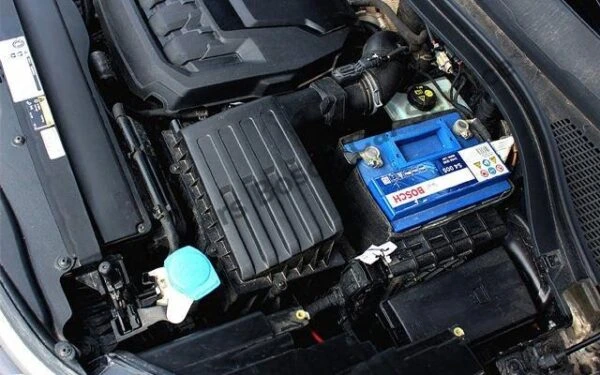
Step 1: Locate the Battery
Open the hood and find the battery. If you cannot see it, check your owner’s manual for its location. Make sure the vehicle is switched off before touching anything.
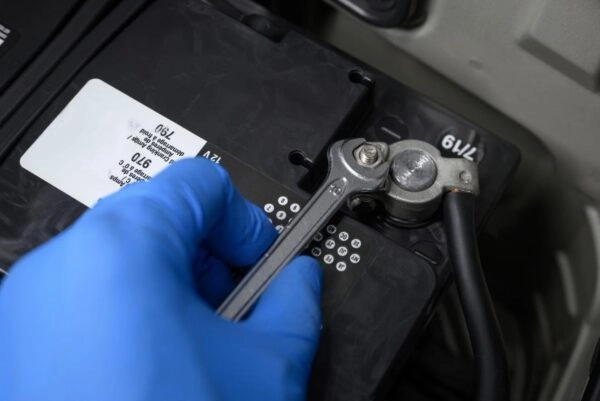
Step 2: Disconnect the Negative Terminal
Find the negative (-) terminal. Use the correct wrench to loosen its clamp nut. Lift the cable off the battery post and move it aside so it cannot accidentally touch the terminal again.

Step 3: Disconnect the Positive Terminal
Locate the positive (+) terminal, usually marked with a red cap. Loosen its clamp and carefully lift the cable off the post. Keep it away from the battery and exposed metal parts.
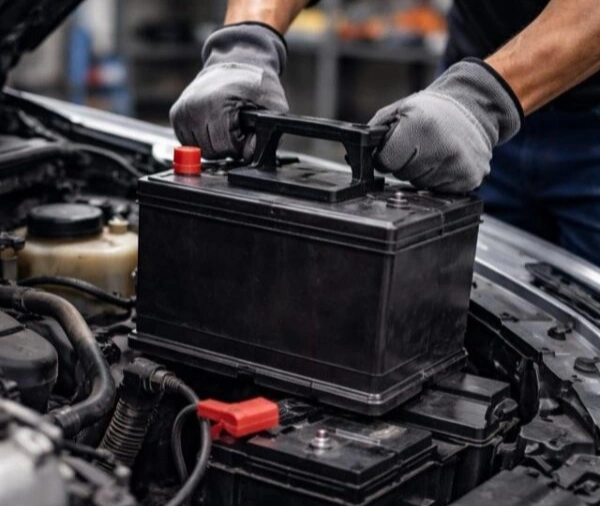
Step 4: Remove the Battery if Necessary
If you are replacing the battery, remove the hold-down bracket or retaining clamp. Carefully lift the battery straight out using its handle, if provided. Car batteries can be heavy, so lift with care.
If you only need to disconnect the battery for a repair, you usually do not need to remove it from the vehicle. Keep the disconnected cables secured away from the terminals while you work.
Why Should You Disconnect the Negative Terminal First?
Disconnecting the negative terminal first is an important safety rule.
In most conventional vehicles, the negative battery terminal is connected to the vehicle’s metal body, which acts as the electrical ground.
When you remove the negative cable first, you break this ground connection. This reduces the risk of creating a short circuit if your wrench accidentally touches the vehicle’s metal body while removing the positive cable.
If you remove the positive cable first, a wrench that touches both the positive terminal and grounded metal can create a high-current short. This may cause sparks, burns, or damage to the battery and vehicle.
Remember the correct order
Disconnect
Negative (-) first
Positive (+) second
Reconnect
Positive (+) first
Negative (-) last
How to Reconnect a Car Battery
If you have finished your repair or battery replacement, reconnect the battery in the reverse order.
- Make sure the battery is correctly positioned and secured in its tray.
- Attach the positive cable to the positive (+) terminal.
- Tighten the positive terminal clamp securely without overtightening it.
- Attach the negative cable to the negative (-) terminal.
- Tighten the negative clamp and check that both connections are secure.
- Start the vehicle and check that the electrical systems work properly.
If you installed a new battery, check your owner’s manual to see if your vehicle requires battery registration or a charging-system reset.
Some vehicles may also need their clock, radio presets, or other electronic settings restored.
Common Mistakes to Avoid
Avoid these common mistakes when disconnecting a car battery:
- Removing the positive terminal first: Always disconnect the negative terminal first on a conventional negative-ground vehicle.
- Working with the engine running: Switch off the engine and all electrical accessories before beginning.
- Letting the cables touch the terminals: Secure each disconnected cable so it cannot accidentally reconnect.
- Using the wrong tools: Use a correctly sized wrench to avoid damaging the terminal clamps.
- Using excessive force: If a clamp is stuck, do not force it or pry against the battery casing. Use an appropriate terminal puller or seek professional help.
- Ignoring vehicle-specific instructions: Some modern vehicles have special battery-disconnection procedures, auxiliary batteries, or electronic systems that require additional steps.
Frequently Asked Questions
Can You Disconnect a Car Battery While the Engine Is Running?
No. Always turn off the engine before disconnecting the battery. Removing a battery cable while the engine is running can cause voltage fluctuations and damage sensitive electrical components. It can also create sparks and expose you to unnecessary risks.
Do You Need to Disconnect Both Battery Terminals?
If you are performing work that requires the battery to be isolated, disconnect both terminals, starting with the negative one. For some minor maintenance tasks, disconnecting only the negative terminal may be sufficient. Follow the vehicle manufacturer’s instructions for the specific repair.
Will Disconnecting the Battery Reset the Car’s Computer?
Disconnecting the battery can reset some vehicle settings, including the clock, radio presets, and certain learned engine settings. The exact effects depend on the vehicle. Some modern cars may require electronic systems to be relearned or reset after reconnecting the battery.
How Long Can You Leave a Car Battery Disconnected?
A car battery can generally remain disconnected for weeks or months if it is in good condition and properly secured. However, disconnecting it does not prevent the battery from naturally losing charge. For long-term storage, follow the manufacturer’s recommendations and check the battery periodically.
Can You Disconnect a Car Battery Without Tools?
Most conventional car batteries require a wrench or socket to loosen their terminal clamps. Some vehicles have quick-release battery connectors that can be operated by hand. Never force a connector or use an unsuitable metal object to remove a battery cable.
Final Thoughts
Learning how to disconnect a car battery is a useful part of basic vehicle maintenance. The most important rule is to remove the negative terminal first and the positive terminal second. Always switch off the vehicle, wear protective equipment, and keep the disconnected cables away from the battery posts.
When reconnecting, reverse the order by attaching the positive terminal first and the negative terminal last. If your vehicle has a special battery system or you are unsure about the procedure, consult the owner’s manual or a qualified mechanic.
Following the correct steps can help you complete routine battery maintenance while reducing the risk of electrical damage and injury.

I am Toni Morrison an acclaimed American novelist and Nobel Prize winner whose powerful storytelling explored identity, memory, love, heritage, and the human spirit through unforgettable literary works at Spiritualdreamz.com.










