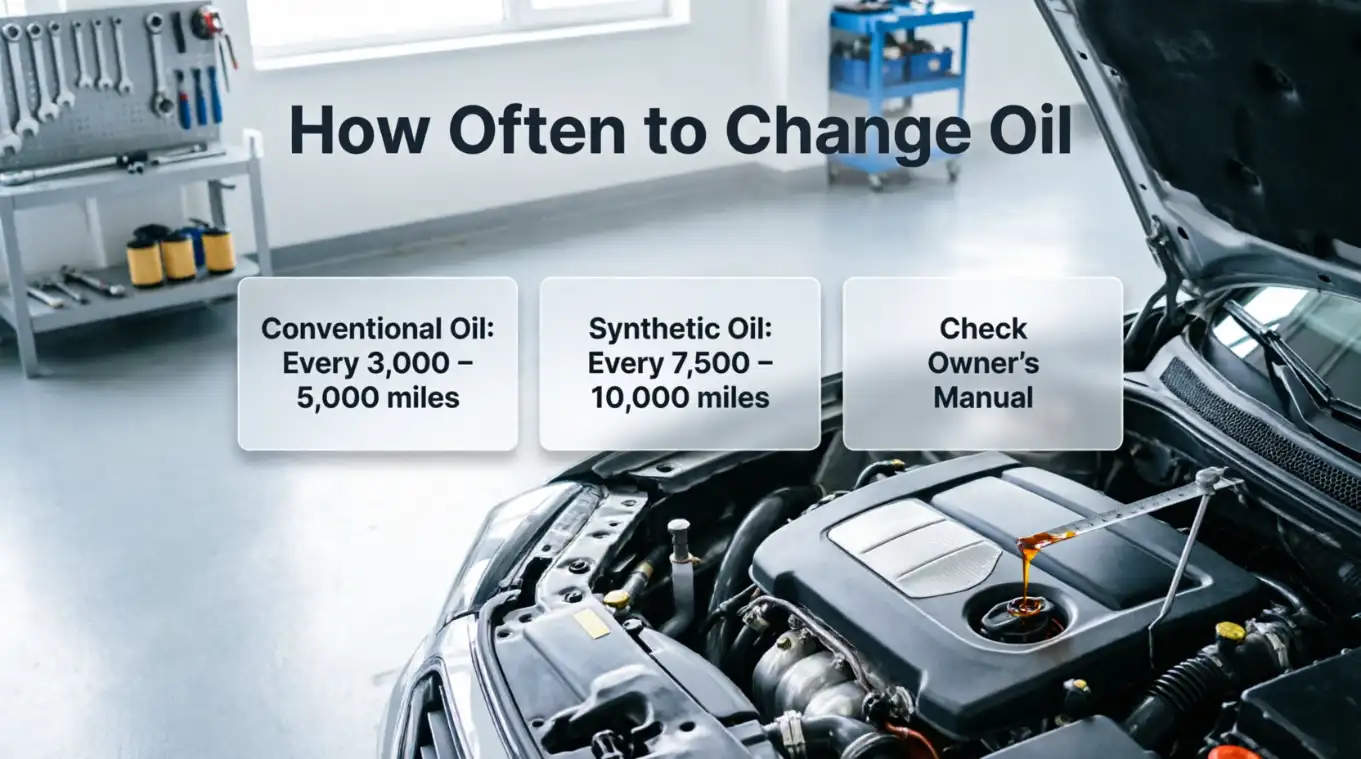
Most modern cars need an oil change every 5,000 to 7,500 miles, although some vehicles can go 10,000 miles or longer between services. The correct interval depends on your vehicle, oil type, and driving conditions. Always follow your owner’s manual or oil-life monitoring system, and change the oil at least as often as the manufacturer recommends.
Key Takeaways
- Most modern cars need an oil change every 5,000 to 7,500 miles, but the exact interval varies.
- Full synthetic oil can last longer than conventional oil when approved for your vehicle.
- Frequent short trips, heavy traffic, extreme temperatures, and towing may require more frequent oil changes.
- Follow your owner’s manual or oil-life monitoring system instead of relying on the old 3,000-mile rule.
- Check your oil level regularly, even if your car does not need an oil change yet.
How Often Should You Change Your Oil?
How often you should change your oil depends on your car’s make, model, engine, and driving habits. For many modern vehicles, the recommended interval is between 5,000 and 7,500 miles. Some vehicles using approved synthetic oil can go 10,000 miles or more.
However, mileage is not the only factor. Your car may need an oil change sooner if you regularly drive in heavy traffic, take short trips, tow heavy loads, or experience extreme temperatures.
The easiest way to find the correct interval is to check your owner’s manual. Newer vehicles may also have an oil-life monitoring system that tells you when service is due.
Avoid following a general mileage recommendation if your manufacturer specifies a different schedule for your particular engine.
Oil Change Intervals by Oil Type
The type of engine oil you use can affect how often you need an oil change. However, you should always use oil that meets your vehicle manufacturer’s requirements.
| Oil type | General interval |
| Conventional oil | Around 5,000 miles |
| Synthetic blend oil | Around 6,000 miles |
| Full synthetic oil | 7,500–10,000 miles or more |
These are general examples, not universal service intervals. Always check your owner’s manual.
Conventional Oil
Conventional oil is made from refined crude oil. It is often less expensive than synthetic oil and may be suitable for older vehicles or engines designed to use it.
Many vehicles using conventional oil have relatively short service intervals. However, some modern conventional-oil engines can safely go longer between changes.
Check the manufacturer’s recommended mileage and time limit rather than assuming every conventional-oil vehicle needs service at 3,000 miles.
Synthetic Blend Oil
Synthetic blend oil combines conventional and synthetic base oils. It offers a middle ground between conventional and full synthetic oil in terms of price and performance.
Some vehicles can use synthetic blends, but the recommended interval depends on the engine and oil specifications. Do not automatically extend your oil change schedule simply because you use a blend.
Full Synthetic Oil
Full synthetic oil is engineered to provide consistent performance across a range of temperatures. It can offer improved resistance to oxidation and help protect engines under demanding conditions.
Some vehicles using full synthetic oil have recommended intervals of 7,500 to 10,000 miles or longer. However, synthetic oil does not automatically mean you can wait 10,000 miles.
Always use the viscosity and performance specification required by your vehicle’s manufacturer.
What Factors Affect Oil Change Frequency?
Your oil change schedule depends on more than the type of oil in your engine. Several factors can affect how quickly the oil needs replacement.
Driving Habits
Your driving habits have a major effect on engine oil. Frequent short trips may prevent the engine from reaching its normal operating temperature. This can allow moisture and fuel to accumulate in the oil.
Driving in heavy stop-and-go traffic can also place additional demands on your engine. Towing trailers, carrying heavy loads, and spending long periods idling may require a shorter oil change interval.
If your car is regularly used under these conditions, check the severe-service maintenance schedule in your owner’s manual.
Weather and Temperature
Very hot and very cold weather can affect engine oil performance.
Extreme heat can speed up oil oxidation, while cold temperatures can make oil thicker and affect how easily it flows during startup.
If you regularly drive in extreme temperatures or dusty environments, your vehicle may require more frequent oil changes. Follow the maintenance schedule designed for those conditions.
Vehicle Age and Engine Type
Older vehicles may have different maintenance needs from newer cars. An older engine with high mileage may consume oil or develop leaks, so checking the oil level is particularly important.
Turbocharged engines and certain performance engines may also have specific oil requirements and maintenance intervals.
Always check the service recommendations for your exact engine rather than relying only on the vehicle’s age.
How to Know When Your Car Needs an Oil Change
Your vehicle may give you several indications that an oil change is due. However, some signs require additional inspection rather than simply replacing the oil.
Look for these common indicators:
- Oil-life warning: Your dashboard displays an oil-change reminder or a low oil-life percentage.
- Maintenance schedule: Your vehicle has reached the mileage or time interval specified in the owner’s manual.
- Unusual engine noise: New ticking or knocking sounds may indicate a lubrication problem or another mechanical issue.
- Low oil level: The dipstick shows that the oil level is below the recommended range. You may need to add oil, investigate a leak, or arrange service.
Check the oil level regularly using the method described in your owner’s manual. If the oil-pressure warning light comes on, stop safely and turn off the engine as soon as possible. Continuing to drive with low oil pressure can cause serious engine damage.
Do not rely on oil color alone. Engine oil can turn dark during normal use, and dark oil does not automatically mean it needs replacement.
Is the 3,000-Mile Oil Change Rule Still Necessary?
For many modern vehicles, the traditional 3,000-mile oil change rule is outdated.
Older engines and conventional oils often required more frequent changes. However, improvements in engine design and oil technology have allowed many newer vehicles to use longer service intervals.
Some modern cars recommend oil changes every 5,000 to 7,500 miles, while others can go 10,000 miles or longer under suitable conditions. Certain vehicles also use electronic oil-life monitoring systems to calculate when maintenance is needed.
Changing your oil too frequently can increase maintenance costs without providing additional benefits when the manufacturer’s schedule is followed. On the other hand, waiting too long can reduce lubrication and increase engine wear.
The right approach is to follow your vehicle’s maintenance schedule rather than automatically changing oil every 3,000 miles.
What Happens If You Don’t Change Your Oil?
Engine oil lubricates moving parts, helps manage heat, and carries contaminants away from important engine components. Over time, oil can lose some of its protective properties and accumulate contaminants.
If you consistently delay oil changes beyond the recommended interval, several problems may develop:
- Increased engine wear: Old or degraded oil may provide less effective protection between moving parts.
- Sludge buildup: Contaminants and degraded oil can contribute to deposits inside the engine.
- Reduced engine performance: Poor lubrication can affect how smoothly the engine operates.
- Expensive repairs: Severe oil-related damage can lead to major engine repairs or even engine failure.
Missing a scheduled oil change does not automatically mean your engine is damaged. However, if you have exceeded the recommended interval, arrange an oil change as soon as practical and have the engine checked if you notice warning lights, unusual noises, or leaks.
How Often Should You Change Oil If You Rarely Drive?
If you rarely drive your car, you may not reach the recommended mileage interval for several months. However, engine oil can still age over time.
Many manufacturers specify both a mileage limit and a time limit. For example, your owner’s manual may require an oil change every 5,000 miles or six months, whichever comes first.
Some vehicles allow longer time intervals, such as 12 months. The correct limit depends on the vehicle and its operating conditions.
If your car spends long periods parked, check the oil level regularly and follow the time-based maintenance schedule. Frequent short trips can also make oil changes necessary sooner, even when annual mileage is low.
Frequently Asked Questions
Can I go 10,000 miles between oil changes?
Yes, some modern vehicles can safely go 10,000 miles between oil changes when using the correct oil and following the manufacturer’s maintenance schedule. However, this interval is not suitable for every car. Check your owner’s manual or oil-life monitoring system before extending the interval.
Should I change my oil every six months?
Not necessarily. Some vehicles require an oil change every six months, while others allow 12 months or another time interval. If your manufacturer specifies a six-month limit, follow it even if you have driven relatively few miles.
Does dark engine oil mean it needs changing?
No. Engine oil naturally becomes darker as it circulates through the engine and collects contaminants. Color alone is not a reliable way to determine if oil needs replacement. Follow the recommended mileage, time interval, or oil-life monitor instead.
Should I change the oil filter every time?
In most cases, yes. Replacing the oil filter during every oil change helps remove contaminants and maintain proper oil filtration. Check your owner’s manual for the correct filter and replacement schedule.
Final Thoughts
Knowing how often to change oil helps protect your engine and avoid unnecessary maintenance costs. Many modern cars need an oil change every 5,000 to 7,500 miles, while some can go longer with approved synthetic oil.
However, the correct interval depends on your vehicle, driving conditions, and oil specifications. Check your owner’s manual, pay attention to your oil-life monitoring system, and inspect your oil level regularly. Following the manufacturer’s schedule is the simplest way to keep your engine properly maintained.

I am James Patterson an American writer sharing thoughtful insights on dreams, spirituality, personal growth, and everyday life through practical guides and meaningful stories for SpiritualDreamz.com readers everywhere with warmth.










