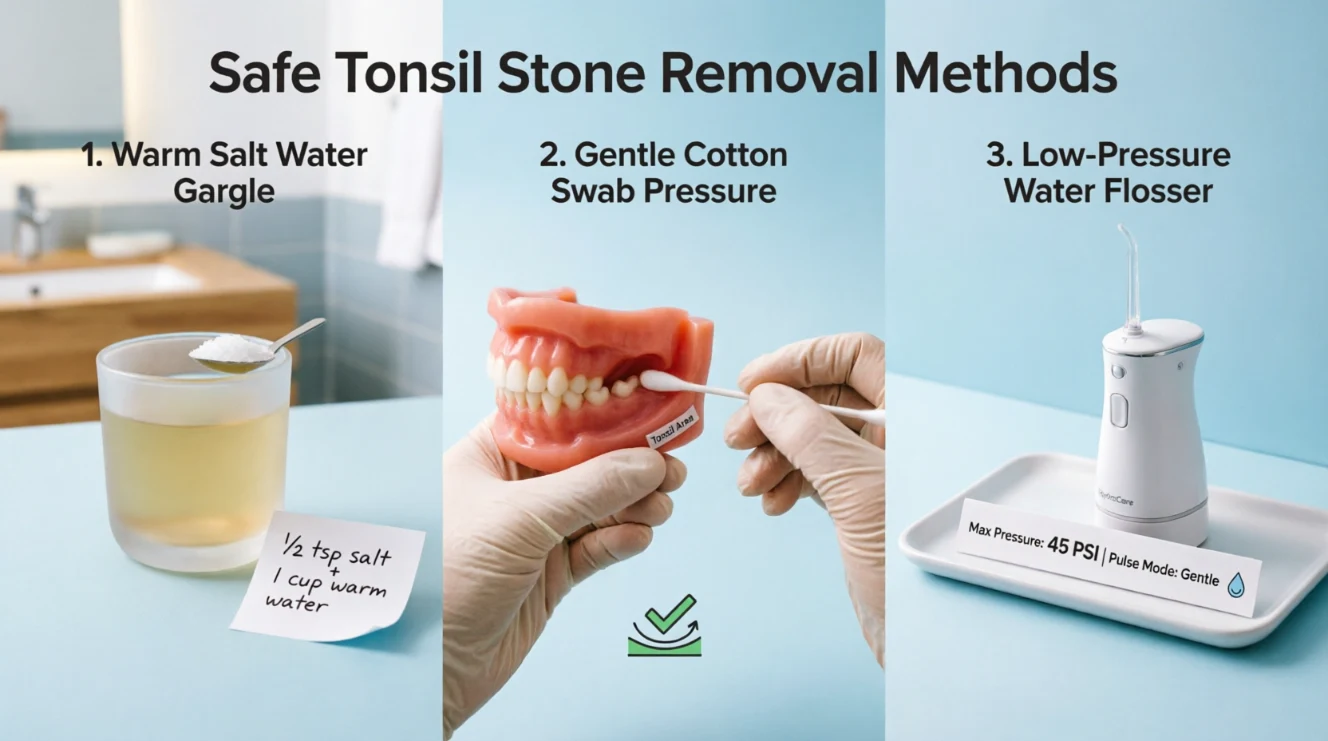
To get tonsil stones out, start with gentle methods such as gargling warm salt water, coughing, or using a cotton swab to carefully dislodge a visible stone. A low-pressure water irrigator may also help. Avoid digging or scraping the tonsils because irritated tissue can bleed. Many small tonsil stones fall out on their own.
Key Takeaways
- Small tonsil stones often come out on their own.
- Warm saltwater gargling may help loosen stones and reduce bacteria.
- A visible stone can sometimes be gently pushed out with a cotton swab.
- Avoid forceful scraping or poking because tonsil tissue can become irritated or bleed.
- Frequent, painful, large, or difficult-to-remove stones may require evaluation by a doctor or ENT specialist.
What Are Tonsil Stones?
Tonsil stones, also called tonsilloliths, are small, hardened pieces of material that develop inside the tiny folds and pockets of the tonsils. Food particles, mucus, bacteria, and other debris can become trapped in these spaces and eventually harden or calcify.
They may appear as small white or yellow lumps on the tonsils. Some are easy to see, while others develop deeper inside the tonsillar crypts and cannot be seen easily.
For many people, tonsil stones cause no serious problems. However, they can contribute to bad breath, bad taste, sore throat, coughing, ear discomfort, or the feeling that something is stuck in the throat.
If you have a small visible stone and otherwise feel well, you can often try gentle home care.
How to Get Tonsil Stones Out at Home
1. Gargle With Warm Salt Water
Warm saltwater is one of the simplest options to try first.
Mix a small amount of salt into warm water and gently gargle. The goal is not to forcefully rinse the throat but to allow the water to reach the back of the mouth and throat comfortably.
Gargling may help loosen debris around the tonsils and can also help reduce bacteria and unpleasant breath. Medical sources commonly recommend saltwater gargling as a conservative approach for tonsil stones.
If gargling causes pain, choking, or significant irritation, stop rather than forcing it.
2. Try a Gentle Cough
If a tonsil stone is already loose, a gentle or moderately forceful cough may help dislodge it.
You do not need to repeatedly cough hard. Excessive coughing can irritate your throat without necessarily removing the stone.
This method works best when the stone is already close to the surface. If it does not come out easily, move on rather than repeatedly irritating the tonsil. Cleveland Clinic lists coughing as one possible way to dislodge tonsil stones.
3. Use a Cotton Swab Carefully
If you can clearly see a small stone near the surface of the tonsil, a clean cotton swab may help.
Wash your hands first and use good lighting. Gently press around the stone rather than digging directly into the tonsil. If the stone does not move easily, stop.
The important word is gently. Tonsils contain delicate tissue, and aggressive pressure can cause irritation or bleeding.
Mayo Clinic and Cleveland Clinic both describe gentle cotton-swab removal as an option for accessible tonsil stones.
4. Consider a Low-Pressure Water Irrigator
A water irrigator may help rinse debris from the crypts of the tonsils.
If you use one, choose a low-pressure setting and avoid directing a powerful stream into the tonsil. The purpose is to gently flush the area rather than blast the tissue.
Mayo Clinic specifically notes that a low-pressure water irrigator can be used to rinse tonsil crypts.
If the area becomes painful or starts bleeding, stop.
What Not to Do When Removing Tonsil Stones
Trying to remove a tonsil stone does not mean you should dig into the tonsil until you find it.
Avoid using sharp objects, fingernails, or excessive force. Do not repeatedly scrape the tonsil when a stone will not come out.
This is especially important when the stone is deep inside a tonsillar crypt. You may not be able to safely reach it yourself.
A small amount of irritation may occur during manipulation, but persistent bleeding, significant pain, or worsening swelling is a reason to stop home attempts and seek medical advice. Mayo Clinic recommends professional evaluation when tonsils are very red, bleed easily, or are associated with persistent soreness or ear pain.
Why Do Tonsil Stones Keep Coming Back?
Removing one tonsil stone does not necessarily stop new ones from forming.
Tonsil stones develop when material becomes trapped inside the natural folds, or crypts, of the tonsils. People with deeper or enlarged crypts can be more prone to developing them. A history of repeated tonsil infections can also contribute to the development of these pockets.
This is why someone may remove a stone today and notice another one weeks or months later.
Recurring stones do not automatically mean that something serious is wrong. However, frequent or troublesome stones can be discussed with a healthcare professional, particularly if they cause persistent symptoms.
How to Prevent Tonsil Stones
You cannot always prevent tonsil stones, but good oral and throat hygiene may reduce the amount of debris and bacteria available to collect around the tonsils.
Helpful habits include:
- Brush your teeth regularly.
- Clean your tongue gently.
- Floss every day.
- Stay adequately hydrated.
- Gargle with salt water after eating if it is comfortable for you.
- Maintain regular dental care.
- Avoid smoking, which can contribute to oral and throat problems.
Mayo Clinic recommends brushing the teeth and tongue, flossing, using an alcohol-free mouthwash, and maintaining good oral hygiene to help reduce factors associated with tonsil stones.
Good hygiene can reduce the material available to collect in tonsillar crypts, but it cannot guarantee that stones will never return.
When Should You See a Doctor or ENT?
You may want to see a healthcare professional if home methods do not work, the stones repeatedly return, or they are causing ongoing discomfort.
An ENT (ear, nose and throat) specialist can examine the tonsils and determine if the problem is actually tonsil stones or another condition.
Professional evaluation is particularly important if you have:
- Persistent or significant throat pain
- Tonsils that are very red or swollen
- Tonsils that bleed easily
- Significant difficulty swallowing
- Persistent ear pain associated with tonsil symptoms
- Recurrent or troublesome tonsil stones
- Symptoms of an infection, such as fever and worsening throat pain
- Difficulty breathing
Tonsil stones are generally harmless, but symptoms such as substantial swelling, breathing difficulty, or severe swallowing problems can point to a condition that needs prompt medical attention.
For people with persistent problems, a clinician can discuss treatment options. In selected cases, procedures or tonsillectomy may be considered, but surgery is not necessary for most small, uncomplicated tonsil stones.
Frequently Asked Questions
Can tonsil stones come out on their own?
Yes. Many tonsil stones eventually loosen and fall out without treatment. If a stone is small and not causing symptoms, you may not need to remove it. Gargling with warm salt water may help encourage loose debris to clear.
Is it safe to remove tonsil stones with a cotton swab?
A visible, accessible stone may sometimes be gently removed with a clean cotton swab. The key is to avoid forceful pressure or digging into the tonsil. If the stone does not move easily, leave it alone and consider professional removal.
Can you swallow a tonsil stone?
Yes. Accidentally swallowing a tonsil stone is generally not considered harmful. Tonsil stones can loosen and be swallowed without a person realizing it.
Does salt water get rid of tonsil stones?
Warm saltwater may help loosen or dislodge small stones and can help reduce bacteria in the mouth and throat. However, it may not remove a stone that is firmly lodged deep inside a tonsillar crypt.
Do tonsil stones need to be removed?
Not necessarily. Small tonsil stones often cause no significant problems and may fall out naturally. Removal becomes more useful when stones cause persistent bad breath, irritation, discomfort, or other bothersome symptoms.
What is the safest way to get tonsil stones out?
For a small, visible stone, start with gentle methods such as warm saltwater gargling. If necessary, a clean cotton swab or low-pressure water irrigator may help. Avoid sharp objects and aggressive scraping. If the stone is deep, painful, repeatedly returns, or causes bleeding, have a healthcare professional examine it.
Final Thoughts
Learning how to get tonsil stones out does not have to mean aggressively poking at your tonsils. Start with gentle options such as warm saltwater, a careful cough, or cautious removal of a clearly visible stone with a cotton swab. A low-pressure water irrigator may also help.
The most important thing is to protect the tonsil tissue. If a stone does not come out easily, do not keep digging for it. Many stones eventually fall out on their own, while persistent or troublesome cases can be evaluated by a doctor or ENT specialist.

I am Toni Morrison an acclaimed American novelist and Nobel Prize winner whose powerful storytelling explored identity, memory, love, heritage, and the human spirit through unforgettable literary works at Spiritualdreamz.com.










