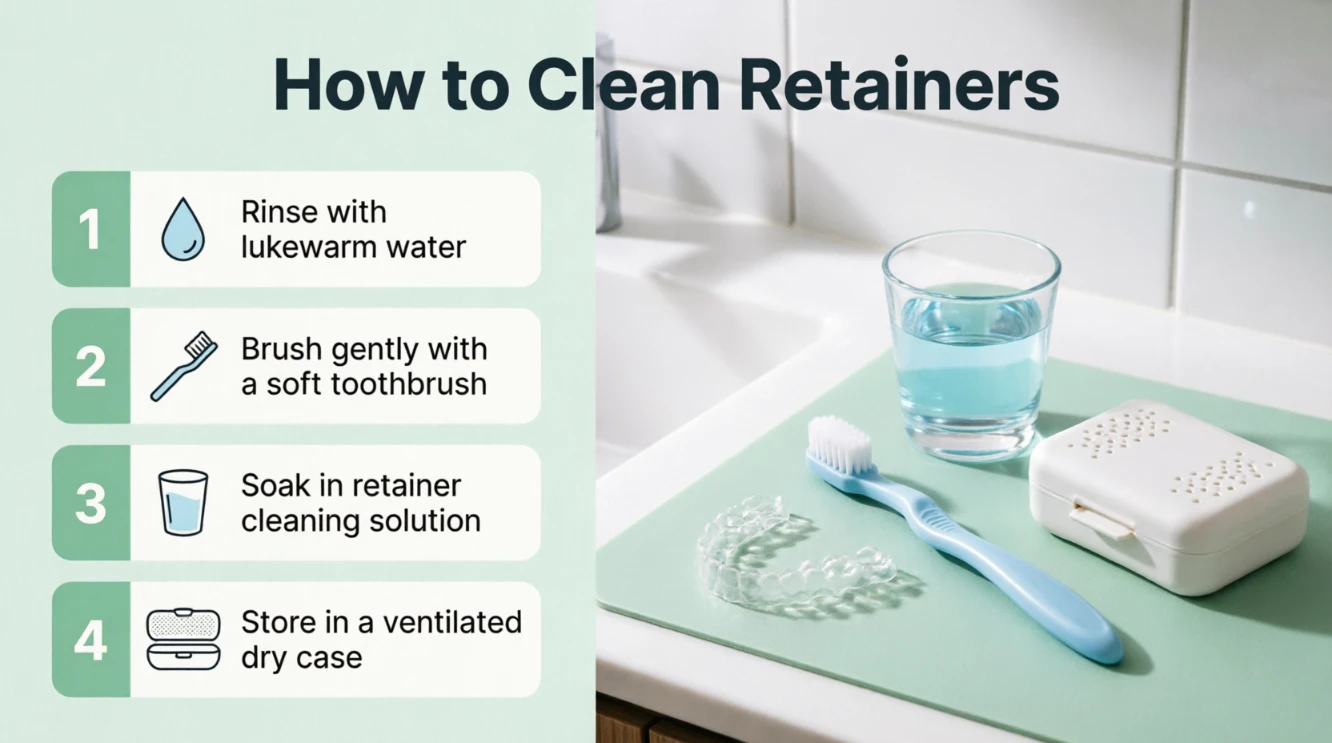
To clean retainers, rinse them with cool or lukewarm water and gently brush them with a soft toothbrush and mild liquid soap. Clean removable retainers daily and use an orthodontist-approved cleaning solution when needed. Avoid hot water, abrasive toothpaste, and harsh chemicals that can damage your retainer.
Key Takeaways
- Clean removable retainers every day to remove plaque, saliva, and food particles.
- Use a soft toothbrush and mild, non-abrasive liquid soap.
- Use a suitable retainer-cleaning tablet for occasional deep cleaning.
- Avoid hot water, bleach, and abrasive toothpaste.
- Store your retainer in a clean, protective case when not wearing it.
Why Is It Important to Clean Your Retainer?
Your retainer helps keep your teeth in their correct positions after braces or other orthodontic treatment. However, wearing it every day means saliva, bacteria, plaque, and food particles can collect on its surface.
Without regular cleaning, your retainer may develop an unpleasant smell, become cloudy, or accumulate stubborn deposits. These problems can also make your appliance uncomfortable to wear.
Cleaning your retainer regularly helps maintain good oral hygiene and keeps the appliance in better condition. It also makes your daily dental care routine easier.
The cleaning method depends on the type of retainer you have. Clear plastic, Hawley, and permanent retainers all require slightly different care.
How to Clean Retainers Step by Step
Cleaning a removable retainer at home is simple. You only need a few basic supplies and a few minutes each day.
Step 1: Wash Your Hands
Wash your hands with soap and water before handling your retainer. This helps prevent dirt and germs from transferring from your hands to the appliance.
Step 2: Rinse Your Retainer
Remove your retainer and rinse it under cool or lukewarm running water. Rinsing immediately helps remove loose debris and saliva before they dry on the surface.
Never use hot or boiling water because heat can distort the plastic and affect the fit.
Step 3: Brush It Gently
Apply a small amount of mild liquid soap to a soft-bristled toothbrush reserved for your retainer. Gently brush the inside and outside surfaces.
Pay attention to grooves and areas where plaque collects. Avoid hard scrubbing, especially on clear plastic retainers.
Step 4: Rinse and Store It Properly
Rinse your retainer thoroughly to remove all soap. Check that no visible debris remains.
If you are not wearing it, place it in a clean, ventilated retainer case. Keep it away from heat and pets.
This routine is suitable for many removable retainers. However, always follow your orthodontist’s instructions if they differ.
How to Clean Different Types of Retainers
Not all retainers are made from the same materials. Knowing which type you have helps you choose a safe cleaning method.
Clear Plastic Retainers
Clear retainers, also called Essix retainers, fit over your teeth and are usually made from thin, transparent plastic.
To clean them:
- Rinse them with cool or lukewarm water after removing them.
- Gently brush them with a soft toothbrush and mild liquid soap.
- Clean the grooves carefully to remove trapped debris.
- Rinse thoroughly before putting them back in your mouth.
- Use a compatible retainer-cleaning tablet when deeper cleaning is needed.
Avoid abrasive toothpaste and hot water because they can scratch or distort the plastic. Scratches can also make a clear retainer look cloudy.
Hawley Retainers
Hawley retainers have a hard acrylic base and metal wires. They are removable and often have a wire that runs across the front teeth.
To clean a Hawley retainer, rinse it with cool water and gently brush the acrylic and metal components. Pay attention to the areas around the wires, where food particles and plaque may collect.
Use a cleaning product specifically approved for your retainer’s materials if you need to soak it. Avoid bending the wires while brushing or handling the appliance.
Permanent Retainers
Permanent retainers are bonded to the back of your teeth, so you cannot remove them for cleaning. They need a slightly different approach.
Brush your teeth twice daily with fluoride toothpaste, paying attention to the wire and the areas around the bonding material. Use floss threaders or an appropriate interdental cleaning tool to clean between your teeth and beneath the wire.
A water flosser may also help remove food debris around the wire. However, it should supplement, not replace, brushing and flossing.
How to Deep Clean Retainers
Daily brushing is usually enough for routine cleaning, but some retainers develop stubborn deposits or odors. An occasional deeper clean may help.
Follow these steps:
- Choose a retainer-cleaning tablet or solution that is compatible with your appliance.
- Fill a clean container with the amount of cool or lukewarm water specified on the product.
- Add the cleaning tablet according to its instructions.
- Place your removable retainer in the solution for the recommended time.
- Remove it and rinse it thoroughly with clean water.
- Gently brush away any remaining debris.
Do not leave your retainer soaking longer than the product instructions allow. Some cleaners are unsuitable for certain materials, so check with your orthodontist if you are unsure.
Deep cleaning supplements your daily brushing routine; it does not replace it.
How to Remove Yellow Stains and Bad Smells
Yellow stains and unpleasant odors are common concerns for retainer wearers. They may result from plaque, food residue, colored drinks, or deposits that build up over time.
Try the following steps:
- Clean it daily: Brush gently with mild liquid soap to remove surface buildup.
- Use a suitable cleaning tablet: Follow the manufacturer’s instructions for occasional soaking.
- Clean your retainer case: Wash the case regularly and allow it to dry.
- Avoid colored drinks while wearing clear retainers: Coffee, tea, and other colored beverages may contribute to staining.
If yellow discoloration or a bad smell remains after proper cleaning, contact your orthodontist. Hardened tartar and some stains may require professional attention. Do not scrape the retainer with sharp objects, as this can damage it.
What Should You Avoid When Cleaning Retainers?
Using the wrong cleaning products can damage your retainer, even if your intention is to make it cleaner.
| Avoid | Why? |
| Hot or boiling water | Can warp plastic and affect the fit. |
| Abrasive toothpaste | May scratch clear plastic. |
| Bleach | Can damage materials and leave harmful residues. |
| Alcohol-based mouthwash | May be unsuitable for some retainer materials. |
| Hard-bristled brushes | Can scratch surfaces or damage components. |
| Sharp objects | Can scratch or break the appliance. |
Do not put your retainer in a dishwasher or use heat to sterilize it. If you are considering a household cleaning product, ask your orthodontist if it is safe for your specific appliance.
How Often Should You Clean Your Retainer?
You should clean your removable retainer every day, preferably whenever you remove it. A quick rinse helps remove loose debris, while gentle brushing removes plaque and buildup.
Here is a simple cleaning schedule:
| Cleaning task | Recommended frequency |
| Rinse with water | Every time you remove it |
| Gently brush | Daily |
| Deep clean with a suitable tablet | As directed by your orthodontist or product |
| Clean the storage case | Regularly |
| Check for cracks or damage | Frequently |
If you wear your retainer overnight, clean it in the morning when you take it out. Keeping a consistent routine makes it easier to prevent buildup.
Frequently Asked Questions
Can I clean my retainer with toothpaste?
It is generally better to avoid ordinary toothpaste, especially on clear plastic retainers. Many toothpastes contain abrasive ingredients that can scratch the surface and make it appear cloudy. Use a soft toothbrush with mild liquid soap or a cleaner approved for your retainer instead.
Can I use baking soda to clean my retainer?
Baking soda may help remove some surface buildup, but it is not suitable for every retainer. It can be abrasive, and prolonged soaking may affect some materials. Ask your orthodontist before using it, particularly if your retainer contains metal.
Can I soak my retainer in mouthwash?
Avoid soaking your retainer in mouthwash unless your orthodontist confirms that it is safe for your appliance. Some mouthwashes contain alcohol or dyes that may damage or discolor certain retainers. A compatible retainer-cleaning solution is a more suitable option.
What should I do if my retainer is still dirty?
If gentle brushing and an appropriate cleaning solution do not remove the buildup, do not scrape it with sharp tools or scrub aggressively. Your orthodontist can check if the deposits are hardened tartar and determine if professional cleaning or replacement is needed.
Can I wear my retainer if it smells bad?
If your retainer smells bad, clean it thoroughly before wearing it again. Persistent odors may indicate remaining buildup or a problem with the appliance. If the smell continues despite proper cleaning, ask your orthodontist to examine it.
Conclusion
Learninghow to clean retainers properly helps keep your appliance fresh and protects it from unnecessary damage. The key is to rinse it regularly, brush it gently with mild soap, and use a compatible cleaning solution when deeper cleaning is needed.
Avoid hot water, abrasive toothpaste, and harsh chemicals. Remember to clean your retainer case and inspect your appliance regularly. If your retainer remains stained, smells unpleasant, or no longer fits correctly, contact your orthodontist for advice.
With a simple daily routine and proper care, you can keep your retainer clean and help maintain your smile.

I am Stephen King an American writer exploring spirituality, dreams, mindfulness, and personal growth. Through SpiritualDreamz.com, he shares thoughtful insights to inspire reflection, clarity, and meaningful everyday living.










