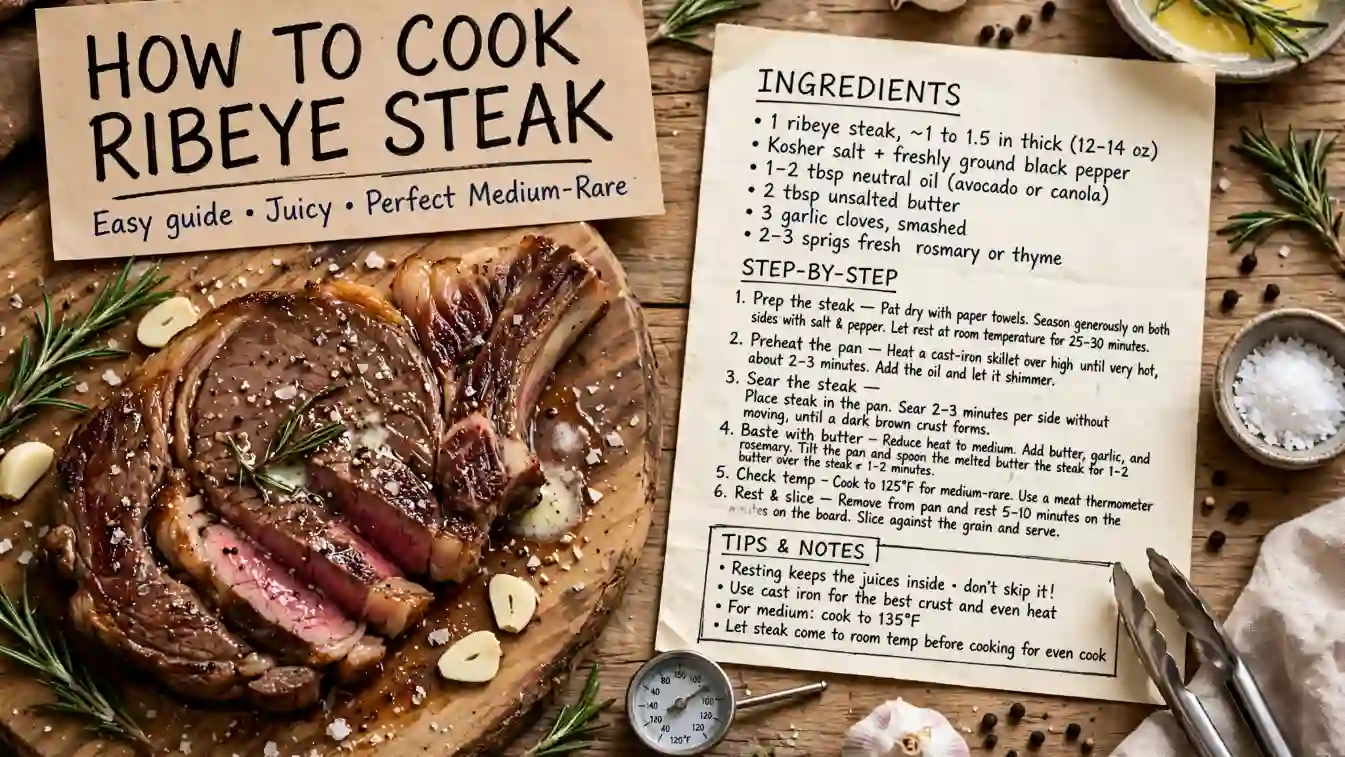
To cook ribeye steak, pat it dry, season generously with salt and pepper, and sear it in a very hot cast-iron skillet with a little high-heat oil. Cook until the desired internal temperature is reached, then rest for at least 3 minutes before serving. For a thick ribeye, use a reverse-sear method for more even cooking.
Key Takeaways
- A hot cast-iron skillet is one of the easiest ways to get a deep, browned crust.
- Steak thickness matters more than a fixed cooking time.
- Use an instant-read thermometer instead of relying only on minutes per side.
- Butter, garlic, and herbs can add flavor during the final stage.
- Rest the steak before slicing so it stays juicy.
- USDA recommends that beef steaks reach at least 145°F internally, followed by at least a 3-minute rest.
What Makes Ribeye Steak Different?
Ribeye is prized for its rich flavor, tenderness, and generous marbling. It comes from the rib section of the beef carcass and contains both tender muscle and flavorful intramuscular fat. That marbling makes ribeye particularly well suited to high-heat cooking because the fat can render as the steak develops its crust.
When shopping, look for a steak with fairly even white flecks and seams of fat throughout the meat. A steak around 1 to 1½ inches thick is a practical size for pan-searing. Very thick steaks benefit from a different approach, such as reverse searing.
You can use either boneless or bone-in ribeye. Bone-in steaks generally take longer because of their shape and thickness, so cooking by internal temperature is especially useful.
What You Need to Cook Ribeye Steak
For a simple ribeye, you do not need a long ingredient list.
Ingredients:
- 1 ribeye steak, about 1 to 1½ inches thick
- Kosher salt
- Freshly ground black pepper
- 1–2 teaspoons neutral, high-heat oil
- 1–2 tablespoons butter
- 1–2 garlic cloves, lightly crushed
- Fresh rosemary or thyme, optional
Equipment:
- Heavy cast-iron skillet
- Tongs
- Instant-read meat thermometer
- Paper towels
- Cutting board
The thermometer is particularly important because cooking time changes with thickness, starting temperature, pan temperature, and the steak itself.
How to Cook Ribeye Steak in a Cast-Iron Skillet
For a typical 1- to 1½-inch ribeye, pan-searing is a straightforward choice. Current cooking guides commonly recommend a very hot heavy skillet and cooking based on internal temperature rather than relying on an exact number of minutes.
1. Prepare the Steak
Take the ribeye from its packaging and pat both sides thoroughly dry with paper towels. Removing surface moisture helps the steak brown instead of steaming.
Season both sides generously with salt and freshly ground black pepper.
If you have time, you can salt the steak several hours ahead and leave it uncovered in the refrigerator. Before cooking, make sure the surface is dry.
2. Heat the Skillet
Place a cast-iron skillet over high heat and allow it to become very hot.
Add a small amount of a neutral, high-smoke-point oil immediately before adding the steak.
The steak should produce a strong sizzle as soon as it touches the pan. A properly heated pan is one of the most important factors in developing a dark, flavorful crust.
3. Sear the Steak
Place the ribeye in the skillet and let it cook until a deep brown crust develops.
For a 1- to 1½-inch steak, approximately 3–4 minutes per side is a useful starting point, but do not treat that timing as a guarantee. Thickness and heat can change the result considerably.
You can also turn the steak periodically rather than leaving it untouched for the entire cooking process. The key is to maintain enough heat for browning without burning the exterior.
If the steak has a thick fat edge, hold it upright with tongs for roughly 30–60 seconds to help render and brown the fat.
4. Add Butter and Aromatics
Once the steak has developed a strong crust, reduce the heat slightly and add butter, garlic, and rosemary or thyme.
Tilt the skillet carefully and spoon the melted butter over the steak for about 30–60 seconds.
Do not add the butter too early over extremely high heat. It can burn before the steak is finished.
5. Check the Internal Temperature
Insert an instant-read thermometer into the thickest part of the steak, avoiding the bone and large pockets of fat.
For home cooking, temperature is a much better guide than simply counting minutes because two steaks of the same weight can have different thicknesses.
For food safety, the USDA recommends cooking beef steaks to a minimum internal temperature of 145°F, measured with a food thermometer, followed by at least a 3-minute rest.
If you prefer your steak at a particular level of doneness, use the following chart as a cooking guide.
Ribeye Steak Temperature Chart
| Doneness | Approx. Final Temperature | Center |
| Rare | 120–125°F | Red |
| Medium-rare | 130–135°F | Warm red/pink |
| Medium | 140–145°F | Warm pink |
| Medium-well | 150–155°F | Slightly pink |
| Well-done | 160°F+ | Fully cooked |
These culinary doneness ranges are preferences rather than USDA food-safety recommendations. The USDA minimum for beef steaks is 145°F with a 3-minute rest.
6. Rest and Slice
Transfer the steak to a cutting board or plate and let it rest before cutting.
A short rest allows the temperature to stabilize and gives you a better eating experience. Many cooking guides recommend around 5–10 minutes for ribeye, while the USDA requires at least 3 minutes for its safety recommendation.
When ready to serve, slice against the grain if you are cutting the steak into pieces.
How Long to Cook Ribeye Steak
There is no single cooking time that works for every ribeye.
For a 1- to 1½-inch steak in a very hot skillet, about 3–4 minutes per side is a reasonable starting point for medium-rare, but the thermometer should make the final decision.
| Ribeye Thickness | Recommended Approach |
| Under 1 inch | Fast pan sear or grill |
| 1–1½ inches | Cast iron or grill |
| 1½–2½ inches | Reverse sear |
| Very thick bone-in | Reverse sear or indirect grill, then sear |
The thicker the steak, the more difficult it becomes to create a dark crust without overcooking the center. That is why reverse searing becomes particularly useful for thick cuts.
How to Grill Ribeye Steak
Grilling is another excellent option, especially when you want smoky flavor.
Preheat your grill and create a hot cooking zone. Pat the steak dry, season it, and lightly oil the surface if needed.
For a 1- to 1½-inch ribeye, medium-high grill heat may take roughly 5–6 minutes per side, but grill temperatures vary significantly.
Watch carefully for flare-ups because ribeye contains plenty of fat. If flames become aggressive, move the steak temporarily to a cooler area.
Use your thermometer to check the center before deciding if the steak is ready.
How to Cook a Thick Ribeye: Reverse Sear
A reverse sear is especially useful for steaks around 1½ inches or thicker.
Instead of starting with an extremely hot pan, cook the steak gently in a low oven until it approaches your desired internal temperature. Then finish it in an extremely hot skillet or grill to create the crust.
One current ribeye guide recommends a 250°F oven for the low-temperature stage, followed by a very hot sear.
The advantage is better control over the center. You can develop an attractive crust at the end without leaving the outside in intense heat for too long.
This method takes longer than a simple pan sear, but it is particularly useful for expensive, thick-cut ribeye.
Common Ribeye Cooking Mistakes
Starting with a wet steak:
Excess surface moisture makes browning harder. Pat the steak dry before seasoning and cooking.
Using a cold pan:
A lukewarm skillet will not create the same crust as a properly heated heavy pan.
Relying only on cooking time:
A 1-inch steak and a 2-inch steak need very different treatment. Use an instant-read thermometer.
Adding butter too early:
Butter can burn at very high temperatures. Add it after the initial sear.
Moving the steak constantly:
Frequent unnecessary movement can interfere with crust development. Give the steak enough contact time with the hot cooking surface.
Cutting immediately:
Rest the steak before slicing.
Ignoring the fat edge:
Ribeye’s fat is part of what makes it special. Briefly searing the fat edge can improve texture and flavor.
Frequently Asked Questions
What is the best way to cook a ribeye steak?
For a typical 1- to 1½-inch ribeye, a hot cast-iron skillet is one of the simplest methods. It provides direct contact with a hot surface, helping create a strong crust while the steak cooks quickly. For very thick ribeyes, reverse searing provides better control over the center.
How long do you cook a ribeye steak?
A 1- to 1½-inch ribeye may take roughly 3–4 minutes per side in a very hot cast-iron skillet, but the exact time varies. Use an instant-read thermometer rather than relying exclusively on the clock.
What temperature should ribeye steak be?
The USDA recommends that beef steaks reach at least 145°F internally, followed by a minimum 3-minute rest. Personal preferences for rare, medium-rare, or medium steaks can differ, but the USDA safety recommendation should be kept in mind.
Should you cook ribeye with butter or oil?
Use a high-heat oil for the initial sear because it handles high temperatures well. Butter can be added later for flavor and basting after the main crust has formed. Garlic and fresh herbs can also be added during this finishing stage.
Is ribeye better grilled or pan-seared?
Both methods work well. Pan-searing offers excellent control and makes it easy to build a browned crust indoors. Grilling adds a smoky, charred flavor. Choose the method based on the flavor and equipment you prefer.
Conclusion
Learning how to cook ribeye steak is mostly about controlling heat, moisture, thickness, and internal temperature. For an everyday 1- to 1½-inch steak, a hot cast-iron skillet, simple seasoning, and a short butter baste can produce an impressive result without complicated techniques.
For thicker steaks, reverse searing gives you more control over the center while still allowing you to finish with a deeply browned crust. Whatever method you choose, use a thermometer, avoid relying solely on cooking time, and let the steak rest before serving.
With those basics, a quality ribeye can become a simple steakhouse-style meal at home.

I am Toni Morrison an acclaimed American novelist and Nobel Prize winner whose powerful storytelling explored identity, memory, love, heritage, and the human spirit through unforgettable literary works at Spiritualdreamz.com.










