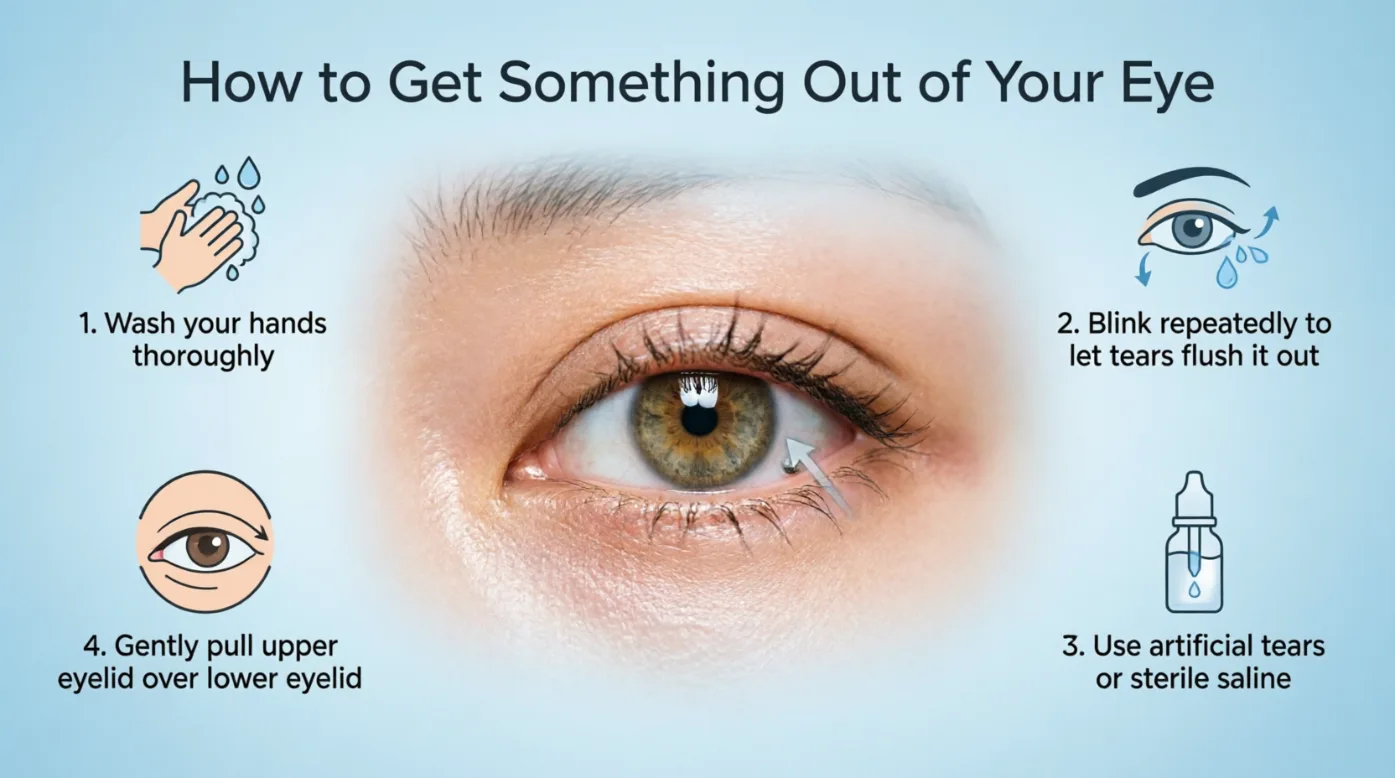
To get something out of your eye, first wash your hands and avoid rubbing the eye. Blink several times, then gently flush the eye with clean, lukewarm water or sterile saline. If the object does not come out easily, do not force it or use tweezers. Seek medical care if it is embedded, causes vision changes or severe pain, or cannot be removed safely.
Key Takeaways
- Do not rub your eye, because rubbing can scratch the cornea or push debris deeper.
- For small, loose particles, blinking and gentle rinsing are usually the safest first steps.
- Never try to remove an object that appears embedded or stuck in the eyeball.
- Metal fragments from grinding, hammering, or similar high-speed activity require prompt medical evaluation.
- Chemical exposure requires immediate and prolonged flushing, followed by medical advice when appropriate.
What to Do First When Something Gets in Your Eye
A tiny eyelash, speck of dust, piece of sand, or other small particle can make your eye water, blink repeatedly, or feel scratchy. In many cases, the eye can remove small loose objects naturally through blinking and tears.
The most important first step is to keep your hands away from your eyes until they are clean. Wash your hands with soap and water before examining or touching the area around your eye.
Wash Your Hands
Before checking your eye, wash your hands thoroughly. This reduces the chance of transferring dirt or germs to an already irritated eye.
Avoid immediately rubbing the eye, even if it feels very itchy or uncomfortable. Rubbing can cause additional irritation and may scratch the cornea.
Let Your Eye Blink and Tear Naturally
If the object is very small, try blinking several times. Your tears may move the particle toward the corner of the eye, where it can sometimes leave naturally.
If blinking does not work, move on to gentle rinsing rather than repeatedly rubbing or poking at the eye.
How to Get Something Out of Your Eye Step by Step
For a small, loose object, you can usually start with simple first aid at home.
1. Look for the Object
Stand in a well-lit area and look up, down, and from side to side. If someone is helping you, they can gently look at the eye without pressing on it.
A small particle may be sitting on the white part of the eye or underneath an eyelid. MedlinePlus notes that tiny foreign objects can sometimes become trapped beneath the upper or lower eyelid.
Do not press on the eyeball while trying to locate the object.
2. Flush Your Eye With Clean Water
If blinking does not remove the particle, gently rinse the eye with clean, lukewarm water.
You can use a gentle stream of water from a clean source or carefully pour water over the affected. Another option is sterile saline or an appropriate eye-rinsing solution.
Keep the eye open as much as is comfortable while the water flows across the surface. The goal is to allow the water to carry the loose particle away rather than trying to physically scrape it out.
Mayo Clinic recommends gently flushing a foreign object with clean, warm water and also describes using a clean drinking glass or gentle shower stream for irrigation.
3. Check Under the Lower Eyelid
If you still feel something in your eye, the object may be underneath an eyelid.
Look upward and gently pull the lower eyelid down to see if you can spot a loose particle. If it is visible and appears to be sitting on the eyelid rather than stuck in the eye, gentle rinsing is preferable to poking at it.
If you cannot remove it easily, stop trying and seek professional help.
4. What About an Eyelash or Tiny Particle?
An eyelash, speck of dust, or grain of sand often comes out with blinking and tears. If it remains, gentle irrigation is generally the safest approach.
Do not use fingernails, tweezers, pins, or other objects to dig around the eye. In particular, do not touch the colored part of the eye while attempting removal.
What Not to Do When Something Is in Your Eye
When something gets in your eye, your first instinct may be to rub it. Try not to.
Avoid these common mistakes:
- Do not rub the eye.
- Do not press hard on the eyeball.
- Do not use tweezers or sharp objects.
- Do not try to pull out an embedded object.
- Do not poke the colored part of the eye.
- Do not continue trying to remove an object that will not come out easily.
- Do not use random medicated eye drops unless a healthcare professional recommends them.
If the object is firmly stuck, repeated attempts at removal can cause additional injury.
When You Should Not Try to Remove It Yourself
Not every foreign object in the eye is appropriate for home removal.
If the Object Is Embedded
If something appears to be stuck in the eyeball or is protruding from the eye, leave it in place and seek immediate medical care. Do not pull it out.
An embedded foreign body can injure the cornea or deeper structures of the eye. Professional removal may require specialized equipment and examination.
If Metal May Have Entered the Eye at High Speed
Be especially careful if the incident happened while grinding, drilling, hammering, cutting, or working with metal.
A high-speed metal fragment can penetrate the eye even if the injury initially seems small. MedlinePlus specifically advises people not to attempt removal in this situation and to seek emergency medical care.
If Your Vision Changes
Blurred, double, or reduced vision after an eye injury is a warning sign. Do not keep experimenting with home remedies when your vision has changed.
Seek prompt medical evaluation instead.
What If a Chemical Gets in Your Eye?
Chemical exposure is different from an ordinary speck of dust or eyelash.
If a chemical gets into your eye, start flushing the eye immediately with plenty of water. Do not delay rinsing while trying to identify or remove the chemical.
Cleveland Clinic recommends continuous flushing for at least 15 minutes for chemical exposure and notes that stronger chemicals, including concentrated acids and certain drain-cleaning products, can cause serious eye injuries.
If you wear contact lenses, begin rinsing immediately. If the lens does not come out easily, continue flushing rather than delaying irrigation.
For a significant chemical exposure, seek urgent medical advice after starting the rinse.
Why Your Eye May Still Feel Like Something Is Stuck
Sometimes the object is gone, but your eye still feels as though something remains inside it.
This can happen because the foreign object may have irritated or scratched the surface of the eye. Mayo Clinic notes that the sensation of a foreign object can continue for a period after removal.
Minor irritation may improve as the surface heals. However, persistent pain, redness, sensitivity to light, blurred vision, or worsening symptoms should not be ignored.
When to See a Doctor or Get Emergency Eye Care
Get medical help if you cannot safely remove the object with gentle flushing.
You should also seek prompt or emergency care if you have:
- Vision loss or a significant change in vision
- Severe or persistent eye pain
- Significant redness
- Strong sensitivity to light
- An object embedded in or penetrating the eye
- A chemical exposure
- A high-speed metal or other projectile injury
- Bleeding or unusual discharge
- An eye injury that is not improving
If you are unsure if an object has penetrated the eye, do not press on the eye or attempt to remove it. Protect the eye from further pressure and get urgent medical attention.
Frequently Asked Questions
How do you get an eyelash out of your eye?
Start by blinking naturally and allowing your tears to move the eyelash. If it remains, gently rinse the eye with clean, lukewarm water or sterile saline. Avoid rubbing or using fingernails and tweezers. If you cannot remove the eyelash or the eye remains painful or your vision changes, seek medical advice.
Can you use water to get something out of your eye?
Yes. Clean, lukewarm water can be used to gently flush many small, loose foreign objects from the eye. A gentle flow is preferable to forceful water pressure. Do not use rinsing alone as a reason to delay emergency treatment for an embedded object, penetrating injury, or serious chemical exposure.
How long can your eye feel irritated after something is removed?
A small foreign object can leave the eye feeling scratchy or irritated even after it has been removed. This may happen if the surface of the eye was irritated or scratched. If pain, redness, light sensitivity, or blurred vision persists or worsens, contact an eye-care professional.
What if you cannot find the object?
The object may be underneath an eyelid, or it may already have been removed while your eye was tearing and blinking. Try gentle irrigation rather than repeatedly touching the eye. If the sensation continues, particularly with pain or vision changes, have your eye examined.
What if something is stuck in the colored part of the eye?
Do not try to remove it yourself. The colored part is the iris, and an object that appears attached to or embedded in the eye needs professional evaluation. Avoid rubbing or applying pressure and seek medical care.
Can I use tweezers to remove something from my eye?
No. Using tweezers or another sharp instrument around the eye can cause injury. Small loose particles should generally be removed with blinking or gentle irrigation. An embedded or difficult-to-remove object should be handled by an eye-care professional.
Conclusion
When learning how to get something out of your eye, start with the safest approach: wash your hands, avoid rubbing, blink naturally, and gently flush the eye with clean water or saline. Most tiny loose particles can be handled this way.
However, an embedded object, chemical exposure, high-speed metal fragment, significant pain, or vision change requires professional medical attention rather than repeated attempts at home removal. When in doubt, protecting your vision is more important than trying to remove the object yourself.

I am James Patterson an American writer sharing thoughtful insights on dreams, spirituality, personal growth, and everyday life through practical guides and meaningful stories for SpiritualDreamz.com readers everywhere with warmth.










