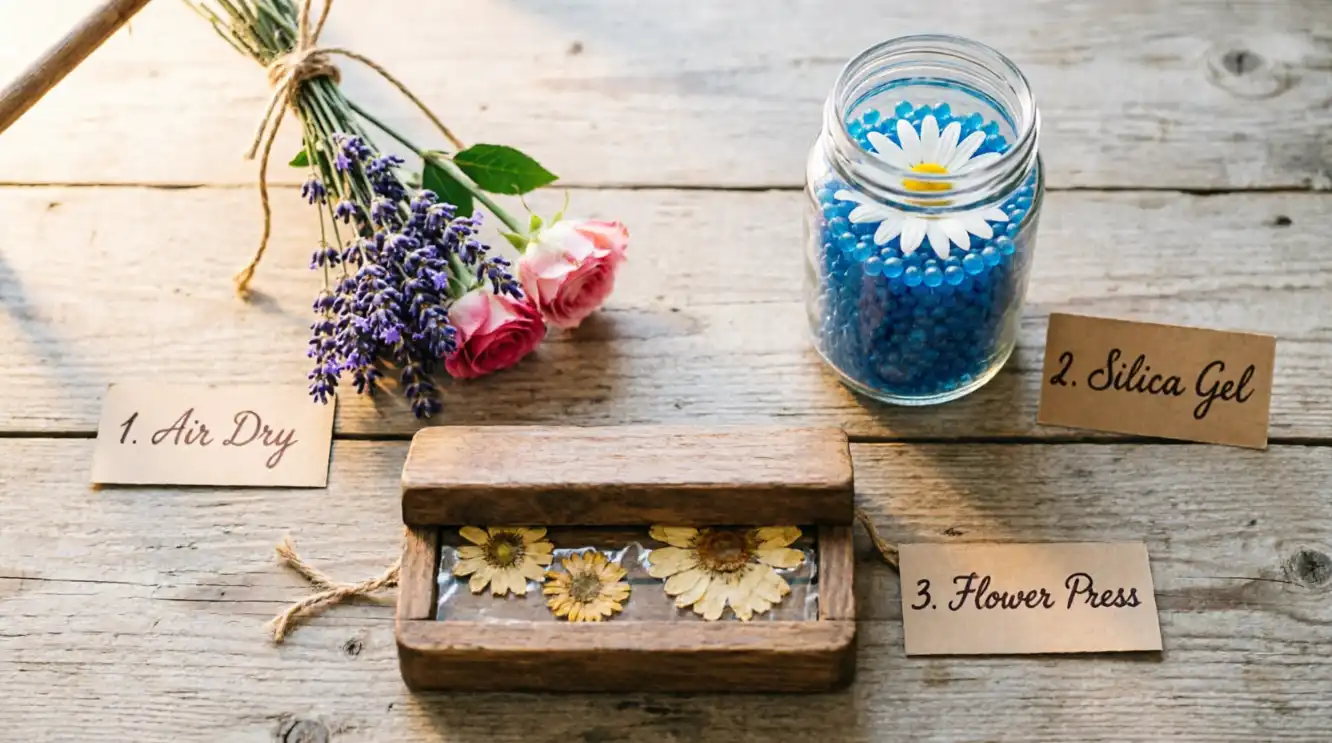
To preserve flowers, choose a drying method that suits their shape and type. You can hang flowers upside down to air-dry them, press them between paper, or use silica gel to maintain their natural shape and color. Once completely dry, store them away from sunlight and moisture to help them last longer.
Key Takeaways
- Air drying is an easy, inexpensive way to preserve roses and other flowers.
- Silica gel helps flowers keep their original shape and color.
- Flower pressing is ideal for making framed artwork and crafts.
- Keep preserved flowers away from direct sunlight, humidity, and dust.
- Properly dried flowers can last for months or even years with careful storage.
What Is the Best Way to Preserve Flowers?
The best way to preserve flowers depends on how you want to use them. If you want to keep a bouquet, air drying is a simple option. If you want to maintain the natural shape of roses, dahlias, or other full flowers, silica gel is useful. For flat decorations, pressing flowers is an excellent choice.
Here is a quick comparison of the most common methods.
| Method | Approximate time | Best for |
| Air drying | 2–3 weeks | Roses, lavender, and small bouquets |
| Flower pressing | 1–3 weeks | Flat flowers and artwork |
| Silica gel | 3–8 days | Roses and delicate blooms |
| Resin | Several days or longer | Jewelry and decorative keepsakes |
| Glycerin | 1–3 weeks | Certain leaves and sturdy foliage |
These times are approximate. Flower size, thickness, and humidity can affect the results.
5 Easy Ways to Preserve Flowers at Home
You don’t need expensive equipment to preserve flowers. Many methods use simple household supplies, while others require materials from a craft store.
1. Air-Dry Flowers
Air drying is one of the easiest ways to preserve flowers at home. It works especially well with roses, lavender, baby’s breath, and flowers with sturdy stems.
What you’ll need:
- Fresh flowers
- String or rubber bands
- Scissors
- A dark, dry room
Steps:
- Choose fresh flowers that are not damaged or fully wilted.
- Remove extra leaves from the stems.
- Arrange the flowers into small bunches and tie the stems together.
- Hang each bunch upside down using string.
- Place them in a dark, dry area with good air circulation.
- Leave them hanging for about two to three weeks, checking occasionally.
The flowers are ready when their petals and stems feel dry. Keep them away from direct sunlight because it can cause fading.
2. Press Flowers Between Paper
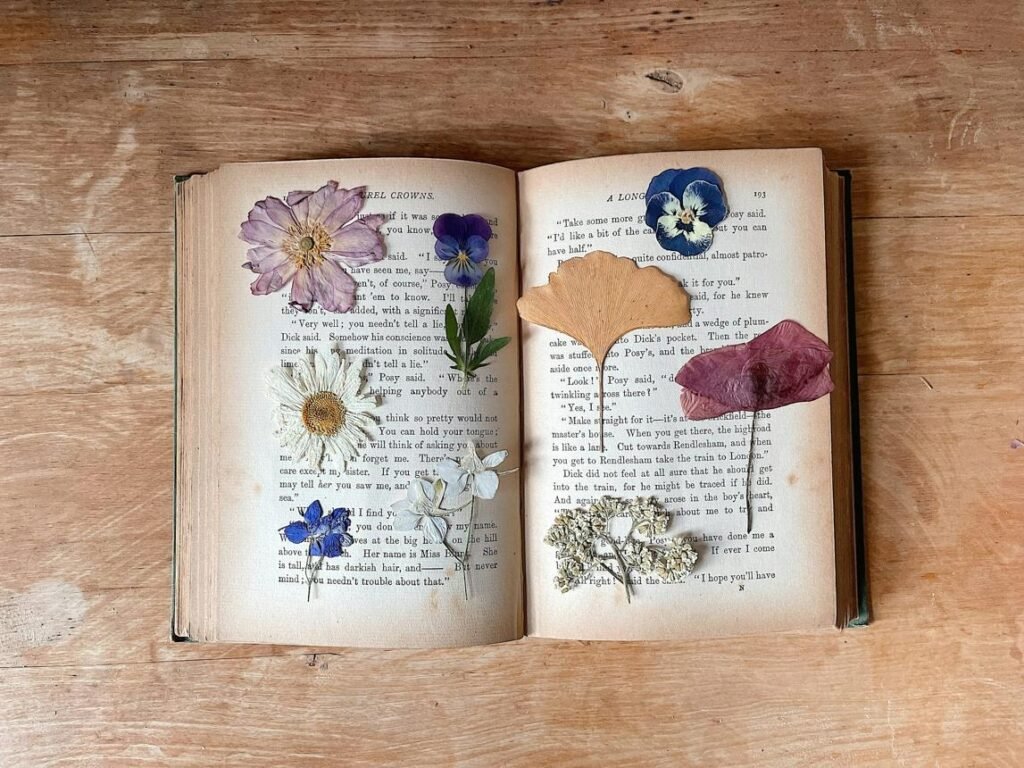
Pressing flowers is ideal if you want to preserve flowers for scrapbooks, greeting cards, framed art, or other crafts. It removes moisture while flattening the flowers.
What you’ll need:
- Fresh flowers
- Parchment paper or absorbent paper
- A heavy book
- Optional: a flower press
Steps:
- Select flowers with relatively thin petals.
- Remove excess leaves and moisture.
- Place the flowers between two sheets of absorbent paper.
- Put the paper inside a heavy book.
- Add more weight if needed, and leave the book in a dry place.
- Check after one week and replace damp paper if necessary.
Most flowers take one to three weeks to dry completely. Once dry, carefully remove them and place them in a frame or use them for crafts.
Flat flowers such as pansies and daisies are particularly suitable for pressing. Thick flowers may need to be separated into individual petals before pressing.
3. Preserve Flowers With Silica Gel
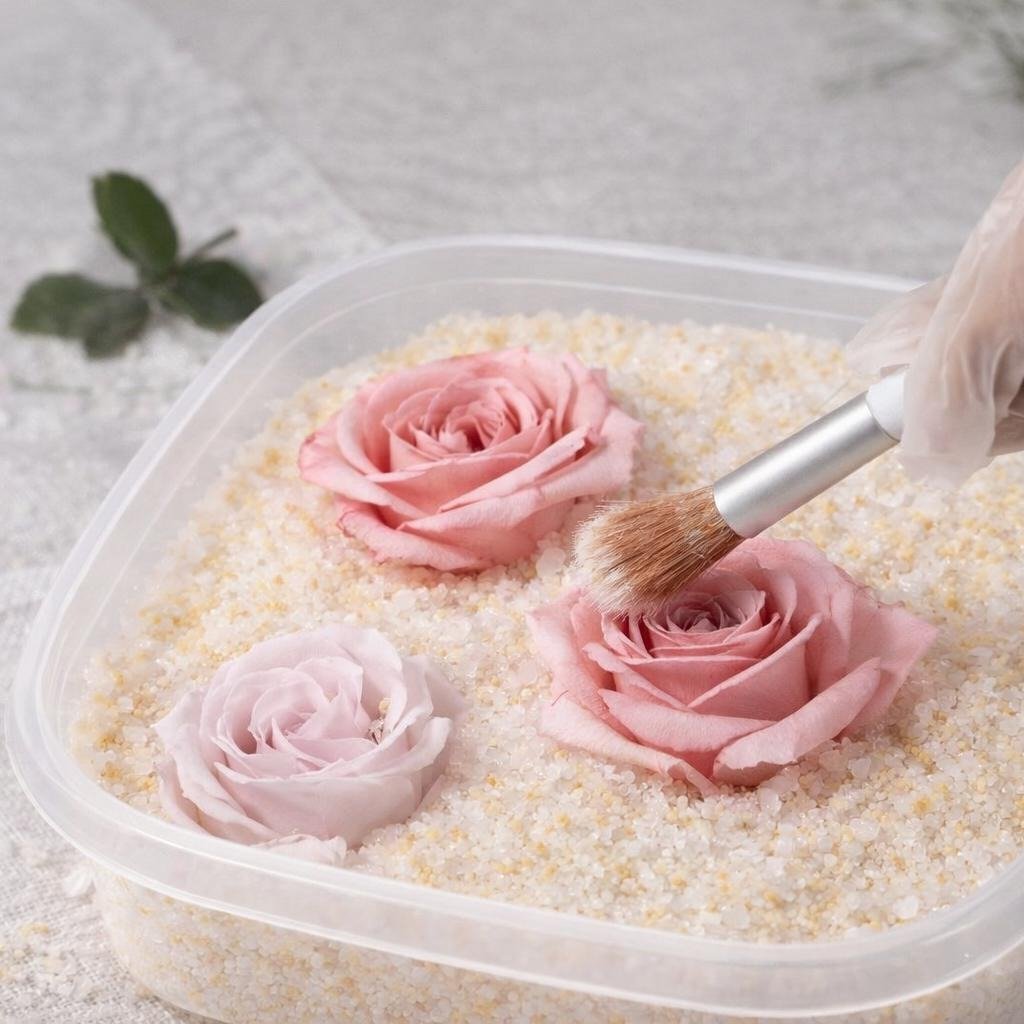
Silica gel is a popular option for preserving flowers while maintaining their natural shape. It absorbs moisture quickly and is especially helpful for flowers that would become distorted when hung upside down.
What you’ll need:
- Flower-drying silica gel
- An airtight container
- Fresh flowers
- A soft brush
Steps:
- Pour a layer of silica gel into an airtight container.
- Trim the flower stem, leaving a short section if needed.
- Place the flower carefully on the silica gel.
- Gently pour more silica gel around and over the petals until the flower is completely covered.
- Close the container tightly and leave it undisturbed for approximately three to eight days.
- Carefully remove the flower and brush away any remaining crystals.
Check the flower according to its thickness and the product instructions. Avoid pulling it out too early, as the petals may still contain moisture.
Silica gel is especially useful for preserving roses, carnations, and other flowers with delicate petals. Keep the container sealed during drying so the gel can absorb moisture from the flowers rather than the surrounding air.
4. Preserve Flowers in Resin
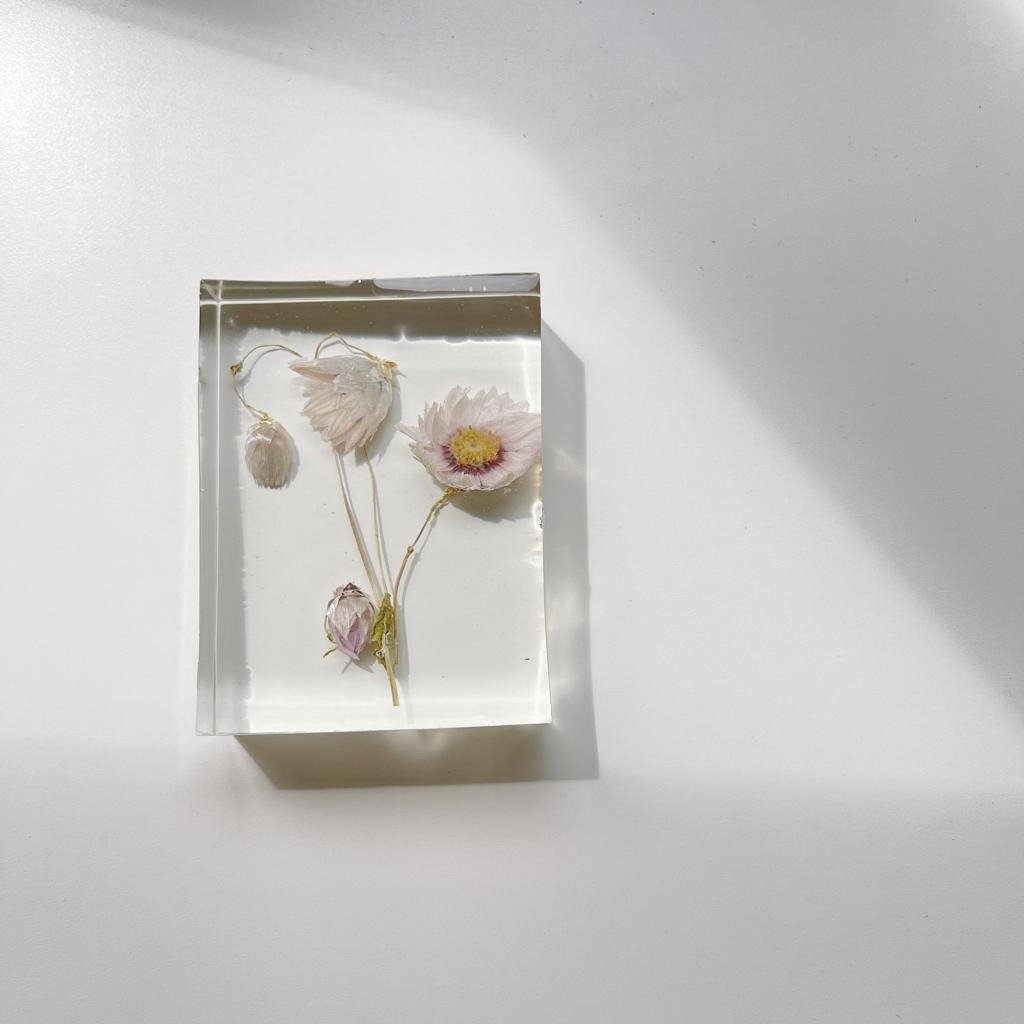
Resin preservation is a popular way to turn flowers into decorative keepsakes. You can use it to make jewelry, paperweights, coasters, and other crafts.
However, flowers must be thoroughly dried before being placed in resin. Fresh flowers contain moisture that can cause discoloration, bubbles, or other problems.
Steps:
- Dry your flowers completely using silica gel or another suitable method.
- Choose a mold designed for epoxy resin.
- Prepare the resin according to the manufacturer’s instructions.
- Pour a thin layer into the mold.
- Carefully position the dried flowers.
- Add more resin as directed, making sure the flowers are covered.
- Allow the resin to cure for the time specified by the manufacturer.
Work in a well-ventilated area and wear the protective equipment recommended on the product label.
Resin can protect flowers inside a solid decorative object, but it does not guarantee that their original color will remain unchanged forever.
5. Preserve Flowers With Glycerin
Glycerin preservation is different from drying. Instead of removing all moisture, glycerin replaces some of the water in plant tissues, helping suitable leaves remain flexible.
This method is generally more useful for sturdy foliage than delicate flower petals.
Steps:
- Prepare a glycerin solution according to the product instructions.
- Cut the stems at an angle to help them absorb the solution.
- Remove leaves that would sit below the liquid.
- Place the stems in a container with the solution.
- Keep the container in a cool location away from direct sunlight.
- Allow one to three weeks for the foliage to absorb the glycerin.
The leaves may become darker, softer, or slightly waxy. Results vary depending on the plant, so test a small amount first.
For delicate flowers, air drying or silica gel is usually a more suitable choice.
How to Preserve Flowers and Keep Their Color
Preserving the original color of flowers can be challenging. Some flowers naturally become darker or change shade as they dry. However, a few simple steps can help you maintain their appearance.
- Choose fresh flowers: Pick flowers before their petals begin to wilt or turn brown.
- Avoid direct sunlight: Dry flowers in a dark or shaded place to reduce fading.
- Use silica gel: Faster drying can help retain more of the flower’s original color.
- Remove moisture: Make sure flowers are completely dry before storing them.
- Handle petals carefully: Dried petals can break easily, so avoid unnecessary touching.
Remember that some color changes are natural. Red flowers may become darker, while pink and purple flowers can change shades during drying.
Common Mistakes to Avoid When Preserving Flowers
Even simple flower preservation methods can go wrong if you don’t prepare the flowers properly.
- Preserving wet flowers: Moisture can encourage mold. Always remove rain or dew and let the flowers dry before starting.
- Using wilted flowers: Old flowers may have damaged petals that become more noticeable after drying.
- Hanging flowers in direct sunlight: Strong sunlight can fade their colors.
- Crowding flowers together: Crowded flowers may not receive enough airflow and can dry unevenly.
- Removing flowers too early: Flowers that still contain moisture may lose their shape or develop mold during storage.
- Storing flowers in humid places: Humidity can soften dried petals and damage your keepsakes.
For the best results, work with fresh flowers and allow enough time for each preservation method.
How Long Do Preserved Flowers Last?
Preserved flowers can last from several months to several years, depending on the method, flower type, and storage conditions.
Air-dried and pressed flowers can last for years when kept dry and protected from sunlight. Flowers preserved in silica gel can also last a long time, but their petals may become brittle. Resin-encased flowers can be protected from handling and dust, although their colors may still change over time.
To extend the life of your preserved flowers, keep them in a dry place, avoid direct sunlight, and handle them gently. For especially delicate arrangements, consider displaying them inside a glass case.
Frequently Asked Questions
What is the easiest way to preserve flowers?
Air drying is generally the easiest method. Remove extra leaves, tie the flowers into small bunches, and hang them upside down in a dark, dry room with good airflow. Leave them for about two to three weeks until completely dry.
Can you preserve flowers with hairspray?
Hairspray can provide a light coating that helps protect dried flowers from handling and shedding. However, it does not preserve fresh flowers or stop them from drying. Use it sparingly and test it on one flower first, as some sprays may change the appearance of delicate petals.
How do you preserve flowers in a jar?
First, dry your flowers completely using air drying or silica gel. Then arrange them carefully in a clean, dry jar. Close the lid to help protect them from dust and humidity. Avoid placing fresh flowers in a sealed jar because trapped moisture can cause mold.
Can you preserve fresh flowers permanently?
No preservation method can guarantee that flowers will look exactly as they did when fresh forever. However, drying, pressing, and resin preservation can help you keep flowers for many years. Protecting them from sunlight, moisture, and physical damage can extend their life.
How do you preserve a wedding bouquet?
For a wedding bouquet, silica gel is a useful choice if you want to maintain the flowers’ natural shape. You can also air-dry the bouquet by hanging it upside down. For a more polished keepsake, arrange the dried flowers in a shadow box or have the bouquet professionally freeze-dried.
Final Thoughts
Learning how to preserve flowers is a simple way to keep meaningful memories alive. If you want to save a wedding bouquet, preserve roses from a loved one, or create beautiful floral decorations, there is a method for almost every type of flower.
Air drying is a good starting point for beginners, while silica gel is useful when you want to maintain a flower’s natural shape. Choose the method that suits your flowers, keep them away from moisture and sunlight, and enjoy your preserved blooms for years to come.

I am Toni Morrison an acclaimed American novelist and Nobel Prize winner whose powerful storytelling explored identity, memory, love, heritage, and the human spirit through unforgettable literary works at Spiritualdreamz.com.










