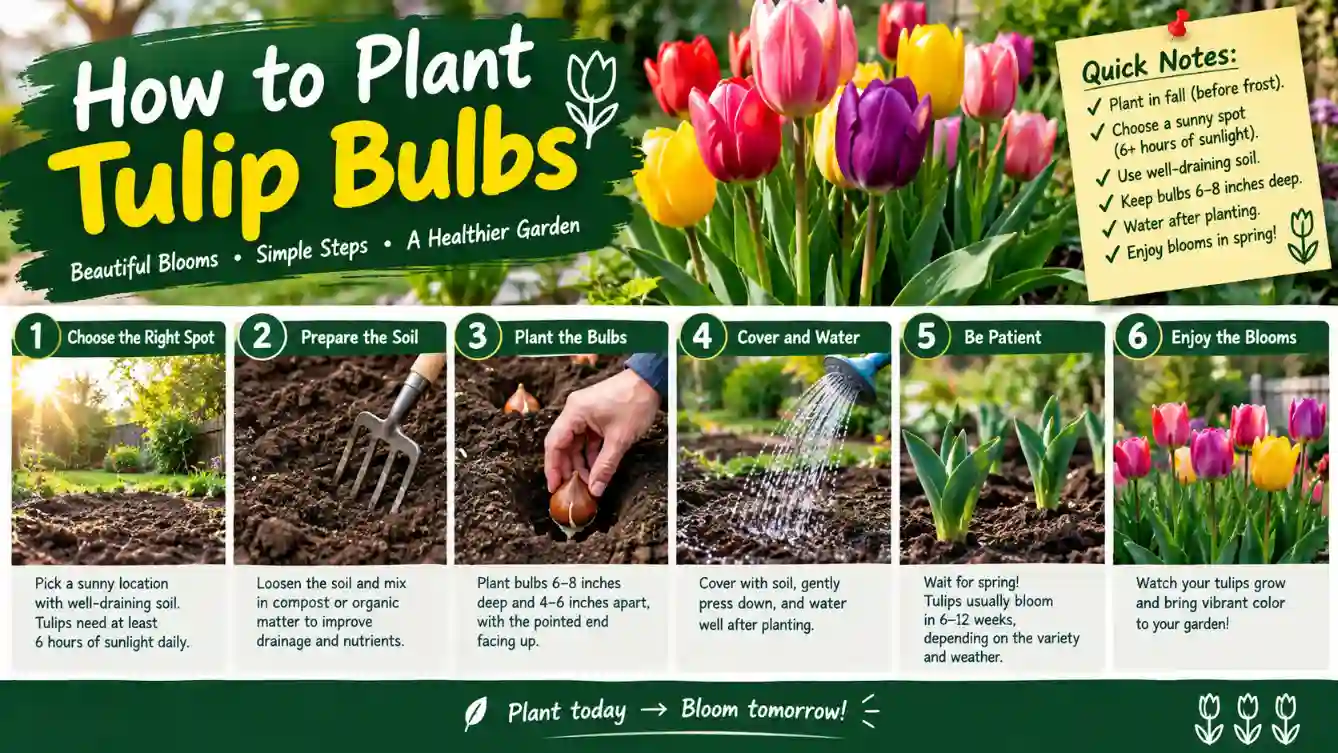
To plant tulip bulbs, choose a sunny location with well-drained soil in the fall. Dig holes 6–8 inches deep and space large tulip bulbs 4–6 inches apart. Place each bulb with its pointed end facing upward, cover it with soil, and water thoroughly. Planting in fall gives bulbs time to develop roots before winter and bloom in spring.
Key Takeaways
- Plant tulip bulbs in fall, usually from September to November, depending on your climate.
- Choose a location with at least six hours of sunlight and well-drained soil.
- Plant most large tulip bulbs 6–8 inches deep and 4–6 inches apart.
- Water after planting, but avoid soil that stays wet.
- Allow the leaves to die naturally after flowering so the bulbs can store energy.
When Is the Best Time to Plant Tulip Bulbs?
The best time to plant tulip bulbs is in the fall, before the ground freezes. In most parts of the United States, September through November is a suitable planting period. However, the ideal month depends on your local climate.
Tulip bulbs need time to grow roots before winter. They also need a period of cold weather to support their natural flowering cycle.
Here is a general planting guide for different US regions:
| Region | Approximate planting time |
| Northern states | September to October |
| Midwest | September to October |
| Northeast | October to November |
| Southern states | November to December |
| Pacific Northwest | October to November |
These are general guidelines, not fixed dates. In warmer areas, wait until the soil cools in fall. In colder areas, plant early enough to allow roots to develop before the ground freezes.
For most gardeners, October is a useful starting point.
What You Need Before Planting Tulip Bulbs
Gather a few basic gardening supplies before you start. You do not need expensive equipment to plant tulips successfully.
- Healthy tulip bulbs
- A garden trowel or shovel
- Well-drained garden soil
- Compost, if needed
- Watering can or garden hose
- Mulch, if needed
Choose firm, healthy bulbs without soft spots, mold, or major damage. Larger, healthy bulbs generally have more stored energy for flowering.
Select tulip varieties based on their flower color, height, and blooming time. You can combine early-, mid-, and late-season varieties to enjoy flowers over a longer period.
How to Plant Tulip Bulbs Step by Step
Follow these simple steps to plant tulip bulbs in your garden.
1. Choose the Right Location
Tulips grow well in locations that receive full sun or partial shade. Aim for at least six hours of direct sunlight each day.
Choose a spot where water drains easily after rain. Avoid low areas where water collects because constantly wet soil can cause bulbs to rot.
You can plant tulips in flower beds, along garden borders, or beneath deciduous trees. Just make sure they receive enough sunlight during their growing season.
2. Prepare the Soil
Tulips prefer loose, fertile, well-drained soil. Before planting, remove weeds, stones, and other debris from the planting area.
Loosen the soil to a depth of approximately 10–12 inches to make room for root growth. If your soil is heavy clay, mix in some well-rotted compost to improve its structure and drainage.
Avoid adding fresh manure or excessive fertilizer. Too much fertilizer is unnecessary for many garden beds and can damage plants if applied incorrectly.
Good drainage is especially important because tulip bulbs can rot when left in soggy soil.
3. Dig the Planting Holes
Dig holes approximately 6–8 inches deep for most large garden tulip bulbs. Measure the depth from the bottom of the bulb to the soil surface.
If you are planting several tulips, you can dig one large planting area instead of making individual holes. This makes it easier to arrange bulbs in attractive groups.
For a natural-looking garden, plant tulips in small clusters rather than perfectly straight rows.
4. Position the Bulbs
Place each tulip bulb in the hole with its pointed end facing upward and its flatter, root-producing base facing downward.
Space large tulip bulbs about 4–6 inches apart. This gives them room to grow while allowing you to create a full display.
If you cannot clearly identify the pointed end, place the bulb on its side. The shoot can usually find its way upward.
5. Cover and Water
Cover the bulbs with loose soil and gently level the surface. Do not press down hard because compacted soil can make it harder for roots and shoots to grow.
Water the planting area thoroughly after planting. This helps settle the soil around the bulbs and provides moisture for root development.
If the soil is already moist and rainfall is expected, avoid excessive watering. The goal is to keep the soil lightly moist, not waterlogged.
How Deep and Far Apart Should You Plant Tulip Bulbs?
The correct planting depth and spacing help tulips develop strong roots and healthy flowers.
| Tulip type | Planting depth | Spacing |
| Large garden tulips | 6–8 inches | 4–6 inches |
| Botanical tulips | 3–5 inches | 3–4 inches |
| Tulips in containers | Follow pot and bulb instructions | Close together, not touching |
For most common garden tulips, planting 6–8 inches deep is a useful guideline. However, always check the instructions supplied with your bulbs because different varieties may have different requirements.
Planting too shallowly can expose bulbs to temperature changes and increase the risk of frost damage. Planting too deeply may delay growth.
How to Plant Tulip Bulbs in Pots
You can grow tulips in containers if you do not have a garden bed. Choose a pot with drainage holes so excess water can escape.
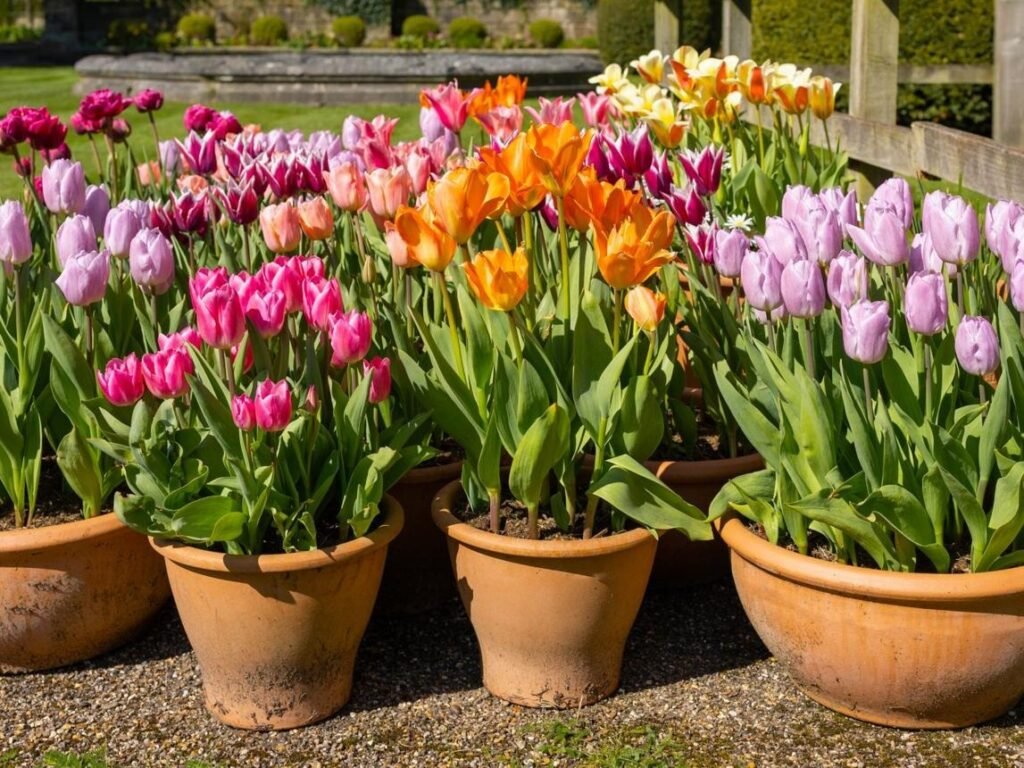
Follow these steps:
- Choose a pot deep enough to accommodate the bulbs and their roots.
- Fill it with a well-draining potting mix.
- Place the bulbs close together, leaving a little space between them so they do not touch.
- Position the pointed ends upward and cover them with potting mix according to the bulb instructions.
- Water the pot and allow excess water to drain.
- Keep the pot in a cool location during winter, protecting it from extreme temperature changes.
Container bulbs can generally be planted closer together than bulbs in garden beds. However, avoid overcrowding them or using containers without drainage.
How to Care for Tulips After Planting
Planting tulip bulbs correctly is only the beginning. Proper care helps them grow healthy leaves and produce beautiful flowers in spring.
Water when necessary: After planting, water the bulbs thoroughly. During fall and winter, natural rainfall is often enough. If the soil becomes dry during a mild winter or early spring, water lightly.
Add mulch: Apply a 2–3-inch layer of mulch after planting if needed. Mulch helps maintain soil moisture and reduces temperature changes during winter. Keep the soil well-drained.
Provide sunlight: Once tulips begin growing in spring, make sure they receive sufficient sunlight. Most garden tulips grow well in full sun.
Remove faded flowers: After the flowers fade, remove the flower heads to prevent seed production. Leave the green leaves and stems in place.
Allow the leaves to die naturally: The leaves collect sunlight and help the bulb store energy for the next growing season. Cut them back only after they turn yellow or brown and die naturally.
Common Mistakes to Avoid When Planting Tulip Bulbs
Even beginners can grow tulips successfully, but a few common mistakes can affect flowering.
- Planting too early in warm soil: Wait until fall temperatures cool down. Planting too early can expose bulbs to unfavorable conditions.
- Planting in wet soil: Poor drainage can cause bulbs to rot. Choose a suitable location or improve the soil before planting.
- Planting bulbs upside down: Always position the pointed end upward when possible.
- Planting too shallowly: Follow the recommended planting depth to protect bulbs and encourage healthy growth.
- Cutting leaves too soon: Removing green leaves after flowering prevents bulbs from storing as much energy.
- Overwatering: Tulips need moisture to establish roots, but constantly wet soil can damage them.
Avoiding these mistakes can help you get healthier plants and more reliable spring blooms.
Frequently Asked Questions
What is the best month to plant tulip bulbs?
October is a suitable month for planting tulip bulbs in many parts of the United States. However, the ideal month depends on your climate. Gardeners in colder regions may need to plant in September, while those in warmer regions may need to wait until November or December.
Do tulip bulbs need to be soaked before planting?
No. You do not need to soak tulip bulbs before planting. Healthy bulbs should be planted directly into well-drained soil. Soaking them can introduce unnecessary moisture and increase the risk of rot.
Can you plant tulip bulbs in the spring?
Fall is the recommended time to plant tulip bulbs because they need a cold period to flower properly. Spring planting may produce leaves, but flowering is less reliable. If you have bulbs left over, store them in a cool, dry place until the appropriate fall planting season.
How often should you water tulip bulbs?
Water tulip bulbs thoroughly immediately after planting. After that, water only when the soil becomes dry. Rainfall usually provides enough moisture during winter in many regions. Avoid overwatering because soggy soil can cause bulb rot.
Will tulips come back every year?
Some tulip varieties can return for several years, but many modern garden tulips produce their best flowers in the first year. Their ability to bloom again depends on the variety, climate, sunlight, and growing conditions. Botanical tulips and some perennial varieties are more likely to return reliably.
Conclusion
Learning how to plant tulip bulbs is simple when you follow the right steps. Choose healthy bulbs, plant them in fall, provide well-drained soil, and place them at the correct depth. Water after planting and protect the bulbs from excessive moisture.
With proper care throughout winter and spring, your tulips can produce colorful flowers that brighten your garden. Remember to leave the foliage until it dies naturally so the bulbs can store energy for future growth.

I am Stephen King an American writer exploring spirituality, dreams, mindfulness, and personal growth. Through SpiritualDreamz.com, he shares thoughtful insights to inspire reflection, clarity, and meaningful everyday living.










