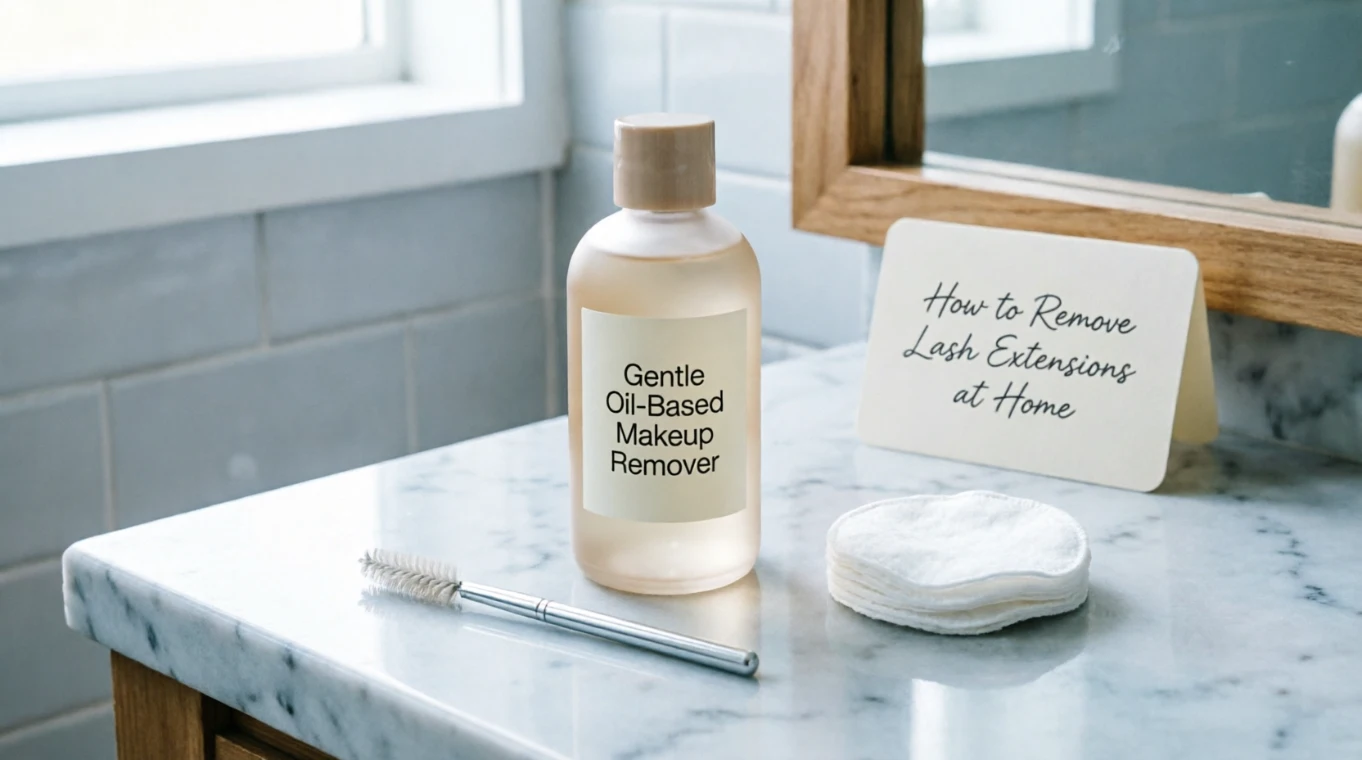
The safest way to remove lash extensions is to have a trained lash professional remove them. If you have only a few loose extensions and cannot get professional help, you can gently loosen them with warmth and an oil-based cleanser, then allow them to slide away without pulling. Never tweeze, peel, cut, or force bonded extensions off your natural lashes.
Key Takeaways
- Professional removal is the safest option for a full or tightly bonded set.
- At home, focus on loosening, not forcing extensions off.
- Warmth and an oil-based cleanser may help already-loose extensions release gradually.
- Never pull, pick, tweeze, scrape, or cut extensions attached to natural lashes.
- Stop and seek medical care if you develop significant pain, swelling, redness, discharge, light sensitivity, or vision changes.
Is It Safe to Remove Lash Extensions at Home?
If you are wondering how to remove lash extensions at home, the first thing to know is that DIY removal carries some risk.
Eyelash extensions are attached to your natural lashes with adhesive. When you pull on an extension that is still firmly bonded, you can accidentally pull out your natural lash with it. The American Academy of Ophthalmology specifically warns that rubbing, tugging, or pulling extensions can fracture natural lashes and may cause more serious follicle damage.
For that reason, professional removal is the preferred option, especially if you have a complete set, dense volume lashes, or extensions that are still strongly attached.
At-home care is more appropriate when only a few extensions remain and they are already beginning to loosen naturally.
When Home Removal May Be Reasonable
A cautious approach may be reasonable if:
- Your extensions are already falling out naturally.
- Only a few pieces remain.
- There is no pain or significant irritation.
- You can leave firmly attached extensions alone.
- You are willing to stop if an extension does not release easily.
Your goal should not be to remove every lash in one session. Natural eyelashes shed as part of their normal growth cycle, and extensions generally come away with them over time.
When You Should See a Lash Professional
Professional removal is a better choice if you have a full, dense, or heavily bonded set.
It is also preferable if extensions are stuck together, attached very close to the skin, or causing discomfort. A trained technician can see the bonds more clearly and use products designed for professional removal.
If the problem is an allergic reaction or eye irritation, do not try to solve it by aggressively removing the extensions yourself. The American Academy of Ophthalmology advises people with an allergic reaction to seek ophthalmic care rather than attempting DIY treatment.
What You Need for Gentle At-Home Removal
For loose extensions, keep the process simple.
You may want:
- Clean hands
- Lukewarm water
- A gentle oil-based cleanser or makeup remover
- A clean, soft washcloth
- A clean spoolie for brushing lashes afterward
Avoid experimenting with harsh solvents or chemicals around your eyes.
Professional lash-removal gels and creams are formulated to break down adhesive, but they can cause problems if they enter the eye. Professional removal is performed with the eyes closed and requires careful placement of the product.
The FDA considers eyelash extensions and their adhesives cosmetic products and notes that the eyelids are particularly delicate. It recommends stopping use of eye cosmetics if irritation occurs and seeking medical advice if irritation persists.
How to Remove Lash Extensions at Home
If you have decided to try gentle at-home removal, remember one rule throughout the process:
If an extension does not slide away easily, leave it alone.
Step 1: Wash Your Hands and Clean Your Eye Area
Start by washing your hands thoroughly.
Remove eye makeup gently. Do not scrub your lash line because friction can pull on extensions and natural lashes.
Your eye area should be clean before you continue.
Step 2: Use Warmth to Help Loosen the Extensions
Take a comfortably warm shower or use gentle warmth around the face with your eyes closed.
The purpose is simply to soften the surrounding product and make the extensions more comfortable to handle.
Do not use extremely hot steam. Your eyelids and the skin around your eyes are sensitive, and excessive heat can cause irritation.
Also, do not deliberately expose your eyes to hot water or steam.
Step 3: Use a Gentle Oil-Based Cleanser
Apply a small amount of a gentle, rinseable oil-based cleanser to the lash area while keeping the product out of your eyes.
Oil-based products are commonly recommended in beauty guidance because they can gradually weaken some lash-adhesive bonds. However, they should not be treated as an instant glue dissolver.
Different adhesives and extension types can behave differently. Some professional extensions may remain firmly bonded despite repeated cleansing.
Give the product time to work rather than increasing pressure.
Step 4: Let Loose Extensions Slide Away
After cleansing, gently wipe downward with a soft, clean cloth.
You can also lightly brush the lashes with a clean spoolie only if the extensions are already loose.
Do not pull individual extensions with your fingers.
Do not use tweezers to force them off.
If you feel resistance, stop.
That resistance is a sign that the extension is still bonded. Continuing to pull can remove the natural lash underneath it.
Step 5: Clean Your Lashes Afterward
Once loose extensions have come away, gently rinse the area with lukewarm water and a mild cleanser.
Avoid rubbing your eyes.
Let the lash line dry naturally or gently pat the surrounding skin dry with a clean towel.
Your lashes may look thinner than expected after extension removal, especially if you have become accustomed to a fuller appearance. This does not automatically mean your lashes have been permanently damaged.
What Not to Do When Removing Lash Extensions
Some DIY removal techniques can create more problems than they solve.
Don’t Pull or Peel
This is the most important rule.
Pulling can take a natural eyelash out with the extension. The American Academy of Ophthalmology warns that repeated tugging can damage natural lashes and potentially affect the follicles.
Don’t Use Tweezers to Force Them Off
Tweezers can give you enough grip to pull an extension and the natural lash beneath it.
If an extension requires force to remove, it is not ready to come off at home.
Don’t Scrape the Glue
Scraping the lash line can irritate the eyelid and potentially injure the delicate skin around the eye.
Don’t Use Professional Glue Remover on Yourself
Professional lash-removal products are designed for controlled application around closed eyes. Getting a remover into your eye can cause significant irritation or injury.
A professional is trained to control where the product goes and how long it remains in contact with the adhesive.
Don’t Keep Going if Your Eye Hurts
Pain is not a normal sign that you need to “push through” the removal.
Stop if you experience burning, significant redness, swelling, excessive tearing, or other concerning symptoms.
Professional Removal vs. At-Home Removal
| Option | Best for | Main advantage | Main concern |
| Professional removal | Full or tightly bonded sets | Controlled adhesive removal | Costs more and requires an appointment |
| Gentle home loosening | A few already-loose extensions | Convenient | May not remove firmly bonded lashes |
| Waiting for natural shedding | Comfortable, grown-out sets | Lowest-effort approach | Takes time |
Professional removal is generally the most controlled choice because the technician can work directly on the adhesive bonds without asking you to manipulate your own lashes.
The American Academy of Ophthalmology notes that eyelash extensions can be associated with irritation, allergic reactions, infection, and temporary or permanent lash loss.
What If Your Lash Extensions Are Irritating Your Eyes?
Do not assume that irritation simply means you need to remove the extensions more aggressively.
Eyelash extensions have been associated with conditions including allergic blepharitis, conjunctival irritation, corneal problems, and traction-related lash loss.
Watch for symptoms such as:
- Significant redness
- Swollen eyelids
- Persistent itching
- Eye pain
- Excessive tearing
- Discharge
- Light sensitivity
- A feeling that something is stuck in your eye
- Blurred or changed vision
If symptoms are significant or persistent, contact an eye-care professional. If your vision is affected or you have severe pain, seek prompt medical attention.
The FDA likewise advises stopping an eye cosmetic that causes irritation and consulting a healthcare provider if irritation continues.
How to Care for Natural Lashes After Removal
After your extensions are gone, keep your routine gentle.
Clean the lash area regularly without aggressive rubbing. Avoid repeatedly touching or pulling your lashes, and give them time to return to their normal appearance.
You do not need an elaborate recovery routine. The most useful habits are simple:
- Clean the eye area gently.
- Avoid pulling or picking at lashes.
- Use clean eye-makeup tools.
- Replace old eye makeup when appropriate.
- Give irritated skin time to recover.
- See an eye-care professional if symptoms continue.
Remember that eyelash extensions themselves are not risk-free. Medical literature has documented ocular irritation and other complications associated with extension application and adhesives.
Frequently Asked Questions
Can I remove lash extensions at home?
You can sometimes loosen a few extensions at home, particularly when they are already growing out and releasing naturally. However, professional removal is safer for a full or tightly bonded set. Never force an extension off because pulling can remove or damage your natural lash.
Can oil remove lash extensions?
Oil-based cleansers may gradually weaken or loosen some extension adhesive, but they are not a guaranteed or instant removal method. If an extension remains firmly attached after gentle cleansing, do not increase pressure. Let it shed naturally or have it professionally removed.
Can I use a professional lash remover at home?
It is better not to use professional lash-removal chemicals on yourself. These products can irritate or injure the eye if they migrate into it. Professional removal allows a trained technician to control product placement while your eyes remain closed.
How long does it take for lash extensions to fall out naturally?
Extensions generally shed as the natural lashes they are attached to complete their growth cycle. The American Academy of Ophthalmology notes that extensions typically last around three to four weeks, although the exact timing varies from person to person.
How do I remove lash extensions without damaging my natural lashes?
The best way is to avoid forcing them off. Professional removal is the safest option. If only a few extensions are loose, gently cleanse the lash area and allow extensions that are ready to release to slide away. Never pull, tweeze, scrape, or peel firmly attached extensions.
Final Takeaway
If you need to remove lash extensions at home, think gentle and gradual, not fast and forceful. Warmth and an oil-based cleanser may help already-loose extensions release, but they should not be used as an excuse to pull on firmly bonded lashes.
For a complete or stubborn set, professional removal is the safer choice. And if your eyes are painful, swollen, very red, producing discharge, sensitive to light, or experiencing vision changes, skip DIY removal and contact an eye-care professional.

I am Stephen King an American writer exploring spirituality, dreams, mindfulness, and personal growth. Through SpiritualDreamz.com, he shares thoughtful insights to inspire reflection, clarity, and meaningful everyday living.










