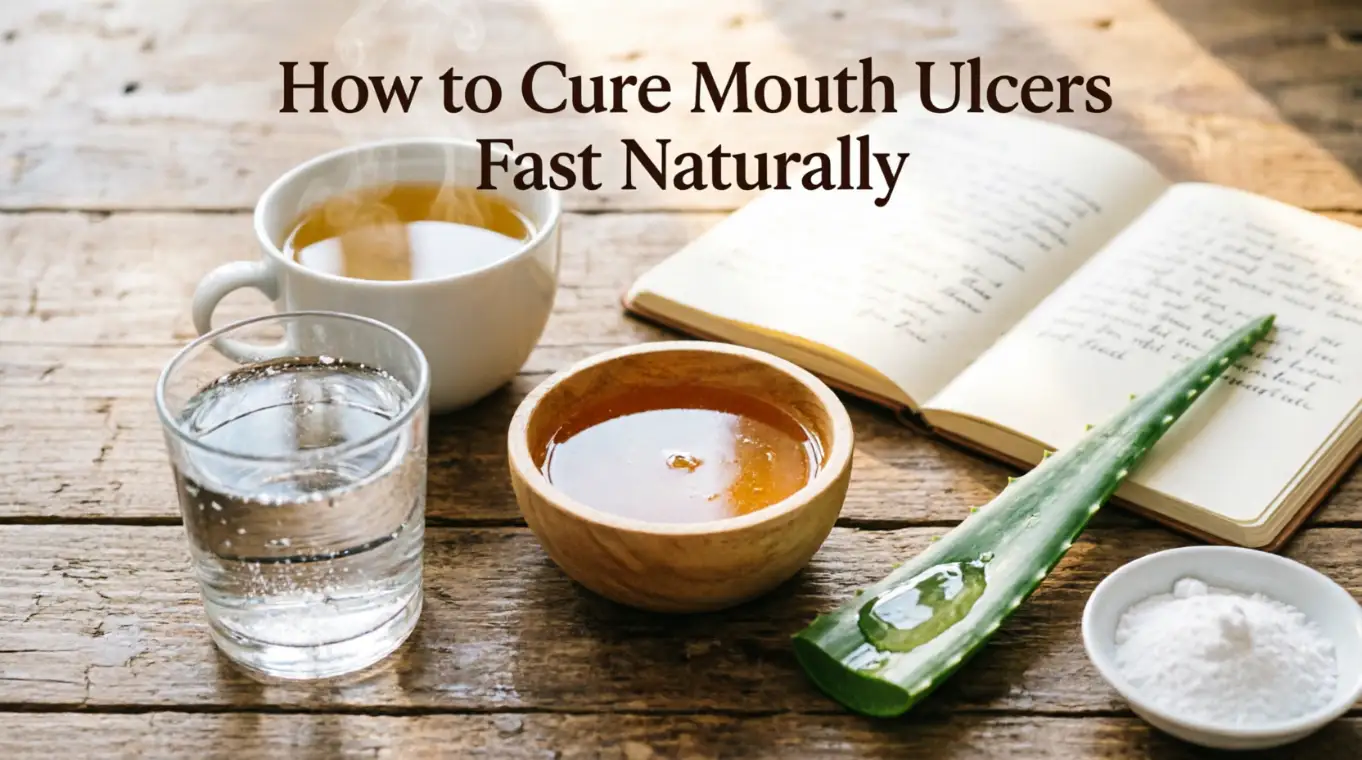
To help a mouth ulcer heal naturally, rinse with warm salt water, avoid spicy or acidic foods, keep your mouth clean with a soft toothbrush, stay hydrated, and avoid irritating the sore. These steps can reduce discomfort and support healing, but most canker sores still need about 1–2 weeks to fully disappear.
Key Takeaways
- Warm salt-water rinses can soothe a mouth ulcer and support comfortable healing.
- Avoid spicy, acidic, salty, very hot, and crunchy foods while the sore is painful.
- A soft toothbrush and good oral hygiene can help prevent additional irritation.
- Most ordinary canker sores heal naturally within 1–2 weeks.
- A sore that lasts more than 2–3 weeks, repeatedly returns, or makes eating and drinking difficult should be checked by a healthcare professional or dentist.
What Causes Mouth Ulcers?
Mouth ulcers are painful sores that develop inside the mouth. A common type is a canker sore, also called an aphthous ulcer. It may appear on the inside of your cheek or lip, under or on the tongue, at the base of the gums, or on the soft palate.
A typical canker sore is usually round or oval, with a white or yellow center and a red border. Unlike cold sores, ordinary canker sores are not contagious.
The exact cause of canker sores is not always known. Possible triggers include accidentally biting your cheek, irritation from dental work or brushing, emotional stress, hormonal changes, and certain nutritional deficiencies. Some people may also experience them in association with conditions such as celiac disease or inflammatory bowel disease.
This matters because treating the trigger can be just as important as soothing the sore itself.
How to Cure Mouth Ulcers Fast Naturally
There is no natural remedy that reliably makes a mouth ulcer disappear overnight. However, several simple measures can reduce irritation and pain while giving the sore a better environment to heal.
1. Rinse With Warm Salt Water
A salt-water rinse is one of the simplest home treatments for a mouth ulcer.
Mix ½ teaspoon of table salt with 8 ounces of warm water. Swish it gently around your mouth and spit it out. Do not swallow the solution. Mayo Clinic and the NHS both list salt-water rinses as a self-care option for canker sores and mouth ulcers.
The goal is not to “burn” the ulcer away. A gentle rinse can help keep the mouth clean while reducing irritation.
If the rinse stings severely, use less salt or stop and try plain cool water instead.
2. Try a Baking Soda Rinse
Baking soda, or sodium bicarbonate, is another commonly recommended home option for canker sores. Mayo Clinic lists baking-soda rinses among measures that may help lessen pain and support healing.
Use a mild solution rather than applying large amounts of dry baking soda directly to the sore. Swish gently and spit it out.
The purpose is to provide a less irritating oral environment rather than aggressively scrub or dry out the ulcer.
3. Avoid Foods That Irritate the Ulcer
One of the fastest ways to make a mouth ulcer feel worse is to keep irritating it.
While the sore is healing, limit:
- Spicy foods
- Citrus fruits and acidic foods
- Very salty foods
- Very hot drinks
- Crunchy foods such as chips and hard toast
- Foods that you already know trigger your ulcers
These foods can increase pain and irritation. The NIDCR and NHS specifically recommend avoiding hot, acidic, spicy, salty, and rough foods when you have a canker sore.
Instead, choose soft and relatively bland foods such as oatmeal, yogurt, eggs, mashed potatoes, rice, or other foods that feel comfortable.
4. Keep Your Mouth Clean
Good oral hygiene is important even when your mouth is sore.
Brush your teeth gently twice a day with a soft-bristled toothbrush. Avoid aggressively brushing directly over the ulcer.
The NHS recommends using a soft toothbrush for mouth ulcers, while Mayo Clinic also recommends good mouth-care habits to help reduce irritation and future outbreaks.
Also consider if your toothpaste or mouthwash irritates your mouth. Some people with recurring canker sores may benefit from avoiding products containing sodium lauryl sulfate (SLS).
5. Drink Plenty of Water
Staying hydrated is a simple way to make eating and drinking more comfortable while your mouth heals.
Choose cool or room-temperature water if hot beverages make the ulcer hurt. You can also use a straw if drinking causes the liquid to touch the sore.
Avoid very acidic drinks, such as some fruit juices, if they increase the burning sensation.
6. Use Cold Foods or Ice for Pain
A cold can temporarily numb a painful area.
Allowing a small ice chip to melt near the sore may provide short-term relief. Cold foods or drinks may also feel more comfortable than hot foods.
The goal is pain control while the body naturally heals the ulcer—not forcing the ulcer to disappear immediately. Home measures generally help symptoms rather than permanently eliminating the underlying tendency to develop canker sores.
7. Reduce Stress and Get Enough Rest
Stress is a reported trigger for canker sores in some people. If you notice that ulcers appear during stressful periods, reducing stress may help lower future flare-ups.
Simple options include getting adequate sleep, taking short walks, practicing relaxation exercises, or using meditation.
Stress reduction is not an instant cure, but it can be useful when recurring mouth ulcers seem connected to stressful periods.
What Should You Eat When You Have a Mouth Ulcer?
Choose foods that are soft, mild, and easy to chew.
Good options may include:
| Better choices | Foods to limit |
| Yogurt | Spicy foods |
| Oatmeal | Citrus fruits |
| Soft eggs | Very salty foods |
| Mashed potatoes | Chips and hard toast |
| Rice | Very hot foods |
| Soft-cooked vegetables | Acidic drinks |
You do not necessarily need to follow a special “ulcer diet.” The main goal is to avoid foods that increase pain or repeatedly traumatize the sore.
A balanced diet is still important. Recurrent canker sores have been associated with deficiencies involving nutrients such as iron, folate, vitamin B12, and zinc, although supplements should not automatically be taken unless a deficiency is suspected or confirmed.
Mouth Ulcer vs. Cold Sore: What’s the Difference?
It is important to know which type of sore you have because the conditions are different.
| Canker sore | Cold sore |
| Usually occurs inside the mouth | Usually occurs on or around the lips |
| Usually white/yellow with a red border | Often appears as fluid-filled blisters |
| Not contagious | Contagious |
| Not caused by herpes simplex virus | Usually caused by HSV-1 |
| Often heals within 1–2 weeks | Usually heals within a few weeks |
Canker sores and cold sores are frequently confused, but they are not the same condition. The NIDCR notes that location is one of the easiest ways to distinguish them: canker sores generally occur inside the mouth, while fever blisters usually appear outside the mouth around the lips.
How Long Do Mouth Ulcers Take to Heal?
Most ordinary canker sores heal naturally within one to two weeks. The pain may improve before the ulcer completely disappears.
Some larger or more severe ulcers can take considerably longer. Mayo Clinic notes that major canker sores may take up to six weeks to heal.
So, if you are searching for how to cure mouth ulcers fast naturally, it is important to set realistic expectations: home remedies can help with comfort and may support healing, but there is no guaranteed overnight cure.
When Should You See a Doctor or Dentist?
Most mouth ulcers are harmless. However, some need professional evaluation.
See a doctor or dentist if:
- The ulcer lasts longer than about 2–3 weeks.
- You frequently develop new ulcers.
- The ulcer is unusually large or severe.
- Pain makes it difficult to eat or drink.
- You have a fever along with mouth sores.
- The sore becomes increasingly red, swollen, or painful.
- You have sores elsewhere on your body.
- You have other symptoms such as a skin rash, diarrhea, or swollen joints.
Mayo Clinic recommends medical evaluation for sores that last two weeks or longer, are unusually large, repeatedly return, or interfere significantly with eating or drinking. The NHS advises evaluation for ulcers lasting longer than three weeks or those that bleed or become more painful and red.
A persistent mouth ulcer should not simply be treated with home remedies indefinitely. In some cases, recurring or non-healing ulcers can be associated with nutritional deficiencies, medications, inflammatory conditions, or other health problems.
How to Help Prevent Mouth Ulcers
You may not be able to prevent every mouth ulcer, but you can reduce some common triggers.
Try to:
- Brush gently with a soft toothbrush.
- Avoid biting your cheek or lip.
- Avoid foods that consistently trigger your sores.
- Protect your mouth from sharp dental surfaces.
- Manage stress if it appears to trigger outbreaks.
- Eat a balanced diet.
- Stay hydrated.
- Ask your dentist about dental appliances that repeatedly rub the same area.
If ulcers occur frequently, talk with your healthcare professional about possible nutritional deficiencies or underlying conditions rather than simply treating each sore at home.
Frequently Asked Questions
Can salt water cure mouth ulcers?
Salt water cannot guarantee an instant cure, but a gentle warm salt-water rinse can help soothe a canker sore and support comfortable healing. A common preparation is ½ teaspoon of salt in 8 ounces of warm water. Swish and spit rather than swallowing it.
Does baking soda help mouth ulcers?
Baking soda may help relieve discomfort when used as a mild mouth rinse. Mayo Clinic includes baking-soda rinses among self-care options for canker sores. Avoid aggressively rubbing dry baking soda onto the ulcer because additional irritation can make the sore more painful.
Can mouth ulcers heal overnight?
Usually, no. Most minor canker sores need about one to two weeks to heal. Natural home remedies can reduce irritation and pain, but there is no reliable remedy that makes an ordinary mouth ulcer disappear overnight.
Why do I keep getting mouth ulcers?
Recurring ulcers can have several possible triggers, including stress, mouth injuries, hormonal changes, certain foods, and nutritional deficiencies such as low iron, folate, or vitamin B12. Repeated outbreaks may also be associated with certain medical conditions. If ulcers frequently return, discuss them with a healthcare professional.
Are mouth ulcers contagious?
Typical canker sores are not contagious. They are different from cold sores, which are caused by herpes simplex virus and can spread to other people.
What is the fastest natural way to relieve a mouth ulcer?
The most practical approach is to combine several gentle measures: use a warm salt-water rinse, avoid spicy and acidic foods, drink cool fluids, eat soft foods, and maintain gentle oral hygiene. These steps focus on reducing irritation and pain while the ulcer naturally heals.
Conclusion
Mouth ulcers can be painful, but most minor canker sores heal naturally within one to two weeks. If you want to support faster healing, focus on simple steps such as warm salt-water rinses, gentle oral hygiene, drinking enough water, eating soft foods, and avoiding spicy, acidic, salty, or crunchy foods that can irritate the sore.
There is no reliable natural remedy that can make a mouth ulcer disappear overnight. If an ulcer lasts longer than two to three weeks, keeps coming back, becomes unusually painful, or makes eating and drinking difficult, talk with a dentist or healthcare professional. Identifying the underlying cause can help prevent future ulcers and ensure that a more serious problem is not overlooked.

I am Toni Morrison an acclaimed American novelist and Nobel Prize winner whose powerful storytelling explored identity, memory, love, heritage, and the human spirit through unforgettable literary works at Spiritualdreamz.com.










