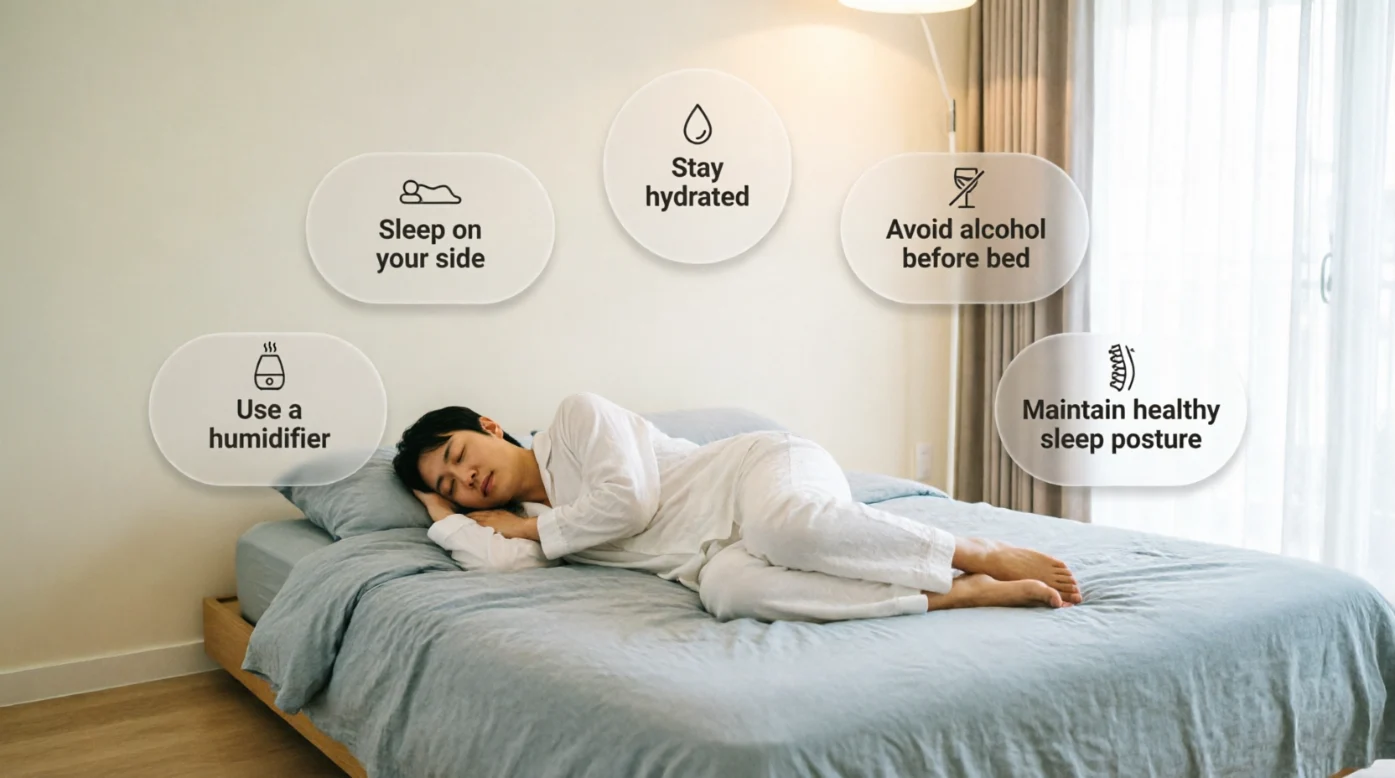
To stop snoring while sleeping, try sleeping on your side, avoiding alcohol before bedtime, treating nasal congestion, and getting enough sleep. Maintaining a healthy weight and raising your head slightly may also help. If you snore loudly, wake up gasping, or feel tired during the day, consult a doctor to check for sleep apnea.
Key Takeaways
- Sleeping on your side may reduce snoring by keeping your airway more open.
- Avoid alcohol and sedatives before bedtime because they can worsen snoring.
- Treating nasal congestion and getting enough sleep may improve nighttime breathing.
- Nasal strips can help with some types of snoring but do not treat sleep apnea.
- Loud snoring with breathing pauses or daytime sleepiness requires medical evaluation.
Why Do People Snore While Sleeping?
Snoring happens when air cannot move freely through your nose and throat while you sleep. As you relax, the muscles in your throat also relax. The surrounding tissues may narrow your airway and vibrate as air passes through, creating the familiar snoring sound.
Several factors can make snoring more likely, including sleeping on your back, nasal congestion, drinking alcohol, smoking, and having excess tissue around your neck.
Sometimes, snoring is simply an occasional problem. However, regular, loud snoring can also be a sign of obstructive sleep apnea (OSA), a condition in which your breathing repeatedly stops or becomes reduced during sleep. Not everyone who snores has sleep apnea, but certain symptoms should not be ignored.
8 Ways to Stop Snoring While Sleeping
If you want to reduce snoring naturally, start with these practical changes. The right solution depends on what is causing your snoring.
1. Sleep on Your Side
Sleeping on your back can make snoring worse. In this position, your tongue and soft tissues may move toward the back of your throat, narrowing your airway.
Sleeping on your side can help keep your airway more open and reduce snoring for some people.
To make side sleeping easier:
- Use a comfortable pillow to support your head and neck.
- Place a pillow behind your back to discourage rolling over.
- Try a body pillow if you frequently return to your back during the night.
If you consistently snore while sleeping on your back, changing your sleeping position is a simple first step.
2. Avoid Alcohol Before Bedtime
Alcohol may relax the muscles in your throat more than usual. This can narrow your airway and increase the chances of snoring.
If you regularly drink alcohol in the evening, try avoiding it for several hours before bedtime. You may notice an improvement in your breathing and sleep.
Some sleeping pills and sedatives can also worsen snoring. Do not stop prescribed medication on your own; ask your healthcare professional if it could be contributing to the problem.
3. Keep Your Nose Clear
A blocked nose can make breathing difficult while you sleep. Allergies, colds, and other nasal problems may cause congestion, encouraging you to breathe through your mouth.
You can try these simple steps:
- Use a saline nasal spray to help relieve congestion.
- Keep your bedroom free of dust and other allergy triggers.
- Wash your bedding regularly.
- Ask a healthcare professional about persistent nasal congestion.
If you have ongoing nasal blockage, a doctor can check for allergies, a deviated septum, or another cause.
Treating nasal congestion may reduce snoring when nasal obstruction is the main problem.
4. Raise Your Head Slightly
For some people, sleeping with the upper body slightly elevated may help reduce snoring.
You can try an adjustable bed or a suitable wedge pillow that raises your upper body. Choose a comfortable position that supports your neck without bending it forward.
Raising your head may help some people breathe more comfortably, but it is not a reliable treatment for sleep apnea. If you still snore loudly or experience breathing pauses, seek medical advice.
5. Maintain a Healthy Weight
Excess weight can contribute to snoring because fatty tissue around the neck and throat may narrow the airway during sleep.
If you are higher-weight person, gradual weight loss may help reduce snoring. Consider making manageable lifestyle changes, such as:
- Eating balanced meals.
- Exercising regularly.
- Maintaining a consistent sleep schedule.
- Choosing sustainable habits instead of crash diets.
However, people of any body size can snore. Weight loss is not necessary or effective for everyone, and it should not replace an evaluation for possible sleep apnea.
6. Get Enough Sleep
Not getting enough sleep can make your body more tired and may contribute to increased muscle relaxation during sleep.
Adults generally need at least seven hours of sleep each night. Try to maintain a regular bedtime and wake-up time, even on weekends.
You can improve your sleep routine by:
- Going to bed at approximately the same time each night.
- Avoiding late-night activities that delay sleep.
- Creating a quiet, comfortable sleeping environment.
- Limiting caffeine late in the day.
Getting enough sleep may help reduce snoring, especially when sleep deprivation is contributing to the problem.
7. Avoid Smoking
Smoking can irritate the tissues in your nose and throat, potentially contributing to inflammation and snoring.
If you smoke, quitting may improve your overall health and could help reduce snoring. If quitting is difficult, ask a healthcare professional about proven smoking cessation methods.
Avoiding secondhand smoke may also help reduce irritation in your airways.
8. Try Nasal Strips if Appropriate
Nasal strips are adhesive strips placed across the outside of your nose. They gently pull the sides of your nostrils outward, helping some people breathe more easily through their nose.
They may be useful if your snoring is related to narrow nasal passages or mild nasal obstruction.
However, nasal strips do not keep the throat airway open and are not a treatment for obstructive sleep apnea. If your snoring comes from your throat rather than your nose, they may not make much difference.
Which Anti-Snoring Treatments Actually Help?
Different treatments work for different causes of snoring. A product that helps one person may not work for another.
| Treatment | How it may help |
| Side sleeping | Reduces snoring related to sleeping on your back |
| Nasal strips | Improve airflow through the nostrils |
| Saline nasal spray | Relieves some types of nasal congestion |
| Wedge pillow | Elevates the upper body during sleep |
| Oral appliance | Repositions the jaw or tongue to help keep the airway open |
| CPAP machine | Keeps the airway open with pressurized air in people with sleep apnea |
A dentist trained in dental sleep medicine may recommend a custom oral appliance for certain patients. CPAP is a common and effective treatment for obstructive sleep apnea.
Be cautious about products advertised as guaranteed cures. Anti-snoring sprays, supplements, and other devices may have limited evidence, and some do not address the underlying cause.
When Should You See a Doctor About Snoring?
Occasional snoring is common, but persistent or loud snoring deserves attention, especially when it affects your sleep or your partner’s sleep.
Speak with a healthcare professional if you experience:
- Loud snoring accompanied by pauses in breathing.
- Waking up suddenly while choking or gasping.
- Excessive daytime sleepiness.
- Morning headaches or a dry mouth.
- Difficulty concentrating during the day.
- Snoring that continues despite trying home remedies.
These symptoms may indicate obstructive sleep apnea. A doctor may recommend a sleep study, which can sometimes be completed at home, to assess your breathing during sleep.
If sleep apnea is diagnosed, treatment may include CPAP, a dental appliance, or other options depending on your condition.
Frequently Asked Questions
How Can I Stop Snoring Immediately?
Sleeping on your side, clearing nasal congestion, and avoiding alcohol before bedtime may help reduce snoring tonight. However, there is no guaranteed instant cure because the cause varies from person to person. If your snoring is caused by sleep apnea, home remedies alone may not be enough.
What Is the Best Sleeping Position to Stop Snoring?
Sleeping on your side is often helpful, especially if you snore while lying on your back. Side sleeping may prevent your tongue and soft tissues from narrowing your airway. A body pillow or a pillow behind your back can help you maintain this position throughout the night.
Can Snoring Be Stopped Naturally?
Yes, some people can reduce snoring with lifestyle changes. Sleeping on your side, avoiding alcohol before bedtime, getting enough sleep, and treating nasal congestion may help. Maintaining a healthy weight may also make a difference for some people. However, natural remedies cannot reliably treat every cause of snoring.
Do Nasal Strips Stop Snoring?
Nasal strips can reduce snoring in some people by opening the nostrils and improving nasal airflow. They are most useful when nasal obstruction contributes to the problem. They are unlikely to help much when snoring is caused by throat narrowing or obstructive sleep apnea.
Is Snoring Always a Sign of Sleep Apnea?
No. Many people snore without having sleep apnea. However, loud snoring accompanied by breathing pauses, choking, gasping, or excessive daytime sleepiness may indicate the condition. If you experience these symptoms, consult a healthcare professional rather than relying only on home remedies.
Final Thoughts
Learning how to stop snoring while sleeping starts with identifying what causes it. Sleeping on your side, avoiding alcohol before bed, treating nasal congestion, and maintaining a regular sleep schedule are practical steps to try.
If snoring continues or comes with breathing pauses, gasping, or daytime sleepiness, arrange a medical evaluation. Finding the underlying cause can help you choose a treatment that improves both your sleep and your overall health.

I am Stephen King an American writer exploring spirituality, dreams, mindfulness, and personal growth. Through SpiritualDreamz.com, he shares thoughtful insights to inspire reflection, clarity, and meaningful everyday living.










