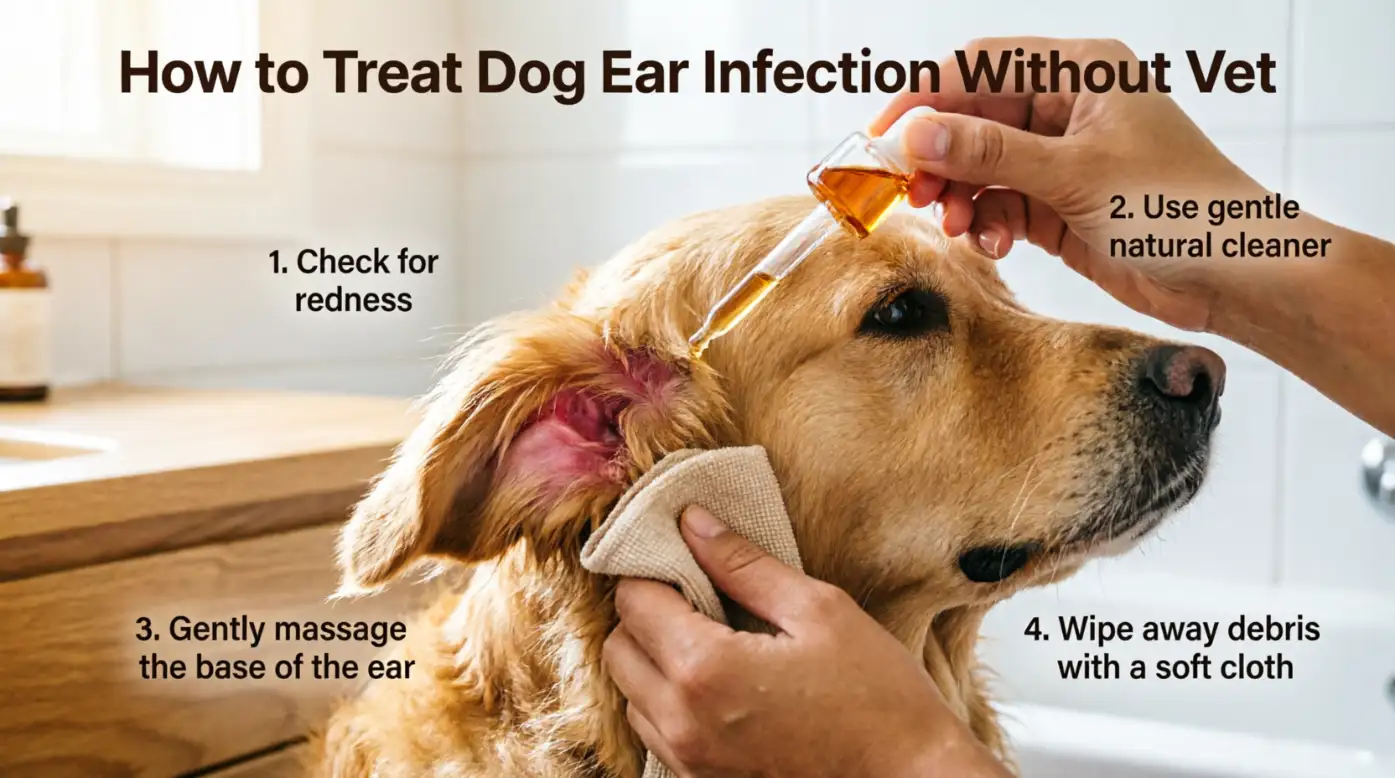
You generally should not try to cure a dog ear infection completely without veterinary guidance. At home, you can keep the ear dry, prevent scratching, and avoid irritating substances. A veterinarian may need to determine if the problem is caused by yeast, bacteria, mites, allergies, or another condition and choose the appropriate treatment.
Key Takeaways
- A true dog ear infection usually needs proper diagnosis rather than a homemade cure.
- Do not put hydrogen peroxide, alcohol, essential oils, or vinegar mixtures into an inflamed ear.
- Keep your dog’s ears dry and prevent excessive scratching.
- Head tilt, balance problems, severe pain, facial weakness, or significant swelling require prompt veterinary attention.
- Repeated ear infections may be caused by allergies, parasites, moisture, or another underlying problem.
Can You Treat a Dog Ear Infection Without a Vet?
If your dog has a suspected ear infection, it is understandable to look for a way to help at home. However, treating the infection yourself can be risky because several different conditions can look similar.
Dogs with ear problems may have yeast or bacterial overgrowth, ear mites, allergies, a foreign object, inflammation, or infection that has moved deeper into the ear. These problems do not all respond to the same treatment.
The biggest issue is that you cannot reliably determine the cause just by looking at the discharge. A veterinarian can examine the ear canal and, when needed, examine a sample under a microscope to identify yeast, bacteria, or other problems.
So, if by “without a vet” you mean completely curing an established ear infection at home, there is no reliable DIY treatment that can safely replace veterinary care.
If you simply need to help your dog until professional care is available, there are safer steps you can take.
What You Can Safely Do at Home
1. Keep the Ear Dry
Moisture can contribute to ear problems by creating conditions that encourage microbial overgrowth. If your dog has recently been swimming or bathed, keep the outer ear dry.
Avoid allowing water to enter the ear canal during bathing.
Do not repeatedly flush an irritated ear simply because you think more cleaning will make the infection disappear. Excessive cleaning can irritate the ear canal and make the problem worse.
2. Avoid Irritating Home Remedies
Many internet searches recommend ingredients such as vinegar, hydrogen peroxide, alcohol, oils, or other homemade mixtures.
These are not good choices for an inflamed or potentially damaged ear.
An irritated ear canal is much more sensitive than healthy skin. If the eardrum is damaged, some substances and medications can also cause problems deeper inside the ear.
For this reason, avoid experimenting with kitchen ingredients or leftover medications.
3. Use Only Dog-Specific Ear Products When Appropriate
A veterinarian-approved ear cleaner may be useful for routine ear care, but cleaning is not the same as treating an infection.
If your dog’s ear is very red, swollen, painful, producing significant discharge, or has a strong odor, do not assume that repeated cleaning will solve the problem.
A painful ear may require examination before cleaning or medication to treat dog ear infection
If your veterinarian has previously shown you how to clean your dog’s ears and recommended a particular product for your dog’s recurring condition, follow those specific instructions rather than creating a new home treatment.
4. Prevent Scratching and Further Trauma
Constant scratching and head shaking can damage the ear flap and surrounding tissues. In some dogs, vigorous scratching or shaking can contribute to an aural hematoma, in which blood collects inside the ear flap.
If your dog is repeatedly scratching or shaking the head, reducing further trauma is important while arranging appropriate care.
Why Dog Ear Infections Are Difficult to Treat at Home
Yeast and Bacterial Infections
Yeast and bacteria can both cause ear problems, and a dog can have both at the same time.
The appearance of ear discharge alone is not a reliable way to determine which organism is responsible. Veterinary examination and microscopic testing can help identify the organisms involved.
Treatment may involve an antifungal medication, antibacterial medication, anti-inflammatory treatment, ear cleaning, or a combination of these depending on the diagnosis.
Using the wrong medication can delay appropriate treatment.
Ear Mites and Allergies
Ear mites can cause intense itching and dark debris, particularly in some dogs. Allergies can also inflame the ear canal and make secondary yeast or bacterial infections more likely.
If allergies are the underlying cause, treating only the infection may not prevent the problem from returning.
Dogs with repeated ear infections therefore may need evaluation for allergies, parasites, hormonal conditions, anatomy-related problems, or other underlying causes.
Middle and Inner Ear Infections
An infection that extends beyond the outer ear is more concerning.
Middle and inner ear disease can affect hearing and balance. Signs can include a persistent head tilt, difficulty walking, coordination problems, abnormal eye movements, or facial nerve problems.
These symptoms are not situations for experimenting with home remedies.
What You Should Not Put in a Dog’s Ear
Avoid using the following unless specifically directed by a veterinarian:
- Hydrogen peroxide
- Rubbing alcohol
- Vinegar mixtures
- Essential oils
- Human ear medications
- Leftover prescription ear drops
- Random antibiotic or antifungal creams
- Cotton swabs deep inside the ear canal
Hydrogen peroxide and alcohol can irritate sensitive ear tissue. Vinegar mixtures can also irritate an already inflamed ear. Cotton swabs may push debris deeper or injure the ear canal.
Another concern is the eardrum. Some ear medications can be harmful if the eardrum is ruptured, so blindly putting medication into an infected ear is not a safe approach.
Signs Your Dog Needs a Vet
Arrange veterinary care promptly if your dog has:
- Significant ear pain
- A very red or swollen ear
- Foul-smelling discharge
- Yellow, green, bloody, or heavy discharge
- Persistent head shaking
- Constant scratching
- Severe sensitivity when the ear is touched
- A swollen ear flap
- Hearing changes
- A head tilt
- Loss of balance or difficulty walking
- Abnormal eye movements
- Facial weakness or difficulty blinking
Balance problems, head tilt, coordination problems, and facial nerve changes can indicate involvement of the middle or inner ear and deserve prompt evaluation.
If your dog appears seriously ill, extremely painful, weak, or unable to walk normally, seek urgent veterinary care rather than attempting home treatment.
What a Veterinarian May Do
A veterinary examination does more than simply confirm that an ear looks infected.
The veterinarian may examine the ear canal and eardrum with an otoscope and collect ear material for microscopic evaluation. This helps determine if yeast, bacteria, parasites, or another problem is involved.
Treatment can then be selected according to the cause.
For example, a yeast infection may require an antifungal medication, while a bacterial infection may require an appropriate antibacterial treatment. Inflammation and pain may also need to be addressed.
More complicated infections may require additional testing or treatment, particularly when the infection is recurrent, severe, resistant to treatment, or suspected to involve the middle ear.
This targeted approach is important because an ear infection is not one single disease with one universal treatment.
How to Prevent Future Ear Infections
After your dog’s current ear problem has been properly evaluated, prevention may help reduce future episodes.
Keep the ears dry after swimming or bathing. Check the ears regularly for changes in odor, redness, moisture, discharge, or sensitivity.
If your dog has recurrent infections, ask your veterinarian if allergies, parasites, excessive moisture, or another underlying condition could be contributing.
Do not over-clean the ears. Too much cleaning can irritate the ear canal and interfere with its normal protective environment. Treat dog ear infection
Use only ear-cleaning products appropriate for dogs and follow professional instructions about how frequently to use them.
Frequently Asked Questions
Can a dog ear infection go away on its own?
Some mild ear irritation may improve after its underlying trigger is removed, but a true ear infection should not be assumed to resolve on its own. Untreated infection can become more painful and may extend into deeper parts of the ear. If your dog has pain, redness, odor, discharge, or persistent scratching, veterinary evaluation is the safer choice.
Can I use hydrogen peroxide for my dog’s ear infection?
No. Hydrogen peroxide can irritate the sensitive tissue inside a dog’s ear. It is not a safe substitute for diagnosis or appropriate ear medication. Avoid using it in an inflamed ear unless a veterinarian specifically tells you to use a particular product.
Can I use vinegar for a dog ear infection?
Vinegar mixtures are commonly promoted online as home remedies, but they can irritate an already inflamed ear. They also do not address every possible cause of an ear problem. A dog with suspected infection should be evaluated rather than treated with an improvised vinegar solution.
How do I know if my dog’s ear infection is serious?
Severe pain, significant swelling, heavy discharge, bleeding, a persistent head tilt, loss of balance, difficulty walking, abnormal eye movements, or facial weakness are concerning signs. These can indicate more advanced ear disease and require prompt veterinary attention.
How long does a dog ear infection take to clear?
The time varies according to the cause and severity. Some uncomplicated infections improve within one to two weeks after appropriate treatment begins, while chronic or complicated infections can take considerably longer. Stopping treatment as soon as the ear looks better can allow the problem to return.
Conclusion
If you searched for how to treat dog ear infection without a vet, the safest answer is that you should not try to completely cure a suspected infection with a homemade remedy.
You can help by keeping the ear dry, preventing further scratching, avoiding irritating substances, and following previously provided veterinary instructions for ear care. But persistent pain, odor, redness, discharge, or head shaking deserves professional evaluation.
The reason is simple: yeast, bacteria, mites, allergies, foreign objects, and deeper ear infections can look similar but require different approaches. Getting the cause right is the key to treating the problem safely and reducing the chance that it keeps coming back.

I am Toni Morrison an acclaimed American novelist and Nobel Prize winner whose powerful storytelling explored identity, memory, love, heritage, and the human spirit through unforgettable literary works at Spiritualdreamz.com.










