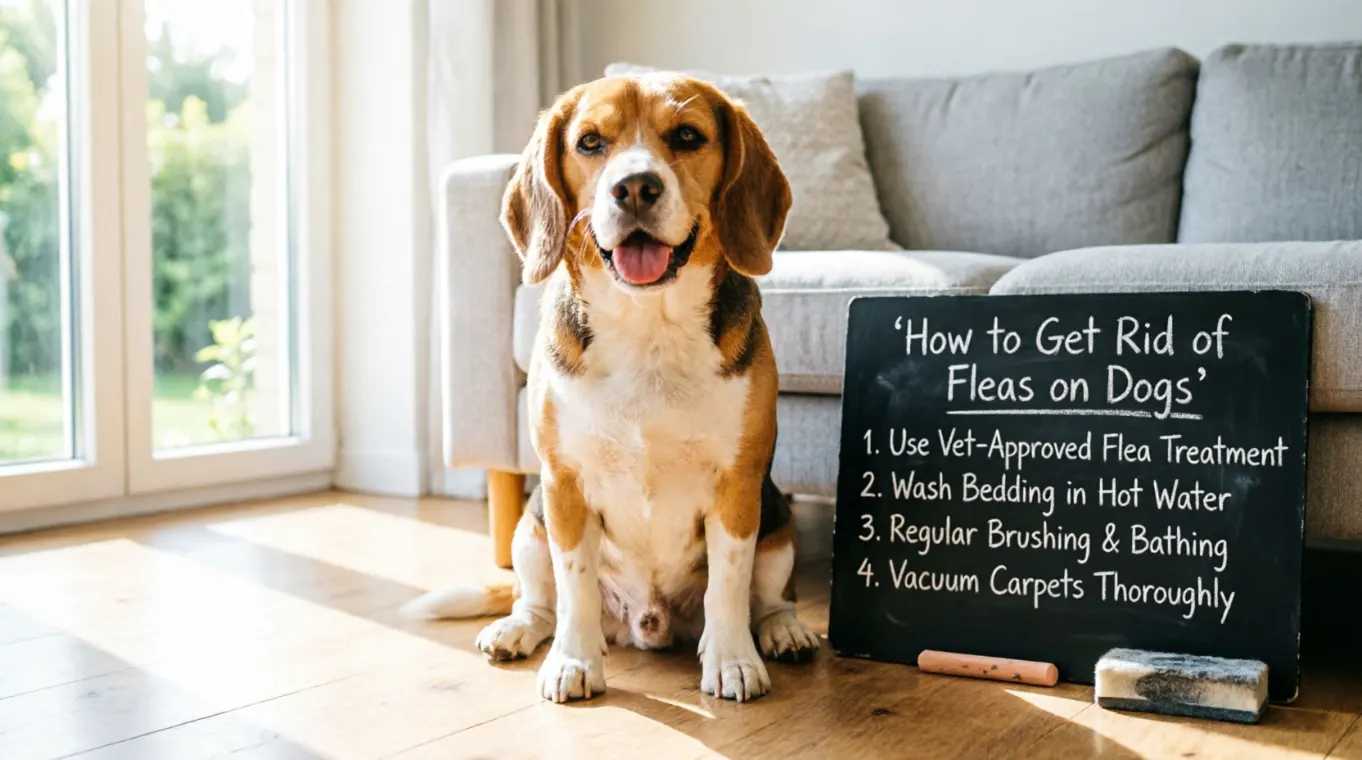
To get rid of fleas on dogs, use a veterinarian-recommended flea treatment appropriate for your dog’s age and weight, remove adult fleas with a flea comb, and clean the areas where your dog spends time. Wash bedding and vacuum carpets, furniture, and floors regularly. Continue flea prevention as directed because flea eggs, larvae, and pupae can remain in the environment after adult fleas are gone.
Key Takeaways
- Treat your dog with an appropriate, properly dosed flea-control product.
- Use a flea comb to remove adult fleas and flea dirt.
- Clean your home because most flea life stages are found off the dog.
- Treat other pets in the household with products appropriate for their species.
- Continue prevention consistently to stop the infestation from returning.
How to Tell If Your Dog Has Fleas
Fleas are tiny, fast-moving parasites that feed on blood. They can cause intense itching, skin irritation, hair loss, scabs, and hot spots. Some dogs develop flea allergy dermatitis, meaning even a small number of flea bites can cause a strong skin reaction.
You may see adult fleas moving through your dog’s fur, especially around the neck, lower back, belly, or base of the tail. However, you cannot always see live fleas.
Another clue is flea dirt, which looks like tiny black or dark-brown specks. If you place suspected flea dirt on a damp white paper towel, it may leave a reddish-brown stain because it contains digested blood.
How to Get Rid of Fleas on Dogs: Step-by-Step
1. Start With a Flea Comb
A fine-toothed flea comb can physically remove adult fleas and flea dirt from your dog’s coat. Pay particular attention to areas where fleas commonly gather, such as around the neck and tail.
Keep a bowl of soapy water nearby. When you remove fleas from the comb, place them in the water.
Combing can provide immediate physical removal, but it usually isn’t enough to eliminate an established infestation by itself. It works best as part of a larger flea-control plan.
2. Use an Appropriate Flea Treatment
For an established infestation, veterinary flea-control products are generally much more effective than relying on bathing or combing alone. Available treatments include oral medications, topical products, collars, and other formulations.
The right product depends on factors such as your dog’s age, weight, health, lifestyle, and other medications.
Some commonly used flea-control medications belong to the isoxazoline class. The FDA considers these products safe and effective for most dogs and cats, but they have been associated with neurological reactions such as tremors, loss of coordination, and seizures in some animals. Discuss the choice with your veterinarian, particularly if your dog has a history of seizures or neurological problems.
Always follow the product label or your veterinarian’s instructions. Never assume that using more products will work faster.
3. Treat Every Pet in the Household
If you have several pets, treating only the dog with visible fleas may not solve the problem.
Cats and other pets can also carry fleas or support the flea life cycle. Each animal should receive a product specifically labeled for its species, age, and size.
This is particularly important because some flea-control ingredients that are appropriate for dogs can be dangerous to cats. The EPA specifically advises owners never to substitute dog products for cat products or use products outside their labeled species and weight ranges.
4. Clean Your Home
This step is easy to overlook.
Adult fleas live on animals, but flea eggs, larvae, and pupae can be found in the environment. Cornell University notes that successful flea control requires attention to both pets and their surroundings.
Wash your dog’s bedding and blankets regularly. Vacuum carpets, rugs, floors, furniture, and other areas where your dog rests.
Pay special attention to:
- Dog beds
- Carpets and rugs
- Upholstered furniture
- Cracks and floor edges
- Areas beneath furniture
- Favorite sleeping spots
- Pet carriers and blankets
Regular vacuuming helps physically remove flea eggs and developing stages. VCA also recommends thorough vacuuming and washing pet bedding as important parts of environmental control.
For a significant infestation, you may need a household flea-control product or professional pest-control service. Follow all product instructions and keep pets and people away from treated areas as directed.
5. Continue Treatment and Prevention
Do not stop flea prevention simply because you no longer see fleas.
Flea pupae can remain protected inside cocoons and later emerge as adult fleas. That is one reason people may continue seeing some fleas after beginning treatment.
Merck Veterinary Manual notes that an established infestation can take 2–3 months to completely control because existing flea life stages can remain in the environment.
Consistent prevention helps kill newly emerged fleas before they can continue the life cycle.
What Flea Treatments Can You Use on Dogs?
There is no single flea treatment that is ideal for every dog. Your veterinarian can help select an option based on your dog’s needs.
Oral Treatments
Oral flea medications are given by mouth and can provide systemic flea control. Several modern products work quickly against adult fleas and are also available in combination formulations for other parasites.
Some are prescription medications, so your veterinarian may need to evaluate your dog before recommending them.
Topical Treatments
Topical products are applied directly to the dog’s skin. Depending on the product, they may kill adult fleas, affect developing flea stages, or provide ongoing protection.
Always check the label for the correct weight range, minimum age, application instructions, and bathing restrictions.
Flea Collars and Other Options
Flea collars can provide extended protection, while shampoos and sprays may be useful in particular situations.
However, products differ significantly in their ingredients, duration, and safety requirements. The EPA recommends following the label exactly and using only products intended for the specific animal and size being treated.
How to Get Rid of Fleas in Your House
Getting rid of fleas from your dog while ignoring the home can allow the infestation to continue.
Start by washing pet bedding and frequently vacuuming the areas your dog uses. Continue cleaning regularly rather than expecting one cleaning session to eliminate every flea life stage.
If an infestation is severe, household flea treatments may be necessary. Flea-control products designed for indoor use can contain adulticides and insect growth regulators that target different stages of the flea life cycle.
Read the label carefully before using any pesticide inside your home. Keep children and pets away from treated areas according to the product directions.
Outdoor management may also help when your dog spends substantial time outside. Remove piles of leaves or brush and keep frequently used areas maintained. Cornell recommends reducing outdoor areas that provide favorable flea habitat.
How Long Does It Take to Get Rid of Fleas?
You may kill many adult fleas on your dog relatively quickly, but completely controlling an infestation takes longer.
The reason is the flea life cycle. Fleas develop through four stages: egg, larva, pupa, and adult. Only adults live on the animal, while the other stages can remain in the environment.
Depending on the severity of the infestation and the control methods used, complete control may take several weeks or even a few months.
Therefore, seeing an occasional new flea after starting treatment does not automatically mean the treatment has failed.
Why Does My Dog Still Have Fleas After Treatment?
There are several possible explanations:
- Flea eggs and pupae were already present in the home.
- Treatment was not applied at the correct dose or interval.
- Another untreated pet is carrying fleas.
- Your dog is being exposed to an infested environment.
- The flea product is not appropriate for your dog’s situation.
- Environmental cleaning has not been thorough enough.
Merck notes that delayed or inconsistent application, incorrect dosing, bathing-related loss of some topical products, and environmental flea stages can all contribute to continued infestation.
If fleas continue despite following the product directions, contact your veterinarian rather than repeatedly changing or combining treatments on your own.
Flea Treatment Safety: What Dog Owners Should Know
Flea treatments contain active ingredients designed to kill parasites, so using them correctly matters.
Before applying a product:
- Check that it is labeled for dogs.
- Confirm the correct weight range.
- Check the minimum age.
- Follow the application or dosing instructions.
- Check warnings for pregnant, nursing, sick, elder, or medicated dogs.
- Do not combine products unless your veterinarian tells you to do so.
The EPA warns that using the wrong species product, incorrect amount, or inappropriate formulation can unnecessarily expose pets to pesticides.
If your dog develops a suspected reaction after treatment, contact your veterinarian. The EPA lists possible adverse reactions including skin irritation, vomiting, diarrhea, trembling, depressed behavior, and seizures.
When to Call a Veterinarian
Contact your veterinarian if your dog has severe itching, significant hair loss, open sores, skin infection, weakness, pale gums, or other concerning symptoms.
Veterinary attention is especially important for puppies, very small dogs, elder or sick dogs, pregnant or nursing dogs, and dogs with a history of neurological problems.
Heavy flea infestations can contribute to anemia, particularly in vulnerable animals, while flea bites can trigger allergic skin disease.
Your veterinarian can also check for complications such as secondary skin infections or parasites associated with flea exposure.
Frequently Asked Questions
What kills fleas on dogs instantly?
Some fast-acting flea products can kill adult fleas quickly, while flea shampoos may kill fleas present during bathing. However, killing the fleas currently on the dog does not eliminate eggs, larvae, and pupae in the environment. Complete control therefore requires ongoing treatment and environmental management.
Can I get rid of fleas on my dog naturally?
A flea comb and regular bathing can physically remove some adult fleas, but these methods alone may not eliminate an established infestation. Because flea eggs, larvae, and pupae can remain in the environment, effective control generally requires a comprehensive approach. Talk with your veterinarian before relying on homemade remedies or essential oils.
Do I need to treat my house if my dog has fleas?
Often, yes, especially if the infestation is established. Flea eggs, larvae, and pupae can develop in carpets, bedding, furniture, cracks, and other areas around the home. Vacuuming and washing bedding are important steps, while severe infestations may require additional household treatment.
Can fleas make dogs sick?
Yes. Fleas can cause severe itching and flea allergy dermatitis, and heavy infestations can contribute to anemia. Fleas can also transmit certain parasites, including tapeworms.
How do I prevent fleas from coming back?
Use a veterinarian-recommended flea preventive consistently and follow its dosing schedule. Also maintain regular cleaning of pet bedding and the areas where your dog spends time. Year-round prevention is commonly recommended because fleas can survive indoors even when outdoor temperatures are cold.
Final Thoughts
The most reliable way to get rid of fleas on dogs is to think beyond the fleas you can see. Treat the dog with an appropriate flea-control product, use a flea comb for immediate physical removal, clean the home thoroughly, address other pets, and continue prevention.
Most importantly, do not expect an established infestation to disappear overnight. Flea eggs, larvae, and pupae can survive away from your dog, so consistent treatment is what breaks the flea life cycle and helps prevent another infestation.
If your dog is very young, sick, pregnant, nursing, unusually sensitive, or has a history of seizures or other neurological problems, ask your veterinarian before choosing a flea treatment.

I am Stephen King an American writer exploring spirituality, dreams, mindfulness, and personal growth. Through SpiritualDreamz.com, he shares thoughtful insights to inspire reflection, clarity, and meaningful everyday living.










