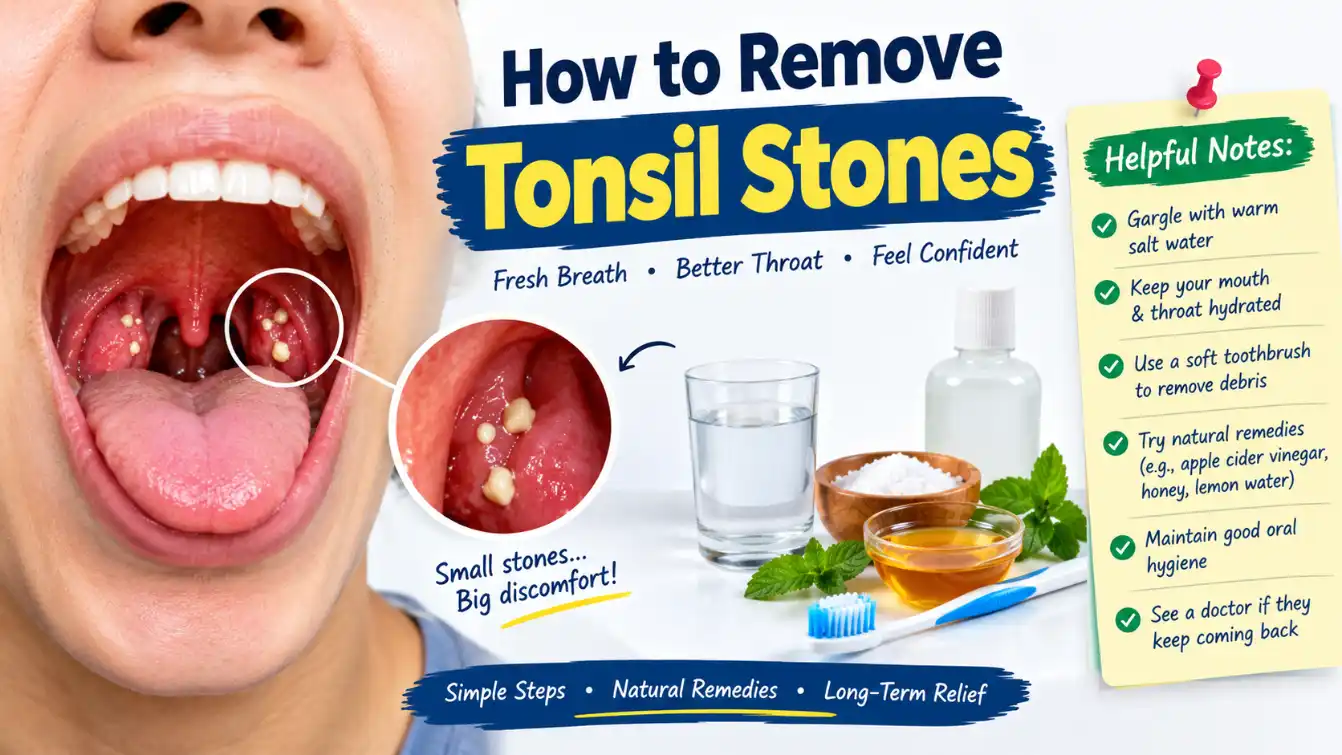
Waking up with persistent bad breath, no matter how often you brush, can frustrate and confuse you especially when you can’t figure out the cause. For many people, the culprit is something small but surprisingly common: tonsil stones. These tiny, calcified formations develop in the nooks and crevices of your tonsils, trapping bacteria, mucus, and food debris until they harden into whitish or yellowish deposits.
While tonsil stones are rarely dangerous, they can cause an ongoing sore throat, a metallic taste, or that nagging feeling that something is stuck in the back of your throat. The good news? In most cases, you can safely manage and even remove them yourself at home, without a trip to the doctor.
In this guide, we’ll walk through exactly what tonsil stones are, why they form, and most importantly the safest, most effective methods to remove and prevent them for good.
What Are Tonsil Stones? (The Basics)
Doctors call tonsil stones tonsilloliths small, hardened formations that develop within the tonsils, the two soft tissue masses at the back of your throat. To understand how they form, it helps to know a bit about tonsil anatomy. Your tonsils aren’t smooth; small pockets and folds called crypts cover their surface. These crevices help trap bacteria and viruses as part of your immune system’s first line of defense.
The problem is that these same crypts can also trap other things: dead skin cells, mucus, leftover food particles, and bacteria. When debris lodges deep in a crypt and your body doesn’t clear it away naturally, it can begin to calcify much like plaque hardens on teeth eventually forming a solid or semi-solid mass.
Tonsil stones vary widely in size. Many are so small they go completely unnoticed, appearing as tiny white or yellow specks. Others can grow larger, sometimes reaching the size of a pea or even bigger in rare cases, causing more noticeable discomfort.
Tonsil stones typically contain calcium, along with other minerals like magnesium and phosphorus, mixed with organic matter such as bacteria and dead cells. This composition also explains their strong, unpleasant odor: the trapped bacteria release sulfur compounds as they break down organic debris.
Why Do Tonsil Stones Form?
Tonsil stones don’t just appear randomly; several factors make certain people more prone to developing them. Understanding these causes can help you figure out why you keep getting them and how to reduce your risk going forward.
Chronic tonsil inflammation is one of the biggest contributors. If you’ve had repeated bouts of tonsillitis, your tonsils may develop scar tissue and deeper, more irregular crypts over time creating more places for debris to lodge.
Anatomy also plays a role. Some people are simply born with larger tonsils or deeper, more numerous crypts, making them naturally more susceptible regardless of hygiene habits.
Poor oral hygiene allows bacteria and food particles to build up in the mouth and throat, increasing the raw material available to form stones. Not brushing your tongue, especially near the back, is a common oversight.
Post-nasal drip, often caused by allergies, sinus infections, or chronic congestion, sends mucus trickling down the throat, where it can settle into tonsil crypts and contribute to stone formation.
Dry mouth reduces saliva’s natural rinsing and antibacterial action, letting debris accumulate more easily.
Finally, diet and lifestyle factors like consuming a lot of dairy or sugary foods, which can leave residue in the mouth, or smoking, which irritates the throat and alters bacterial balance can also increase your likelihood of developing tonsil stones.
Who’s at Risk?
While anyone can develop tonsil stones, certain groups are more likely to experience them regularly. Knowing if you fall into one of these categories can help explain recurring issues and guide your prevention strategy.
People with large or deeply cryptic tonsils top the list. This comes down largely to anatomy; some individuals are simply born with tonsils that have more nooks and crevices, giving debris more places to lodge and calcify.
Those with a history of chronic tonsillitis also face greater susceptibility. Repeated infections can scar the tonsils and reshape them irregularly over time, creating deeper pockets that resist natural cleaning.
People with poor dental hygiene habits face increased risk as well. Infrequent brushing, skipping tongue cleaning, or not flossing allows bacteria and food debris to accumulate in the mouth, providing more raw material for stones to form.
Allergy and sinus sufferers are another at-risk group. Chronic post-nasal drip constantly introduces mucus into the throat, where it can settle in the tonsils and combine with other debris.
Age matters too, tonsil stones are most commonly reported in teenagers and young adults, likely due to more active tonsil tissue during these years, though they can occur at any age, including in children and older adults.
If you fall into one or more of these categories, don’t worry the removal and prevention methods covered later in this guide can still help significantly.
Signs and Symptoms
Tonsil stones can present in a variety of ways, and symptoms often range from barely noticeable to genuinely uncomfortable. Here’s what to watch for.
Persistent bad breath (halitosis) is by far the most common complaint, and often the first clue that something’s off. This happens because the bacteria trapped inside tonsil stones release sulfur compounds as they break down organic material, producing a distinct, unpleasant odor that doesn’t go away with regular brushing or mouthwash.
Visible white or yellow lumps at the back of the throat are another telltale sign. You can often spot them in a mirror, sitting in the folds of the tonsils, and they may vary in size from tiny specks to more noticeable clusters.
A sore or scratchy throat is also common, particularly a sensation that something is lodged in the back of your throat, even when nothing seems visibly present.
Difficulty swallowing can occur when a stone grows large enough to create physical discomfort or a feeling of obstruction, though this is less common.
Ear pain is a surprising but well-documented symptom. Because the tonsils and ears share nerve pathways, irritation in the throat can sometimes be felt as referred to as pain in the ear, even though the ear itself is unaffected.
Other signs include a metallic or unpleasant taste in the mouth and visibly swollen tonsils. Many people have tonsil stones without any symptoms at all, discovering them only by chance during a dental or medical exam.
How Tonsil Stones Are Diagnosed
In most cases, tonsil stones are easy to identify without any special equipment, but there are situations where professional diagnosis becomes important.
Self-detection is often the first step. Many people discover tonsil stones simply by looking in a mirror with good lighting and noticing small white or yellow deposits nestled in the folds of the tonsils. A persistent bad taste, ongoing bad breath despite good oral hygiene, or a nagging feeling of something stuck in the throat can also prompt someone to investigate further at home.
A professional exam becomes useful when symptoms are unclear, recurring, or more severe than expected. During a routine check, a doctor or dentist can visually inspect the tonsils, sometimes using a light and tongue depressor, to confirm if the visible debris is indeed tonsil stones rather than another condition.
In rare cases involving unusually large or deeply embedded stones, doctors may order imaging such as a CT scan. This helps them assess the size and exact location of the stone, particularly if it’s causing significant pain, swelling, or difficulty swallowing.
A healthcare provider also needs to differentiate tonsil stones from other conditions that can look or feel similar, such as strep throat, oral thrush, or a peritonsillar abscess. These conditions often require very different treatment approaches, so an accurate diagnosis ensures you address the right issue rather than assuming every throat symptom relates to tonsil stones.
At-Home Removal Methods (Step-by-Step)
If your tonsil stones are small and not causing severe discomfort, several safe at-home methods can help dislodge them.
Salt water gargling is the gentlest starting point. Mix half a teaspoon of salt into warm water and gargle for 30 seconds, several times a day. The saline solution helps loosen stones and reduce bacteria, sometimes dislodging smaller ones on its own.
Coughing can occasionally dislodge stones that are already loose. A firm, deliberate cough sometimes pops them free without any additional intervention.
A water flosser or oral irrigator, set to low or medium pressure, lets you flush out a visible stone by aiming it carefully at the tonsil. This method is generally safe, but aim gently to avoid irritating surrounding tissue.
The cotton swab technique involves using a clean, damp cotton swab to gently push upward from beneath the stone, coaxing it out rather than digging at it directly.
A soft toothbrush can sometimes handle stones near the surface with light pressure, though caution is essential.
A mirror and good lighting make any of these methods significantly easier and safer, since you’ll be able to see exactly where the stone sits.
Important safety note: avoid sharp objects, toothpicks, or fingernails. These can injure delicate tonsil tissue, cause bleeding, or push the stone deeper into the crypt, potentially worsening the problem or introducing infection.
Medical and Professional Treatment Options
When home remedies aren’t enough especially for large, recurring, or deeply embedded stones several professional treatment options are available.
Manual extraction by a doctor is often the first step. Using specialized tools under proper lighting and sterile conditions, a physician or ENT specialist can safely remove stones that are too difficult or risky for you to reach at home.
Laser cryptolysis is a more permanent solution for people with frequent, recurring tonsil stones. This procedure uses a laser to reshape or smooth out the tonsil crypts, reducing the number of pockets where debris can become trapped in the future.
Coblation cryptolysis works similarly but uses radiofrequency energy instead of a laser to achieve the same crypt-reduction effect, often with less discomfort and a shorter recovery time.
Curettage involves a doctor using a small surgical instrument to scoop out embedded stones, typically reserved for cases where stones are firmly lodged and not responding to gentler methods.
Antibiotics may help if a tonsil stone has led to a secondary infection, signaled by symptoms like fever, significant swelling, or pus.
Tonsillectomy, the surgical removal of the tonsils entirely, generally counts as a last resort. Doctors typically reserve it for cases involving chronic, severe tonsil stones that significantly affect quality of life, or cases tied to recurrent tonsillitis. While effective since no tonsils means no tonsil stones it involves a longer recovery, so doctors usually recommend it only after you’ve exhausted other options.
Prevention Strategies
While tonsil stones can’t always be prevented entirely, especially for those with a natural predisposition due to tonsil anatomy, a few consistent habits can significantly reduce how often they form.
A thorough daily oral hygiene routine is the foundation of prevention. This means brushing your teeth twice a day, flossing regularly, and, importantly, brushing or scraping your tongue, especially toward the back where bacteria tend to accumulate unnoticed.
Gargling regularly with salt water or an antibacterial mouthwash helps flush out debris before it has a chance to settle into tonsil crypts and calcify. Making this a daily habit, rather than something you only do when symptoms appear, offers the best results.
Staying well-hydrated supports your saliva production, which plays a natural role in rinsing away bacteria and food particles throughout the day. Dry mouth, by contrast, allows debris to linger and build up more easily.
Dietary adjustments can also help, particularly for those who notice a pattern between certain foods and flare-ups. Reducing excessive dairy or sugary food intake may minimize residue buildup in the mouth for some people.
Quitting smoking removes a major irritant that can alter the bacterial balance in your throat and worsen tonsil stone frequency.
Finally, managing underlying allergies or sinus issues that cause post-nasal drip, along with keeping up with routine dental checkups, helps you catch and address early buildup or risk factors before they turn into a recurring problem.
Common Myths and Misconceptions
Tonsil stones are surrounded by a fair amount of misinformation. Clearing up these misconceptions can help you approach the condition with the right mindset and avoid unnecessary worry.
Myth: Tonsil stones mean you have poor hygiene. While oral hygiene plays a role, it’s far from the only factor. Many people with excellent dental habits still develop tonsil stones simply because of their tonsil anatomy deep crypts and folds that naturally trap debris regardless of how well they brush and floss.
Myth: You should always remove them yourself. Not every tonsil stone needs to be extracted immediately, especially if it’s small and not causing symptoms. Aggressively digging at tonsils with sharp objects or fingernails can cause more harm than the stone itself, leading to bleeding, injury, or infection. In many cases, it’s safer to let smaller stones dislodge naturally or use gentle methods only.
Myth: They’re a sign of a serious illness. Tonsil stones are almost always benign. While they can cause discomfort or embarrassment due to bad breath, doctors don’t typically link them to cancer or any dangerous underlying condition. Persistent, severe symptoms still warrant a doctor’s visit, but the stones themselves aren’t inherently alarming.
Myth: Tonsillectomy is the only permanent fix. While removing the tonsils does eliminate the possibility of future tonsil stones, it’s a significant surgical procedure that doctors typically reserve for severe, chronic cases. Many people successfully manage or even resolve recurring tonsil stones through consistent at-home prevention and, when necessary, less invasive treatments like laser cryptolysis.
Possible Complications if Left Untreated
In most cases, tonsil stones are harmless and won’t lead to serious health problems. However, ignoring persistent or recurring stones can sometimes result in a few notable downsides worth understanding.
Chronic bad breath is the most common and immediate impact. Because tonsil stones are a major contributor to halitosis, leaving them untreated can mean dealing with ongoing bad breath that doesn’t respond to typical fixes like mints, mouthwash, or even regular brushing. Beyond the physical symptoms, this can take a toll on confidence and social comfort over time.
Recurrent tonsillitis is another possible consequence. Since tonsil stones often form in the same crypts that harbor bacteria, an ongoing buildup can contribute to repeated tonsil inflammation and infection, creating a frustrating cycle where stones and tonsillitis each make the other more likely.
In rarer cases, larger stones can grow if debris continues to accumulate and calcify without treatment. While uncommon, sizable stones can cause increased discomfort, a persistent feeling of something stuck in the throat, or even mild difficulty swallowing.
There’s also a small risk of localized infection, particularly if a stone becomes deeply embedded and irritates surrounding tissue, which can lead to swelling, pain, or in rare instances, an abscess.
It’s worth emphasizing that these complications are the exception rather than the rule. Most tonsil stones remain small, manageable, and non-threatening but staying proactive with removal and prevention can help you avoid these less common outcomes altogether.
When to See a Doctor
While most tonsil stones can be managed safely at home, certain signs indicate it’s time to seek professional care rather than continuing to self-treat.
Recurring or large stones are a key signal. If you find yourself dealing with tonsil stones repeatedly, month after month, or notice one growing unusually large, it’s worth having a doctor or ENT specialist evaluate your tonsils. They can determine if a more permanent solution, like laser cryptolysis, might be appropriate for your situation.
Signs of infection should never be ignored. Symptoms such as fever, significant swelling of the tonsils or surrounding throat tissue, visible pus, or severe, worsening pain suggest that something more than a simple tonsil stone may be going on, and prompt medical attention is important.
Difficulty breathing or swallowing is a more urgent red flag. If a stone or associated swelling becomes large enough to interfere with normal swallowing, or if you experience any breathing difficulty, this warrants immediate medical evaluation rather than waiting to see if it resolves on its own.
Stones that won’t resolve with home care are also worth discussing with a doctor. If you’ve consistently tried gentle removal methods and good oral hygiene without success, a professional can offer more targeted treatment options and rule out any underlying issues contributing to the problem.
When in doubt, a quick visit to your doctor or dentist can provide peace of mind and ensure you’re not missing a more significant underlying condition.
FAQs
Can tonsil stones go away on their own?
Yes, small tonsil stones often dislodge naturally through everyday actions like swallowing, coughing, or eating, without any intervention needed.
Are tonsil stones contagious?
No, tonsil stones themselves aren’t contagious. They form from debris and bacteria naturally present in your own mouth and throat, not from an external infectious source.
Do tonsil stones smell?
Yes, one of their most defining characteristics is a strong, unpleasant odor. This happens because the bacteria trapped inside release sulfur compounds as they break down organic material, which is also why tonsil stones are a common cause of chronic bad breath.
Can children get tonsil stones?
Yes, though they’re more commonly reported in teenagers and young adults, children can develop tonsil stones too, particularly if they have larger tonsils or a history of recurrent tonsillitis.
Is it safe to remove tonsil stones daily?
Gentle methods like salt water gargling can be done daily without issue. However, more direct removal techniques, like using a cotton swab or water flosser, should be done carefully and not excessively, as repeated poking or pressure can irritate tonsil tissue over time.
Conclusion
Tonsil stones are a common, usually harmless condition that many people deal with at some point, even if they don’t always realize what’s causing their symptoms. From persistent bad breath to that nagging feeling of something stuck in your throat, the signs are often easy to spot once you know what to look for.
The good news is that most tonsil stones can be safely managed at home using gentle methods like salt water gargling, careful water flosser use, or light cotton swab techniques, paired with consistent oral hygiene to prevent them from returning. For larger, recurring, or more stubborn cases, treatments like laser cryptolysis offer an effective, less invasive solution than surgery.
If you’re dealing with frequent or severe tonsil stones, don’t hesitate to consult an ENT specialist who can recommend the right long-term approach for your specific situation. With the right routine, you can keep tonsil stones from becoming a recurring nuisance.

I am James Patterson an American writer sharing thoughtful insights on dreams, spirituality, personal growth, and everyday life through practical guides and meaningful stories for SpiritualDreamz.com readers everywhere with warmth.










