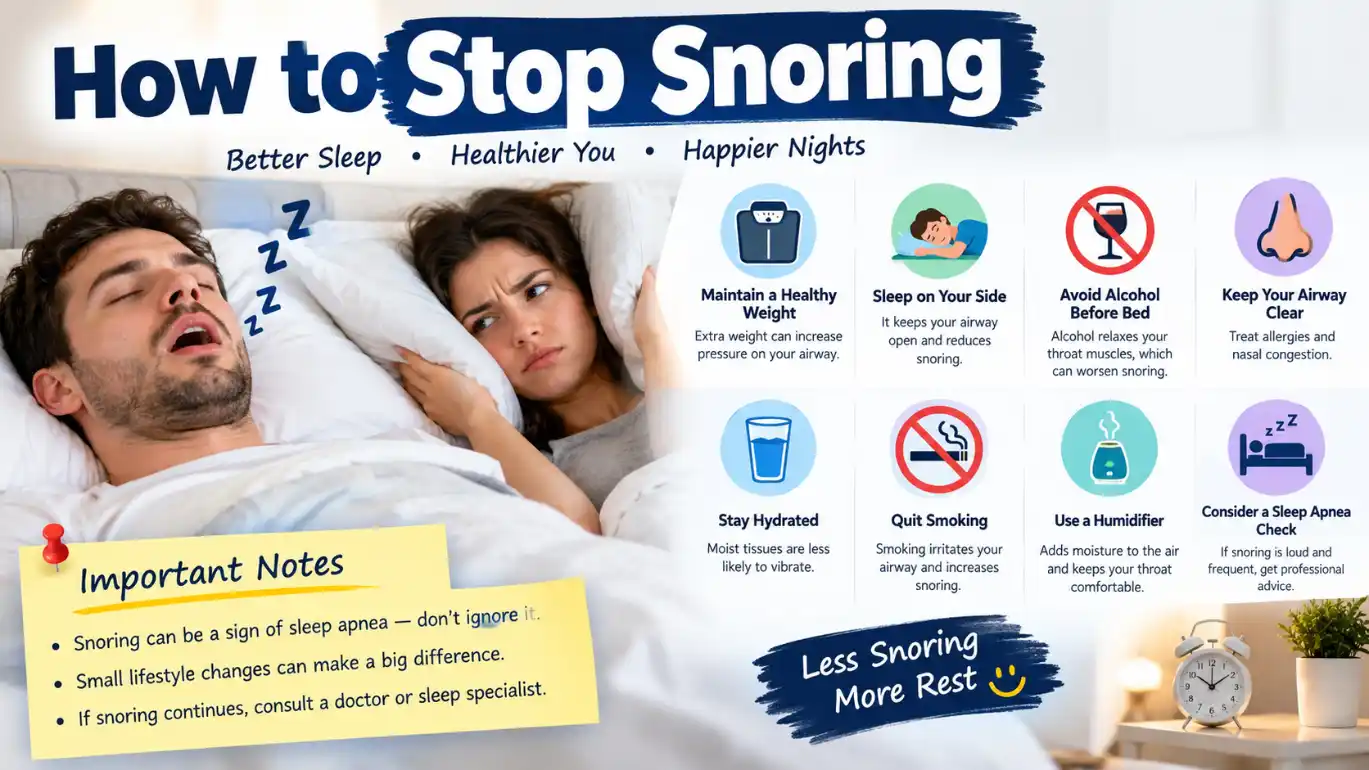
If you’ve ever been jolted awake by your own snoring or nudged awake by a partner who has you far from alone. An estimated 40% of adults snore regularly, and many people dismiss it as a harmless quirk of sleep. But snoring is more than just a nighttime nuisance. It can chip away at your sleep quality, strain relationships, and in some cases, point to a more serious condition like obstructive sleep apnea.
The good news is that snoring is rarely something you have to live with. In most cases, it responds well to simple, targeted changes from adjusting how you sleep to strengthening the muscles in your throat. In others, it’s a signal worth taking to a doctor.
This guide walks through exactly why snoring happens, the full range of remedies available, and how to tell when it’s time to seek professional help.
Understanding the Mechanics of Snoring
To understand how to stop snoring, it helps to know what’s actually happening in your body while you sleep. Snoring is the sound air produces when it struggles to move freely through the passages at the back of your nose and throat. As you drift into deeper sleep, the muscles supporting your soft palate, tongue, and throat naturally relax. In most people, this relaxation is mild enough that breathing stays quiet. But if the airway narrows too much, the surrounding tissues, the soft palate, uvula, tonsils, and throat walls begin to vibrate as air rushes past them, creating the familiar rattling or rasping sound.
The severity and pitch of snoring often depend on exactly where this obstruction occurs. A blockage higher up, in the nasal passages, tends to produce a lighter, whistling sound. A blockage deeper in the throat often involving the tongue falling backward usually creates louder, more resonant snoring.
Age plays a significant role here as well. As we get older, throat muscles gradually lose tone, much like muscles elsewhere in the body, making the airway more prone to collapse during sleep. This is one reason snoring tends to become more frequent and more pronounced later in life, even in people who never snored as younger adults.
Understanding this mechanism matters because it explains why so many different remedies exist; each one targets a different point along the airway where the obstruction happens.
Types of Snoring
Not all snoring is the same, and identifying which type you have is often the first step toward finding an effective fix.
Nasal snoring originates in the nasal passages, and congestion, allergies, or structural issues like a deviated septum usually cause it. It tends to produce a higher-pitched, whistling sound. People with nasal snoring often notice it worsens during cold and allergy seasons, or when lying in certain positions that intensify congestion.
Mouth or throat snoring happens when the tissues at the back of the throat including the soft palate and throat walls vibrate as air passes by. Alcohol consumption, sedative use, or simply the natural relaxation of throat muscles during deep sleep frequently trigger this type. It tends to produce a deeper, more resonant sound than nasal snoring.
Tongue-based snoring occurs when the tongue falls backward toward the throat during sleep, partially blocking the airway. This is especially common among back-sleepers and tends to worsen with excess weight around the neck, since additional tissue can push the tongue further back.
Mixed snoring combines elements of more than one type, and it’s actually quite common that many people experience snoring that involves both nasal and throat components simultaneously.
Pinpointing your type matters because a nasal strip won’t do much for tongue-based snoring, and a throat exercise won’t fix a deviated septum. This guide organizes the remedies later on with these distinctions in mind, so you can match the solution to the actual source of the problem.
Root Causes A Deep Dive
Snoring rarely has a single cause; it’s usually the result of anatomy, lifestyle, and circumstance overlapping.
Anatomical factors play an outsized role for many chronic snorers. A deviated septum, enlarged tonsils or adenoids, an unusually long soft palate, or a naturally recessed jaw can all narrow the airway regardless of weight or habits, which is why some people snore even at a healthy weight.
Weight and fat distribution matter because extra tissue around the neck and throat physically compresses the airway. Even modest weight gain can be enough to tip someone from quiet sleep into regular snoring.
Alcohol, sedatives, and muscle relaxants relax the throat muscles beyond their normal nighttime slackening, making vibration more likely which is why snoring is often worse after a night of drinking.
Smoking inflames and irritates the airway, leading to swelling and congestion that restrict airflow, while allergies and chronic congestion create a similar bottleneck at the nasal level.
Sleep position is one of the most common and fixable contributors: sleeping on the back allows gravity to pull the tongue and soft tissue backward into the airway.
Age and sex also factor in that men have statistically narrower airways and are more prone to snoring, while women’s risk rises notably after menopause, likely tied to hormonal shifts affecting muscle tone. Pregnancy adds another layer, as hormonal changes and nasal swelling can trigger snoring even in women who never snored before.
Because these causes often stack, effective treatment usually means addressing more than one at once.
Snoring vs. Sleep Apnea
Ordinary snoring and obstructive sleep apnea (OSA) aren’t the same thing, and learning to tell them apart is one of the most important things you can do for your long-term health.
Ordinary snoring is typically steady and doesn’t involve actually stopping breathing. Sleep apnea, by contrast, involves repeated pauses in breathing sometimes dozens or even hundreds of times a night as the airway fully collapses rather than just partially narrowing. Choking, gasping, or snorting sounds often follow these pauses as the body jolts itself back into breathing.
A few self-assessment questions can help flag risk: Do you wake up gasping? Does a partner report witnessed pauses in your breathing? Do you wake up with headaches or a dry mouth? Are you excessively tired during the day despite a full night’s sleep? Clinicians commonly use tools like the STOP-BANG questionnaire which screens for snoring, tiredness, observed apnea, blood pressure, BMI, age, neck size, and sex to gauge risk, and similar self-check versions are available online.
This distinction isn’t just academic. Ordinary snoring, while disruptive, generally isn’t dangerous on its own. Untreated sleep apnea, however, carries serious long-term risks including high blood pressure, heart disease, stroke, and cognitive decline, since it repeatedly starves the body of oxygen during sleep.
If any of the warning signs above sound familiar, the right next step isn’t a nasal strip, it’s a conversation with a doctor about a sleep evaluation.
Lifestyle Interventions
For many people, the most effective snoring remedies aren’t devices or medical procedures, they’re everyday habits.
Sleep position training is often the single biggest lever. Since back-sleeping lets the tongue and soft tissue fall backward into the airway, training yourself to sleep on your side can meaningfully reduce or eliminate snoring. Simple tricks include sewing a tennis ball into the back of a pajama shirt, using a body pillow, or trying a wearable positional trainer that gently buzzes when you roll onto your back.
Weight management addresses snoring at its structural root for many people. Even a modest reduction in weight particularly around the neck can loosen the pressure on the airway enough to noticeably quiet nighttime breathing.
Alcohol and sedative timing matters more than most people realize. Avoiding alcohol, sleep aids, or muscle relaxants for at least three to four hours before bed prevents excessive throat muscle relaxation during the night.
Hydration plays a quieter but real role dehydration thickens nasal and throat secretions, which can worsen vibration and snoring.
Consistent sleep schedules help too, since overtiredness leads to deeper, heavier muscle relaxation, which can intensify snoring.
Smoking cessation reduces airway inflammation and swelling over time, gradually easing congestion-related snoring.
Finally, people frequently mention dietary adjustments such as avoiding heavy meals or dairy close to bedtime anecdotally, though the evidence here is thinner than for the other factors.
None of these changes work overnight, but together they form the foundation most other remedies build on.
Physical & Mechanical Remedies
When lifestyle changes aren’t enough on their own, a range of physical devices can directly address the mechanics of airway obstruction.
Nasal strips and dilators work by gently pulling the nostrils open from the outside or holding them open from within, which can meaningfully reduce nasal snoring caused by congestion or narrow nasal passages. They’re inexpensive and require no adjustment period, making them a common first step.
Mandibular advancement devices (also called anti-snoring mouthguards) reposition the lower jaw slightly forward during sleep, which pulls the tongue away from the back of the throat and keeps the airway more open. You can buy these as over-the-counter “boil and bite” versions, or have a dentist custom-fit one for a more precise fit.
Chin straps support the jaw and encourage mouth-closed, nasal breathing throughout the night, which can help reduce mouth-based snoring for some users.
Positional therapy devices wearable sensors worn on the back or chest detect when a person rolls onto their back and deliver a gentle vibration prompting them to shift position, automating the “stay off your back” strategy without conscious effort.
Humidifiers add moisture to dry indoor air, which can ease nasal and throat irritation that contributes to congestion-related snoring, particularly in winter months or dry climates.
Bed and pillow elevation raising the head of the bed by a few inches or using a wedge pillow uses gravity to help keep the airway more open throughout the night.
Each of these tools targets a different point of obstruction, so matching the device to your snoring type (covered earlier) makes a real difference in results.
Exercises & Natural Techniques
For snorers looking for a drug-free, device-free approach, strengthening the muscles that control breathing can make a measurable difference over time.
Myofunctional therapy is the clinical term for a structured set of exercises targeting the tongue, soft palate, and throat muscles. The idea is straightforward: just as targeted exercise can strengthen weak muscles elsewhere in the body, it can make the muscles supporting the airway firmer and less prone to collapsing during sleep. Several studies have found that consistent practice over 2–3 months can reduce snoring frequency and intensity, particularly in people with mild to moderate snoring.
Specialists often recommend these specific exercises: pressing the tip of the tongue against the roof of the mouth and sliding it backward repeatedly; pushing the tongue against the inside of each cheek to build lateral strength; opening the mouth wide and holding the jaw in position for several seconds; and repeating vowel sounds like “a-e-i-o-u” slowly and deliberately to engage throat muscles. Consistency matters more than intensity most programs call for daily practice.
People frequently mention singing and wind instruments as anecdotal aids, and there’s some logic behind it: both activities engage and condition the same throat and soft palate muscles that myofunctional therapy targets. Small studies on didgeridoo playing, in particular, have shown promising snoring reductions.
It’s worth noting the evidence base here, while growing, is still smaller than for lifestyle or mechanical interventions; these exercises tend to work best as a complement to other strategies, not a standalone fix for more severe snoring.
Medical & Clinical Treatments
When lifestyle changes, devices, and exercises aren’t enough or when you suspect sleep apnea it’s time to bring in a medical professional.
ENT evaluation is typically the starting point. An ear, nose, and throat specialist can examine the nasal passages, throat, and jaw structure to identify anatomical contributors like a deviated septum, enlarged tonsils, or a narrow airway that at-home remedies can’t fix.
Sleep studies are the diagnostic gold standard for determining if snoring has crossed into sleep apnea territory. You can do these in-lab, where technicians monitor breathing, oxygen levels, and brain activity overnight, or increasingly through home sleep apnea tests, which use simplified wearable sensors and are often sufficient for straightforward cases.
CPAP therapy (continuous positive airway pressure) is the most common and effective treatment for moderate to severe sleep apnea. A machine delivers steady airflow through a mask, keeping the airway open throughout the night. While highly effective, adherence can be a challenge for some users adjusting to the mask and machine.
Surgical options exist for cases involving clear anatomical obstructions or where other treatments have failed. These include UPPP (removing excess throat tissue), septoplasty (correcting a deviated septum), tonsillectomy, and radiofrequency ablation, which shrinks tissue using targeted heat.
Newer treatments have also emerged, including the Inspire implant, a device surgeons place to stimulate the airway muscles to stay open during sleep, offering an alternative for patients who can’t tolerate CPAP.
Special Populations
Snoring doesn’t present the same way across every stage of life, and some groups warrant particular attention.
Snoring in children is common, but parents shouldn’t dismiss it outright. While occasional light snoring during a cold is normal, frequent or loud snoring in kids can signal enlarged tonsils or adenoids, often the leading cause of pediatric sleep-disordered breathing. Warning signs worth flagging to a pediatrician include mouth breathing during the day, bedwetting past the expected age, hyperactivity or attention difficulties, and pauses in breathing during sleep. Ignoring it can allow pediatric sleep apnea to affect growth, behavior, and school performance, so persistent snoring in children generally warrants a medical evaluation rather than a wait-and-see approach.
Snoring during pregnancy affects a notable share of expectant mothers, even those who never snored before. Hormonal shifts increase blood flow and swelling in the nasal passages, while weight gain can add pressure to the airway. It typically resolves after delivery, but because pregnancy also raises the risk of conditions like preeclampsia, new or worsening snoring during pregnancy is worth mentioning to an OB-GYN.
Snoring in older adults tends to increase simply due to the natural loss of throat muscle tone that comes with aging, making airway collapse more likely during sleep. Because older adults also face higher baseline risk for cardiovascular issues, new or worsening snoring later in life is a reasonable prompt to screen for sleep apnea, particularly if daytime fatigue or witnessed breathing pauses accompany it.
When to See a Doctor Red Flags
You can manage most snoring with the lifestyle changes, devices, and exercises this guide covered earlier. But certain warning signs suggest it’s time to move past self-help strategies and get a professional evaluation.
Gasping or choking episodes during sleep are one of the clearest red flags. If you wake yourself up gasping for air, or feel a sudden jolt of panic as your body restarts breathing, this points toward obstructive sleep apnea rather than ordinary snoring.
Witnessed breathing pauses are equally significant. If a partner reports that your breathing seems to stop for several seconds at a time often followed by a snort or gasp treat this as one of the most reliable indicators of sleep apnea, and don’t ignore it.
Excessive daytime fatigue, even after what feels like a full night’s sleep, suggests something is repeatedly interrupting your sleep at a level you’re not consciously aware of. This can show up as difficulty concentrating, falling asleep during the day, or relying heavily on caffeine to function.
High blood pressure, particularly if it’s new, poorly controlled, or doesn’t respond well to standard treatment, has a well-documented connection to untreated sleep apnea. Doctors will sometimes ask about snoring specifically when investigating resistant hypertension.
Other signs worth flagging include morning headaches, a persistently dry mouth or sore throat upon waking, and mood changes like increased irritability. If any of these apply to you, the right next step is a conversation with a doctor about a sleep evaluation, not another home remedy.
Myths vs. Facts About Snoring
Snoring is surrounded by almost as much misinformation as it is noise, so it’s worth separating what’s actually true from what’s just commonly believed.
Myth: Only higher weight people snore. Fact: While excess weight is a common contributor, plenty of slim, fit people snore due to anatomical factors like a deviated septum, a naturally narrow airway, or enlarged tonsils. Weight is one variable among many, not a prerequisite.
Myth: Snoring is always harmless. Fact: Occasional light snoring usually is. But loud, frequent snoring especially with gasping, choking, or witnessed breathing pauses can signal obstructive sleep apnea, a condition that carries real cardiovascular and cognitive risks if it goes untreated.
Myth: Only men snore. Fact: Men do snore more often on average, partly due to narrower airways, but women snore too, and rates rise notably after menopause and during pregnancy.
Myth: Snoring always gets worse with age, so there’s nothing to be done. Fact: While aging does reduce throat muscle tone and increase snoring risk, targeted interventions from positional training to myofunctional exercises to medical treatment remain effective at any age.
Myth: An anti-snoring device that worked for a friend will work for you. Fact: Because snoring has multiple distinct causes and types (nasal, throat, tongue-based, mixed), a solution that works well for one person’s throat-based snoring may do nothing for someone else’s nasal congestion. Matching the remedy to the actual cause matters more than product popularity.
Conclusion
Snoring can feel like an unsolvable nighttime nuisance, but in reality, it usually responds well to a fairly logical process of elimination. Start with the basics sleep position, alcohol timing, weight, and hydration since these lifestyle factors address the root causes for a large share of snorers. If that’s not enough, mechanical solutions like nasal strips, mouthpieces, or positional wearables target the problem more directly, while hypofunctional exercises offer a natural way to strengthen the airway over time.
For snoring that persists despite these efforts, or comes with warning signs like gasping, witnessed breathing pauses, or constant daytime fatigue, a medical evaluation isn’t optional; it’s the responsible next step. Sleep apnea is treatable, but only once a doctor properly diagnoses it.
Quieter nights are achievable for almost everyone who snores. It just takes matching the right solution to the actual cause, rather than guessing.

I am Stephen King an American writer exploring spirituality, dreams, mindfulness, and personal growth. Through SpiritualDreamz.com, he shares thoughtful insights to inspire reflection, clarity, and meaningful everyday living.










