Introduction
Waking up with a red, swollen bump on your eyelid can alarm you especially if it hurts to the touch or makes your eye feel puffy and tender. In most cases, this is a stye, a common and generally harmless eyelid condition that affects people of all ages at some point in their lives.
A stye develops when bacteria, usually the same kind naturally found on your skin, infect a small oil gland or hair follicle at the base of your eyelashes. While the redness and swelling can look concerning, styes typically clear up on their own within a week or two, and simple home treatment can speed up the healing process significantly.
In this guide, we’ll cover exactly what causes styes, how to treat them safely at home, and the warning signs that mean it’s time to see a doctor.
What Is a Stye?
Doctors call a stye a hordeolum a small, painful bump that forms on or near the edge of the eyelid, usually caused by a localized bacterial infection.
Styes fall into two main categories. An external stye forms on the outer edge of the eyelid, typically affecting the glands of Zeis or Moll, small oil- and sweat-producing glands near the eyelash follicles. An internal stye develops on the inner surface of the eyelid, affecting the meibomian glands, which produce the oily layer that keeps your tear film from evaporating too quickly.
Both types share a similar cause: a gland or follicle becomes blocked and infected, and your body responds with inflammation, redness, and swelling as it fights off the bacteria.
Most styes stay small and localized, forming a single tender bump rather than spreading across the eyelid. Understanding which gland is involved doesn’t change your day-to-day treatment much, but it can help explain why some styes appear right at the lash line while others form a bit further back on the inner eyelid.
Why Do Styes Form?
Styes develop for a handful of well-understood reasons, and knowing them can help you figure out what triggered yours.
Bacterial infection sits at the root of nearly every stye. Staphylococcus aureus, a bacterium that lives harmlessly on most people’s skin, occasionally makes its way into an eyelid gland or hair follicle and triggers an infection.
Clogged oil glands create the conditions bacteria need to thrive. When the oil (sebum) produced by glands near your eyelashes can’t drain properly, it builds up, providing a breeding ground for infection.
Poor eyelid hygiene allows bacteria, dead skin cells, and debris to accumulate along the lash line, increasing your risk of a blocked, infected gland.
Touching your eyes with unwashed hands transfers bacteria directly to a delicate area, making this one of the most common and easily preventable causes.
Old or contaminated makeup, especially eyeliner and mascara used past their recommended shelf life, can harbor bacteria that transfer directly to your eyelid and lash line with each application.
Understanding these triggers won’t guarantee you’ll never get another stye, but addressing them, especially hygiene habits, significantly lowers your risk going forward.
Who’s at Risk?
While anyone can develop a stye, certain factors make some people considerably more prone to them.
People with blepharitis, a chronic condition involving inflammation of the eyelid margins, face a much higher risk. Blepharitis often involves clogged glands and bacterial overgrowth along the lash line, creating ideal conditions for styes to form repeatedly.
Contact lens wearers also face increased risk, particularly if they don’t wash their hands thoroughly before handling their lenses or don’t clean their lenses properly, both of which introduce bacteria closer to the eye.
Those with rosacea or naturally oily skin tend to produce more sebum, which can more easily clog the small glands around the eyelids.
A history of previous styes is one of the strongest predictors of future ones. Once you’ve developed a stye, especially if it stemmed from underlying blepharitis or a chronic gland issue, you become more likely to experience recurrences.
If you fall into one or more of these categories, don’t worry the prevention strategies covered later in this guide can meaningfully reduce how often styes appear.
Signs and Symptoms
A stye usually makes itself known quickly, with symptoms that develop over a day or two.
A red, swollen, painful bump near the edge of the eyelid is the hallmark sign. It typically starts small and grows slightly larger over the first day or two before beginning to improve.
Tenderness to touch accompanies the swelling even light pressure on the affected area, like rubbing your eye, often causes noticeable discomfort.
Watery eyes commonly occur alongside a stye, as the irritation and inflammation stimulate extra tear production.
Crusting along the eyelid, particularly noticeable after sleep, can develop as the infection progresses and the area drains slightly.
Light sensitivity sometimes accompanies a stye, making bright environments feel more uncomfortable than usual.
Many people also describe a gritty or foreign-body sensation, as if something is stuck in the eye, even though the irritation actually originates from the eyelid itself.
Symptoms typically peak within the first few days before the stye begins to shrink and, in many cases, drain on its own.
How Styes Are Diagnosed
Most people can identify a stye without any medical help, but a proper diagnosis matters when symptoms don’t fit the usual pattern.
Self-detection usually happens quickly, since the tender, visible bump and localized redness make a stye fairly easy to recognize on your own.
A professional exam becomes useful when the bump doesn’t look or behave like a typical stye, or when symptoms persist longer than expected. An eye doctor can examine the eyelid closely, sometimes with magnification, to confirm the diagnosis and rule out other conditions.
Differentiating a stye from a chalazion matters, since the two conditions look similar but behave differently. A stye tends to be painful and develops quickly, while a chalazion, caused by a blocked meibomian gland rather than active infection, usually feels painless and develops more slowly, sometimes persisting for weeks.
Imaging or specialist referral is rarely needed for a standard stye, but a doctor may recommend it if the swelling spreads beyond the eyelid, doesn’t respond to treatment, or raises concern about a more serious underlying issue.
At-Home Treatment Methods
Most styes respond well to simple home care, and treatment usually focuses on encouraging natural drainage.
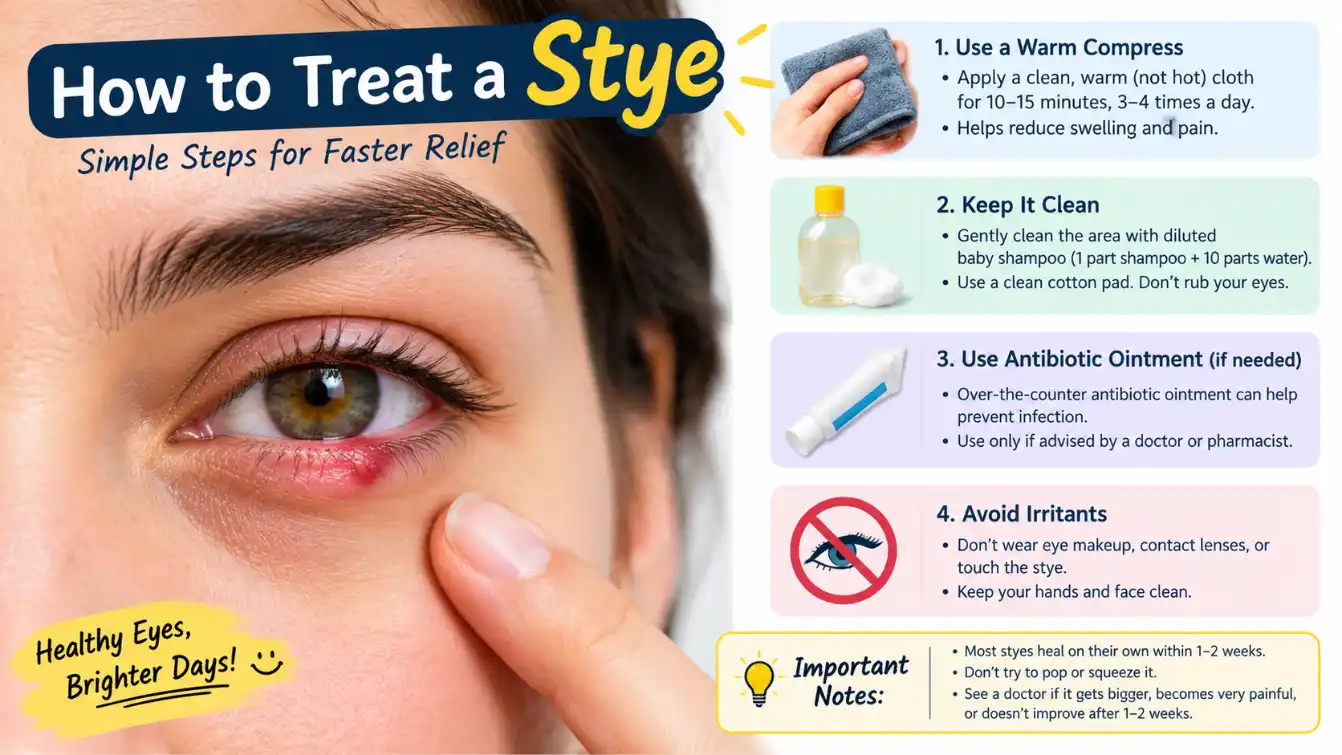
Warm compresses work as the single most effective home treatment. Soak a clean washcloth in warm (not hot) water, wring out the excess, and hold it gently against the closed eyelid for 10 to 15 minutes, three to four times a day. The warmth helps loosen the blocked gland and encourages the stye to drain on its own.
Gentle eyelid massage can help after a warm compress. Using a clean fingertip, lightly massage the area around the stye in a circular motion, which can help move trapped oil and encourage drainage.
Keeping the area clean matters throughout treatment. Wash your hands before touching your eye area, and gently clean the eyelid with a mild, tear-free cleanser if crusting develops.
Over-the-counter pain relief, like acetaminophen or ibuprofen, can help manage discomfort if the stye feels particularly tender.
What to avoid: never pop, squeeze, or attempt to lance a stye yourself. Doing so can push the infection deeper into the eyelid tissue, worsen swelling, or spread bacteria to surrounding areas. It’s also best to avoid wearing contact lenses or eye makeup until the stye fully heals, since both can introduce more bacteria or irritate the area further.
Medical and Professional Treatment Options
Most styes clear up with home care alone, but some cases call for professional treatment.
Topical antibiotics, in the form of eye drops or ointment, may help if a doctor suspects the infection is spreading or not improving on its own.
Oral antibiotics come into play for more significant infections, particularly if swelling extends beyond the immediate area of the stye or if you develop signs of a broader eyelid infection.
Steroid injections can reduce stubborn inflammation in some cases, particularly for styes that have shifted into a more chronic, chalazion-like state.
Incision and drainage becomes an option when a stye grows large, doesn’t drain on its own despite home treatment, or causes significant discomfort. An eye doctor performs this procedure in-office using a small, sterile instrument, which relieves pressure far more safely than attempting to pop the stye yourself.
Surgery is rarely necessary for a simple stye, but a doctor may consider it for a persistent chalazion that formed after a stye and hasn’t resolved through other treatments.
Most people never need to progress beyond home care, but knowing these options exist can offer peace of mind if your stye doesn’t improve as expected.
Prevention Strategies
While you can’t eliminate your risk of a stye entirely, a few consistent habits go a long way toward reducing how often they occur.
A daily eyelid hygiene routine forms the foundation of prevention. Gently cleaning your eyelids with a mild cleanser or diluted baby shampoo, especially if you have a history of blepharitis, helps keep the glands along your lash line clear.
Removing eye makeup every night prevents product buildup from clogging the small glands around your eyes. Leaving makeup on overnight, even occasionally, significantly raises your risk.
Replacing cosmetics regularly, particularly mascara and eyeliner, keeps bacteria from accumulating in products you apply directly near your eyes. Most eye makeup should be replaced every three months.
Practicing good hand hygiene, washing your hands before touching your face or eyes, and especially before inserting or removing contact lenses cuts down significantly on bacterial transfer.
Managing underlying blepharitis, if you have it, through a consistent eyelid-cleaning routine recommended by your eye doctor, reduces the chronic gland blockages that make recurrent styes far more likely.
Common Myths and Misconceptions
A few persistent myths about styes can lead people to mishandle or worry unnecessarily about the condition.
Myth: Styes spread like pink eyes. Styes don’t spread through casual contact the way conjunctivitis does. They develop from bacteria already present on your own skin, so you can’t “catch” a stye from someone else or pass one along through normal contact.
Myth: You should pop a stye to speed up healing. Squeezing or popping a stye risks pushing the infection deeper into the eyelid tissue, which can worsen swelling, delay healing, or even lead to a more serious infection. Warm compresses encourage safe, natural drainage instead.
Myth: Poor diet causes styes. While general health supports your immune system’s ability to fight off infection, diet doesn’t directly cause a stye. Bacterial infection of a blocked gland, not what you eat, drives the condition.
Myth: Every type needs antibiotics. Most styes resolve with warm compresses and time alone. Doctors typically reserve antibiotics for cases involving spreading infection or ones that don’t improve with home care.
Possible Complications if Left Untreated
Most styes heal without any lasting issues, but ignoring a stubborn one can occasionally lead to complications worth understanding.
Spreading infection, sometimes progressing to a condition called preseptal or orbital cellulitis, can develop if bacteria spread beyond the immediate gland into surrounding eyelid or eye-socket tissue. This complication, while uncommon, requires prompt medical treatment.
Chalazion formation can occur when a stye doesn’t fully resolve. The remaining blocked gland can develop into a chalazion, a firm, usually painless lump that may persist for weeks or months without proper treatment.
Recurrent styes become more likely once you’ve had one, particularly if an underlying cause, like blepharitis or chronically clogged glands, goes unaddressed.
These complications remain the exception rather than the rule. With basic home care and reasonable hygiene, the vast majority of styes heal completely within one to two weeks without any lasting effects.
When to See a Doctor
While most styes clear up with simple home treatment, certain signs mean it’s time to involve a doctor.
No improvement after a week of consistent warm compresses and home care warrants a check-in with your eye doctor, since a stubborn stye may need additional treatment to resolve.
Vision changes of any kind, even mild blurriness, should prompt immediate medical attention, since this can signal a more serious underlying issue rather than a typical stye.
Spreading redness or swelling beyond the immediate area of the stye, especially if it extends across the eyelid or toward the eye socket, can indicate a more significant infection that needs professional treatment.
Recurrent styes, especially if you develop several in a short period, deserve a doctor’s evaluation to check for underlying blepharitis or another contributing condition that ongoing treatment could address.
When in doubt, a quick visit to an eye doctor provides peace of mind and ensures you’re not missing a more serious underlying issue.
FAQs
How long does a stye take to heal?
Most styes heal within one to two weeks with consistent home care, particularly regular warm compresses. Some resolve faster, within just a few days, especially if treatment starts early.
Can a stye go away on its own?
Yes, many styes drain and heal without any treatment at all, though warm compresses and good hygiene generally speed up the process and reduce discomfort along the way.
Is a stye contagious?
No, a stye itself isn’t contagious. It develops from bacteria already present on your own skin rather than from an external infectious source, so you can’t pass it to someone else through casual contact.
Can you wear makeup with a stye?
It’s best to avoid eye makeup until the stye fully heals. Makeup can introduce additional bacteria or irritate the already inflamed area, potentially slowing recovery.
What’s the difference between a stye and a chalazion?
A stye typically develops quickly and causes noticeable pain, while a chalazion forms more slowly from a blocked gland and usually feels painless, even though it can persist longer without treatment.
Conclusion
A stye can feel uncomfortable and look alarming, but in the vast majority of cases, it resolves on its own within a week or two with nothing more than warm compresses, gentle hygiene, and a little patience. Avoiding the urge to pop or squeeze the area goes a long way toward preventing complications and speeding up natural healing.
If you find yourself dealing with styes frequently, addressing underlying factors like eyelid hygiene, contact lens habits, or blepharitis can meaningfully reduce how often they occur. And if a stye doesn’t improve, spread, or affects your vision, don’t hesitate to check in with an eye doctor who can offer more targeted treatment. With the right care, most people find styes to be a short-lived, manageable annoyance rather than a lasting problem.

I am Stephen King an American writer exploring spirituality, dreams, mindfulness, and personal growth. Through SpiritualDreamz.com, he shares thoughtful insights to inspire reflection, clarity, and meaningful everyday living.










